EDUCATIONAL AND METHODOLOGICAL ACTIVITIES
Educational and methodological activities at the Institute are carried out in accordance with the University’s current curricula and programs.
The Institute has implemented a training system that incorporates both two-hour and six-hour training sessions to cater to the needs of different student groups. The two-hour training system is utilized for first- to third-year students, allowing for focused practical sessions. Meanwhile, the six-hour system is employed for fourth- to sixth-year students, providing them with more extensive and specialized learning opportunities. This approach enables teachers to deepen their expertise and develop specific resources for each cycle.

A practical session with international students by Head of the Department of Microbiology, Virology and Immunology Professor Sergii Klymnyuk

A practical session with domestic students at the Department of Physical Rehabilitation, Human Health and Physical Education by Associate Professor Nataliia Panchyshyn

Associate Professor Dariia Popovych, Head of the Department of Physical Rehabilitation, Human Health and Physical Education, leads the seminar part of a practical session with domestic students
The departments of the Institute welcome both domestic and international students, offering programs and additional methodological support in Ukrainian and English. The educational material used by the Institute’s teachers is regularly updated with the latest achievements in theoretical medicine, ensuring that students receive a comprehensive education that meets the requirements of practical medicine. In accordance with Article 62, para. 15 of the Law of Ukraine “On Higher Education”, students have the right to choose their courses within the scope of the relevant educational program and curriculum, within the scope of not less than 25% of the total number of ECTS credits provided for this level of higher education. Therefore, the departments of the Institute of Biomedical Problems have developed and prepared more than 60 elective courses with relevant materials and methodological support (in the Ukrainian and English languages). All lectures delivered at the Institute are conducted in both Ukrainian and English, ensuring accessibility for both domestic and international students. To enhance the learning experience, these lectures are accompanied by multimedia presentations and video support.

Lecture in the Physiology course for domestic students delivered by Professor Stepan Vadziuk

Video lectures on the courses taught by the departments of the Institute of Biomedical Problems
The teachers at the Institute’s departments are actively involved in the continuous development and improvement of methodological materials for both students and teachers. Every semester, these materials are updated and enhanced to ensure their relevance and effectiveness. The University’s web portal plays a crucial role in providing access to these resources. Students can conveniently access the updated materials, including lecture presentations, student materials for lectures, and materials for practical classes, through the dedicated sections on the portal. The materials are enriched with various visual aids such as figures, graphs, and videos to enhance comprehension and engagement. Access to these materials is available round-the-clock for students through the Intranet, enabling them to study and review the content at their convenience. The educational process at the Institute incorporates remote knowledge testing through the Moodle system. This approach has proven to be highly effective in assessing students’ initial knowledge levels across all course topics. The tests are regularly updated and diversified with various visual elements, including diagrams, situational tasks, drawings, tables, and images. Tests for the comprehensive examination database, which is used for University-wide independent testing, have been meticulously developed and submitted to the Center for Independent Testing of Students’ Knowledge. These tests serve as the basis for unified semester exams. To ensure the reliability and validity of the examination process, outdated or invalid test tasks are regularly removed from the database and replaced with new ones. The teachers at the departments are actively involved in preparing students for the integrated Krok 1 and Krok 2 exams. They employ a proactive approach by integrating Krok database tests into practical sessions and including them in the semester test exams. Additionally, pre-Krok consultations are organized every year for students from all faculties, conducted in both Ukrainian and English.

The results of the first stage of the Unified State Qualification Exam (USQE): integrated test exam “Krok 1”
The Institute’s efforts are focused on making sure that students master practical skills, which indicates that the educational process is practically oriented. In accordance with the Sectoral Standards of Higher Education approved by the Ministry of Health of Ukraine, the departments of the Institute have created lists of practical skills that are included in the series of practical skills.

First-year students training for the practical skills exam

Checking how students have mastered practical skills by solving situational tasks in genetics
A modern fitness center was opened, equipped with up-to-date rehabilitation devices. By having classes here, the Department’s teachers help students learn new practical skills.

The Institute’s teachers are working on creating databases of modern educational videos and virtual training programs for students to properly master each practical skill; they can watch them using video systems during practical classes and in the process of self-study.

New virtual training programs created by the teachers of the Department of Medical Biology.

Video films created by the teachers of the Department of Physiology and the Department of Microbiology, Virology and Immunology.
The Educational Biological Museum, which is the Institute’s pride, is widely used in the educational process; it was founded in 1957 by Associate Professor Ivan Yaremenko, PhD in Biology, the first Head of the Department of Biology of Ternopil Medical Institute.
The Educational Biological Museum is an exposition project and an educational resource of the Institute. The Department’s Museum reflects not only the history of the development of living organisms, but also the history of how the Museum of Nature was created, the history of the Institute, and the history of the University.

A fragment of the Educational Biological Museum founded by Associate Professor Ivan Yaremenko.
Currently, the Educational Biological Museum plays a multifaceted role: training, scientific and educational. Educational: The Museum’s exhibits help students observe the interconnectedness between flora and fauna, organisms and the environment, develop an understanding of the structure of multicellular organisms, and study the role of humans in changing natural ecosystems. Scientific: The expositions of the Museum’s sections are valuable because they help to develop a system of knowledge about the laws of nature and serve as a basis for studying the basics of parasitism and parasitic invasions in humans. Educational: the museum shapes a humane, respectful and caring attitude to the nature of the native land, the ability to appreciate all living things aesthetically; it plays an important role in shaping students’ environmental awareness.

Schoolchildren of Ternopil taking thematic excursions in the Institute’s Educational Biological Museum

A fragment of the exposition: Chronology of the Evolution of Wildlife

Exhibits of the Wildlife—a Multilevel System of the Earth section
The Museum’s exposition “The Notion of Ecological System in Modern Ecology” includes a map-scheme that highlights the main nature protection objects in the Ternopil region.

A fragment of the Museum’s exposition “Nature Reserve Territories of Ternopil Region.” Regional scheme of the Ternopil region ecological network
A mini-lecture hall has been set up at the Educational Biological Museum, which is intended for: lectures with multimedia presentations for students; training seminars with demonstration of scientific and educational videos for students; meetings of the student scientific club; listening to scientific reports of breakout sessions at scientific and practical conferences.

Mini-lecture hall of the Institute
In order to train students, the departments are provided with the necessary number of monographs, textbooks and manuals, and the departments of the Institute form creative teams to prepare and publish them in order to replenish the libraries with modern educational literature adapted to the credit transfer system. Teachers of the Institute of Biomedical Problems have authored and co-authored 5 textbooks on relevant subjects and more than 14 tutorials used in the educational process of higher educational institutions of the 1st-4th accreditation levels.

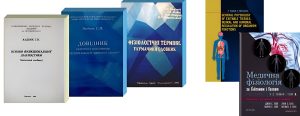

Educational publications authored by the Institute’s teachers
PROFESSIONAL DEVELOPMENT
The Institute of Biomedical Problems pays considerable attention to raising the professional level of teachers. Every 5 years, the teachers of the departments improve their qualifications at the Faculty of Professional Development in accordance with the approved schedule. The professional development of teachers at the departments is carried out through mutual visits to practical classes and lectures, as well as attending training seminars on teaching methods and nanotechnology, internships in international research centers.
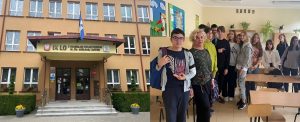
Internship of prof. Larysa Fedoniuk as part of scientific and educational cooperation in the international project “The Four Elements of Nature—Harmony of Life in the Ternopil Region and Podkarpackie Voivodeship”

Associate Professor Olena Pokryshko at the scientific and practical training on antibiotic resistance and synergy of antibiotics

Professor Dariia Popovych on a professional internship at the General Faculty Hospital of Charles University in Prague

Professor Hanna Saturska on a professional internship in public health and disease prevention in Munich, Germany (Technical University of Munich, Faculty of Sports and Health Sciences)

Professor Nataliia Terenda and Associate Professor Olha Lytvynova at the Ukrainian Catholic University (Lviv)—School of Public Administration with the support of the USAID project “Case Method in Healthcare Management Education”

Associate Professors Liudmyla Trushchenkova and Yurii Petrashyk, at the seminar “Research Methods for Global Health”, Tbilisi, Tbilisi State University (Georgia)