
From June 3 to 6, 2025, representatives of I. Horbachevsky Ternopil National Medical University — Associate Professors Maryana Levkiv, Kateryna Kozak, Kateryna Hlushko, and Senior Lecturer Nataliia Ohinska — took part in the “Training Workshop on the Institutional Toolkit for Open Science Implementation and Research Assessment Advancement” within the ERASMUS+ Open4UA project — Open Science for Ukrainian Higher Education System, funded by the European Union.
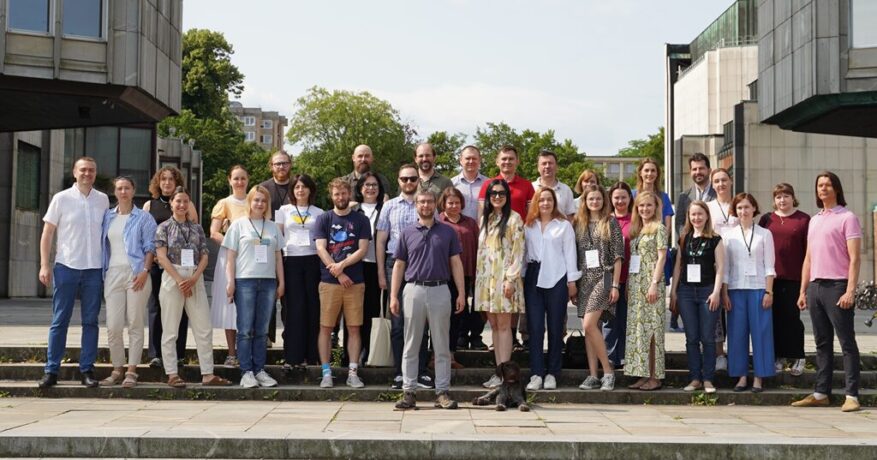
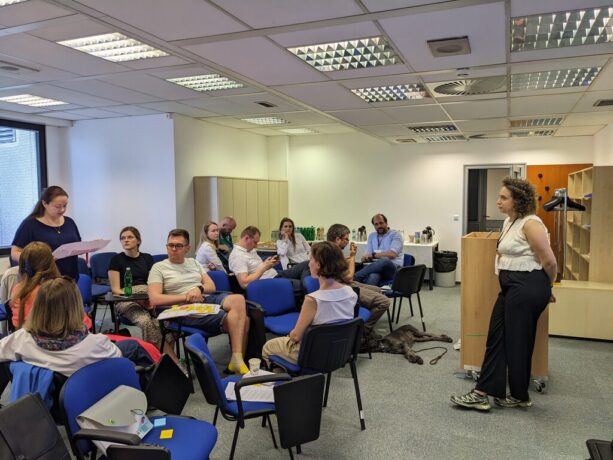
The workshop was held at the University of Ljubljana (Slovenia) and brought together 36 participants from Ukrainian higher education institutions (Lviv Polytechnic National University, National Technical University of Ukraine “Igor Sikorsky Kyiv Polytechnic Institute”, Yaroslav Mudryi National Law University, I. Horbachevsky Ternopil National Medical University, Mariupol State University, Berdyansk State Pedagogical University), representatives of the Ministry of Education and Science of Ukraine, the National Research Foundation of Ukraine, the Institute of Open Science and Innovation (Ukraine), the University of Ljubljana (Slovenia), Delft University of Technology (Netherlands), Vrije Universiteit Brussel (Belgium), University of Amsterdam (Netherlands), Eurodoc, and Technopolis Group.
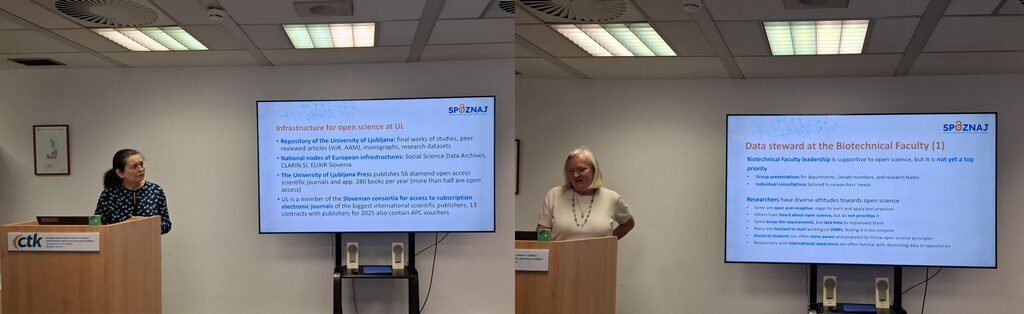
During several training sessions under the general theme “Open Science and Research Data Management: Policies, Tools, and Future Perspectives”, participants learned about the University of Ljubljana’s experience presented by Mojca Kotar, Mira Metljak, Urša Opara Krašovec, and Tina Zorman. The topics included organizing data steward networks, current requirements for Data Management Plans (DMPs), the FAIR principles, and building open data repositories.
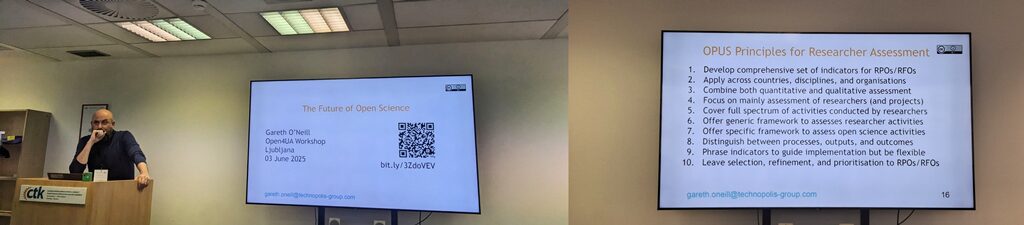
Special attention was given to the European experience in researcher assessment based on open science criteria, as implemented through the CoARA initiative and the OPUS project, presented by Gareth O’Neill (Netherlands).
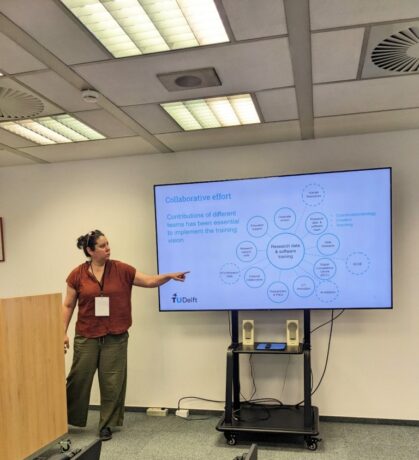
Speakers from TU Delft — Paula Martinez Lavanchy, Carla Strubbia, and Bjørn Bartholdy — discussed the role of libraries as training centers for data and software management, as well as the support system for researchers through Data Stewardship.
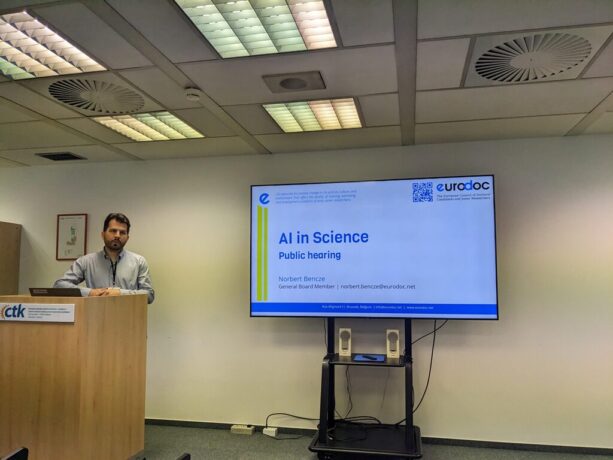
A separate session was dedicated to the opportunities and risks of using artificial intelligence in research and research assessment, presented by Norbert Bencze from Eurodoc.
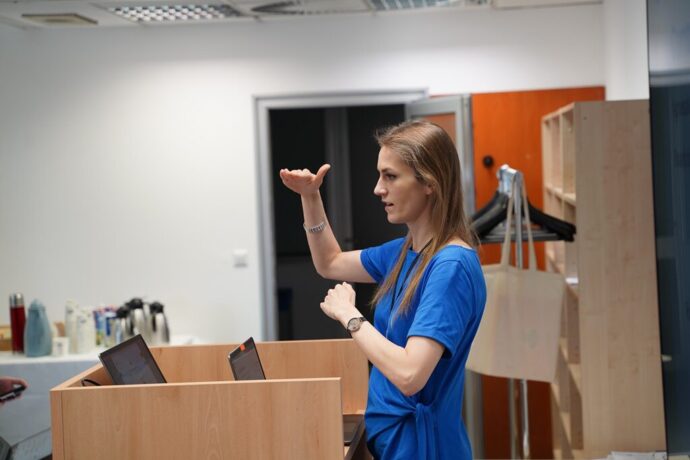
CoARA (Coalition for Advancing Research Assessment) working group updates were shared by Agnieszka Żura (Eurodoc), who outlined the key focus areas, including reforming research assessment systems, recognizing interdisciplinarity, developing alternative metrics, and integrating open science and AI principles into assessment practices.
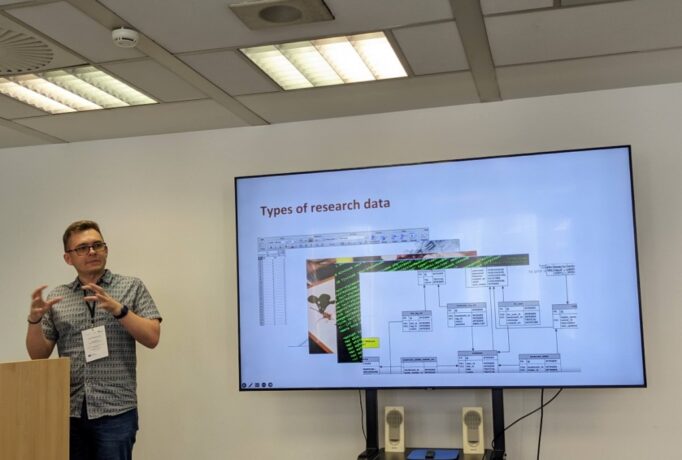
Separate masterclasses focused on improving institutional policies on open science and data management. Led by Ivan Pyshnograiev (KPI) and Oleksandr Berezko (LPNU), these sessions emphasized the importance of developing effective DMPs, checking the availability of templates and guidelines, updating institutional RDM policies, and creating a high-quality RDM toolkit to support researchers. Georgii Vasyliev (KPI), institutional coordinator of the Open4UA project, presented a report titled “Model of Institutional Policy on Open Science — Comparison with Existing Policies at Partner Institutions and Identification of Implementation Barriers.”
During the foresight research workshop (Futures Studies) led by Barbara Leitner (AUMC), participants developed scenarios for the development of open science by 2035 and outlined concrete steps to be taken in the coming years to realize them.
Participation of university educators in such events helps improve local institutional policies on open science and research data management, implement modern approaches in training young scientists, and enhance international cooperation.