

The XXIII All-Ukrainian Scientific and Practical Conference with International Participation “Current Trends and Prospects for the Development of Higher Medical (Pharmaceutical) Education in Ukraine” Was Held at TNMU
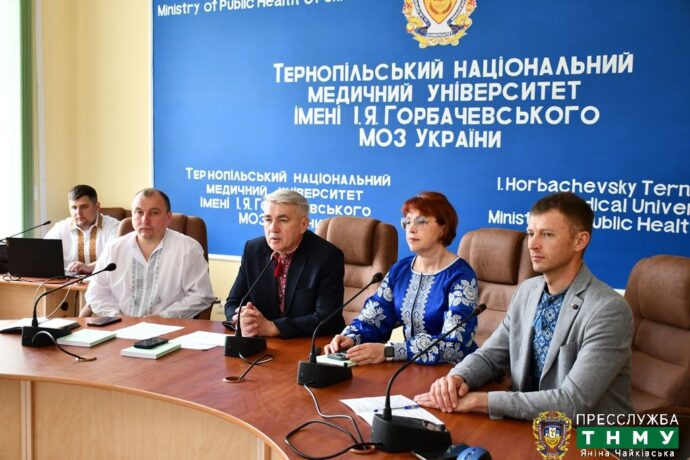
On May 21–22, 2026, the XXIII All-Ukrainian Scientific and Practical Conference with International Participation entitled “Current Trends and Prospects for the Development of Higher Medical (Pharmaceutical) Education in Ukraine” was held at I. Horbachevsky Ternopil National Medical University. This large-scale event, organized jointly with the Ministry of Health of Ukraine, coincided with the major Christian holiday of the Ascension of the Lord and the national Vyshyvanka Day, bringing together leading researchers, educators, and practicing healthcare professionals to address current challenges and discuss the modernization of the educational process. The conference was conducted in a modern hybrid format, combining in-person participation in the TNMU conference hall with remote attendance via the Microsoft Teams platform.
The official opening of the conference was delivered by the co-chair of the organizing committee, Vice-Rector for Science and Education, Professor Arkadii Shulhai. In his welcoming speech, Professor Shulhai outlined the strategic objectives of the event, emphasizing the importance of adopting advanced European experience and adapting it to national specificities, regional contexts, and the contemporary challenges faced by the Ukrainian healthcare sector.
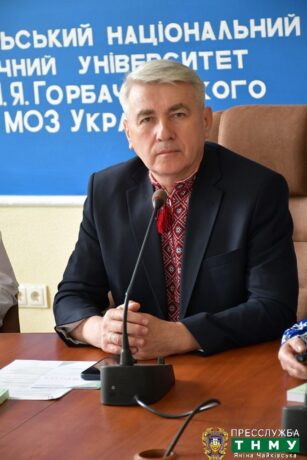
The first day featured an intensive program of plenary and sectional sessions. Conference speakers represented Ternopil, Ivano-Frankivsk, Kyiv, Lviv, Kharkiv, Zaporizhzhia, Chernivtsi, and Vinnytsia. Among the key topics discussed were the experience of implementing the educational and professional program “Prosthetics and Orthotics” at the second (master’s) level of higher education (presented by T. H. Bakaliuk), as well as the introduction of innovative technologies and educational digitalization based on the experience of Ivano-Frankivsk National Medical University (presented by O. I. Bulbuk).
An important issue raised by O. V. Solienko concerned the quality of higher education as the architecture of academic integrity. D. O. Cherednychenko presented a report on the establishment and operation of the simulation center at the twice-relocated Luhansk State Medical University. N. M. Vorobets from Danylo Halytsky Lviv National Medical University introduced case-study methods in medical biology. N. I. Marienko presented the didactic potential of video-hosting platforms and behavioral patterns of students studying histology. Unique results on the use of artificial intelligence for creating a standardized patient during the OSCE examination were presented by N. B. Haliyash from Ternopil National Medical University. Representatives of other leading Ukrainian medical higher education institutions shared their experience in developing the architecture of academic integrity, operating simulation centers, utilizing virtual patients as an effective tool for clinical reasoning development under limited clinical access during wartime, and implementing the digitalization of the educational process.
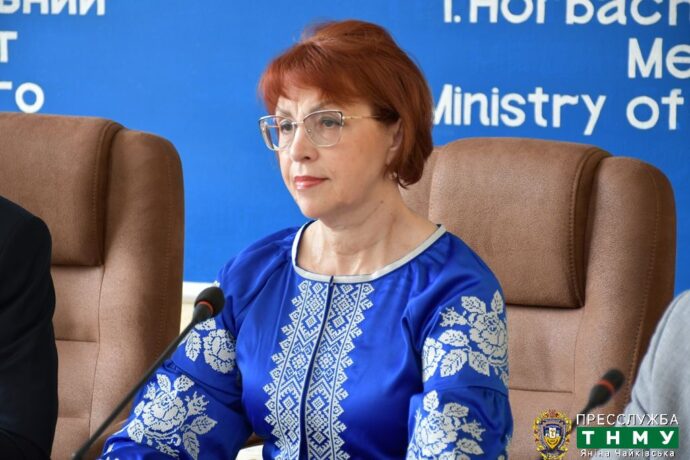
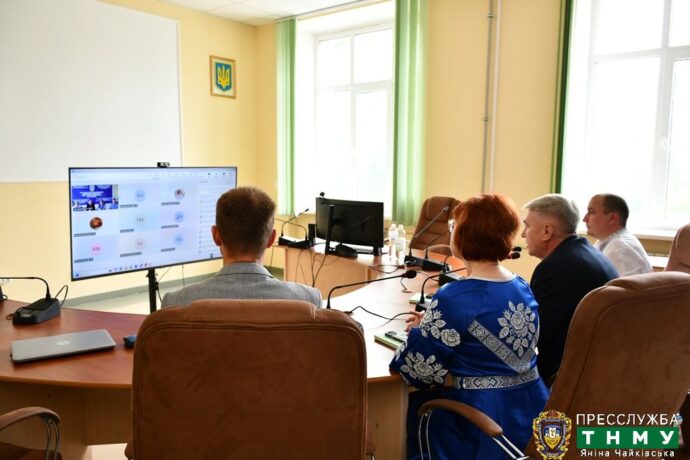
The speakers presented high-quality content based on the experience of their own higher education institutions.
The second day of the conference was entirely devoted to poster presentations and summarizing the results. Thanks to open digital access, participants had the opportunity to familiarize themselves in detail with a wide range of studies — from methodological aspects of training healthcare management specialists and analyzing the professional motivation of interns to the implementation of problem-based learning and digital didactic tools in clinical surgery. Special attention was also paid to telemedicine and simulation-based training methods for students specializing in traumatology.
The final stage of the event included comprehensive assessment procedures. All registered participants completed mandatory testing to evaluate the knowledge acquired during the conference. Participants who successfully demonstrated at least 70% correct answers will receive Continuing Professional Development provider certificates. In accordance with the regulations, CPD credits were awarded based on conference participation. The organizing committee expressed gratitude to all participants for the fruitful discussions, which concluded with the adoption of the official conference resolution.