

Integration of Research, Digital Innovation, and International Collaboration within the Digi-CHange Project
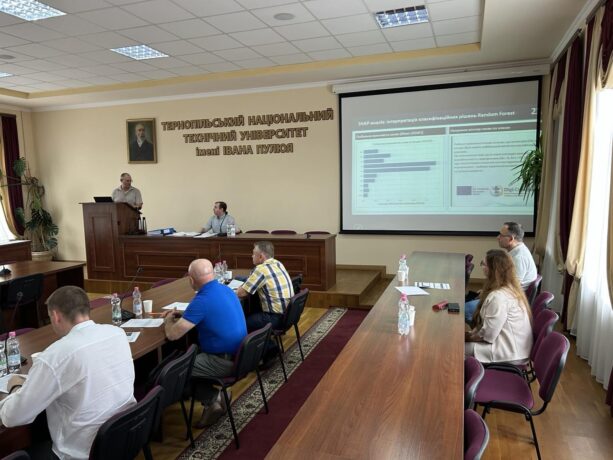
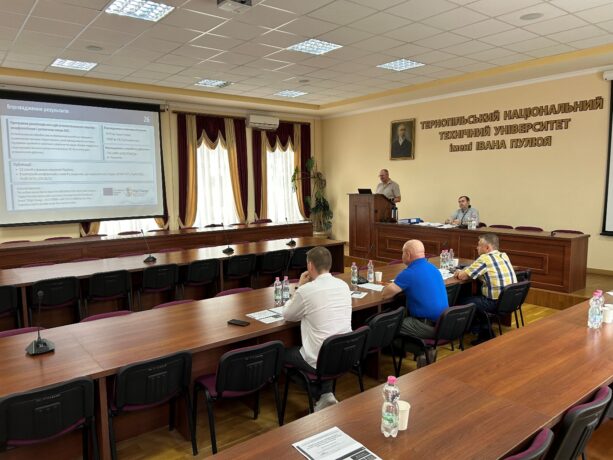
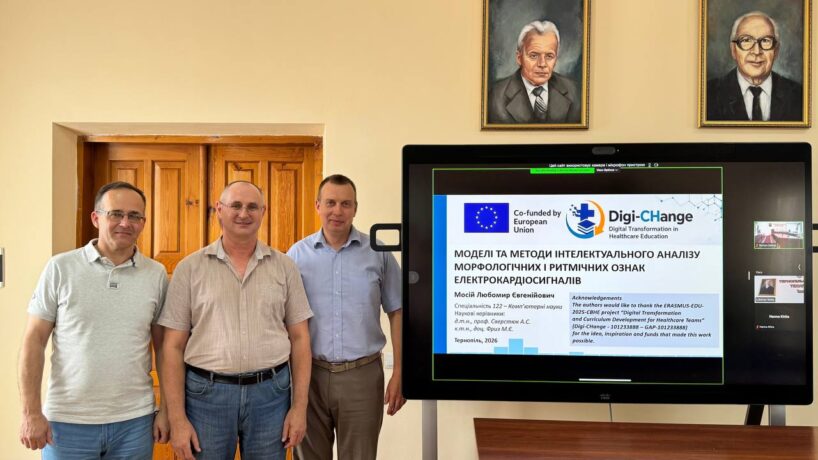
As part of the Erasmus+ KA2 project “Digi-CHange” (Digital Transformation and Curriculum Development for Healthcare Teams), Liubomyr Mosii successfully defended his PhD dissertation entitled “Models and Methods for Intelligent Analysis of Morphological and Rhythmic Features of Electrocardiographic Signals” in the field of Computer Science. The research was supervised by Professor Andrii Sverstiuk and Associate Professor Mykhailo Fryz. The dissertation defense took place on July 7, 2026, at Ivan Puluj Ternopil National Technical University.
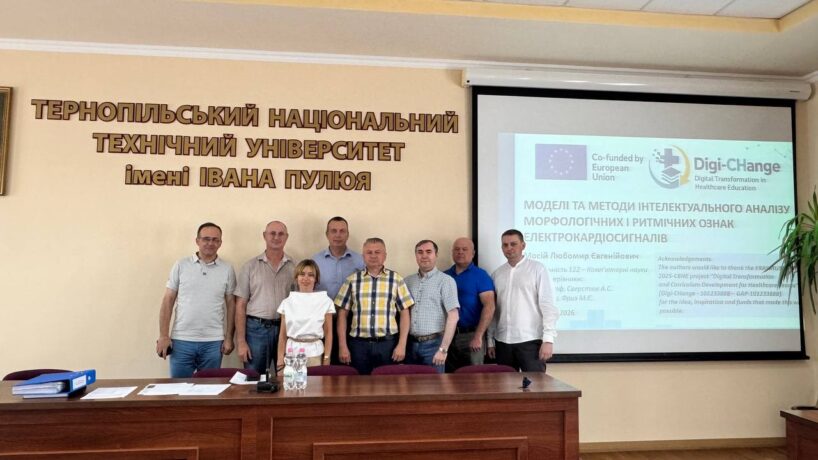
The dissertation focused on the development of models and methods for the intelligent analysis of electrocardiographic (ECG) signals using modern artificial intelligence, mathematical modelling, and machine learning technologies to improve the accuracy of computer-assisted cardiac diagnostics. The research findings have significant practical value for the development of intelligent clinical decision support systems, the advancement of digital medicine, and the implementation of modern information technologies in healthcare.
Within the framework of the Digi-CHange project, the outcomes of the dissertation have already been incorporated into the educational and research activities of I. Horbachevsky Ternopil National Medical University. They are being used to update educational components related to the digital transformation of healthcare, biomedical information technologies, artificial intelligence, and medical data analysis, as well as in the development of teaching and learning materials, the implementation of research projects, and the training of higher education students.
The research results have also been integrated into project activities aimed at strengthening the digital competencies of academic staff and students, modernising curricula, and introducing advanced digital technologies into the education of future healthcare professionals. The application of intelligent biomedical signal analysis methods helps students develop practical skills in working with artificial intelligence systems and modern digital diagnostic tools in accordance with European approaches to medical education.
The successful dissertation defense and the implementation of its findings demonstrate the effective integration of scientific research, digital innovation, and international cooperation within the Digi-CHange project. The project contributes to the modernisation of the educational process, the enhancement of the university’s research capacity, the preparation of highly competitive healthcare professionals, and the implementation of innovative digital solutions in medical education and clinical practice in line with European standards.