

TNMU Research Laboratory Receives Modern Thin-Layer Chromatography Equipment Funded by the Ministry of Education and Science
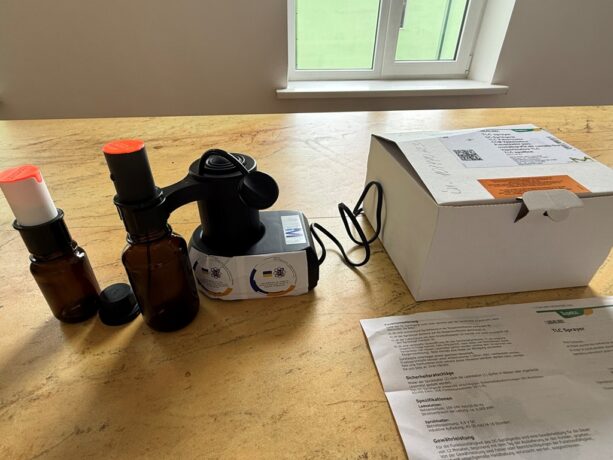
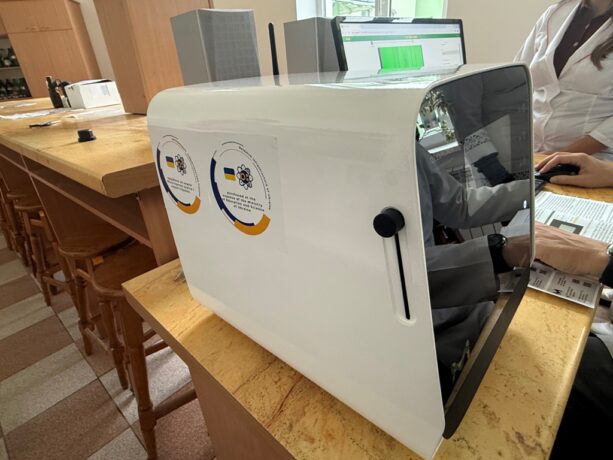
The TNMU Research Laboratory for Quality Control of Medicinal Products has received modern equipment for thin-layer chromatography (TLC). With funding provided through the Ministry of Education and Science of Ukraine’s budget financing, the laboratory has acquired a TLC instrument for the digital documentation and visualization of research results, as well as a TLC sprayer.
The new equipment is an important addition to the laboratory’s research infrastructure and expands its capacity to conduct advanced scientific and applied research in pharmaceutical chemistry, pharmaceutical development, and medicinal product quality control.
Thin-layer chromatography is widely used in pharmaceutical analysis for the identification of medicinal substances, assessment of the purity of active pharmaceutical ingredients, detection of impurities and degradation products, analysis of herbal raw materials, and examination of multi-component medicinal products.
The new equipment enables the digital documentation and visualization of TLC chromatograms, ensuring consistent documentation of research results and facilitating their storage, comparison, and further analytical processing. The TLC sprayer, in turn, expands the laboratory’s capabilities for the preparation and visualization of chromatographic plates in qualitative and semi-quantitative analysis.
The newly acquired equipment is housed in the Research Laboratory for Quality Control of Medicinal Products and forms part of the research infrastructure of the Shared Research Facilities Center.
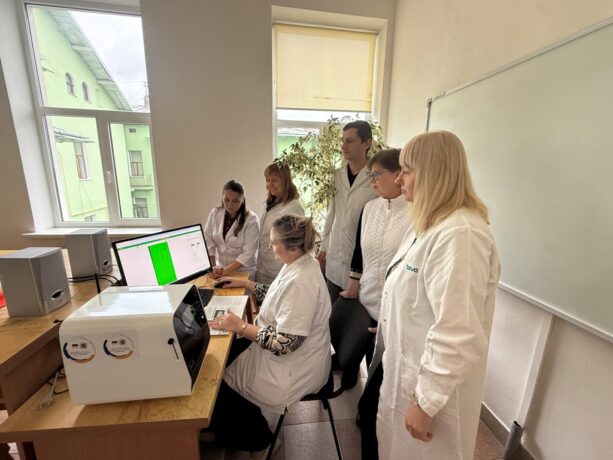
This infrastructure creates opportunities to use the equipment in research projects, doctoral and PhD research, grant-funded programs, educational projects, and collaborative studies conducted by TNMU researchers and partner institutions.
The TNMU Research Laboratory for Quality Control of Medicinal Products operates across a broad range of research areas, combining analytical, technological, and bioanalytical studies.
The laboratory’s specialists carry out:
independent quality control of medicinal substances, active pharmaceutical ingredients (APIs), and finished medicinal products to ensure compliance with approved regulatory documentation;
development of regulatory analytical documentation, specifications, and quality-control procedures;
development and validation of analytical methods;
preparation of documentation in the Common Technical Document (CTD) format, Module 3 “Quality,” for the registration and re-registration of medicinal products;
experimental technological studies in the development of new medicinal products;
analytical and technological support for pharmaceutical development;
development and validation of bioanalytical methods for the determination of active substances and their metabolites in biological matrices;
research in therapeutic drug monitoring and pharmacokinetics;
determination of pharmacokinetic parameters and statistical analysis of experimental data;
research into biologically active substances of plant origin;
development of analytical control methods for new biologically active substances and medicinal products;
dissolution-profile studies of generic medicinal products and research into their bioequivalence;
scientific research in the standardization and quality control of medicinal products.
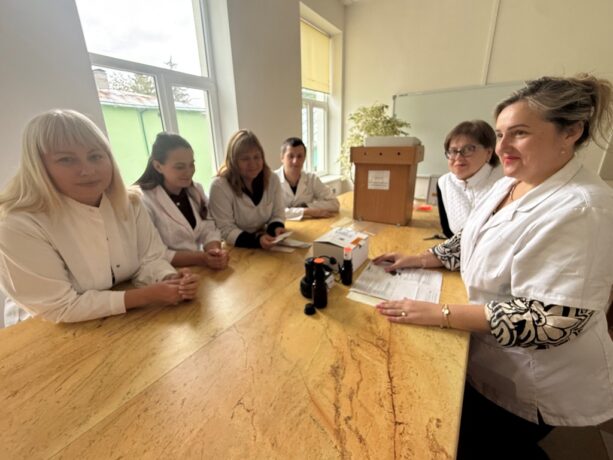
Another important area of the laboratory’s work is the application of modern approaches such as Quality by Design (QbD), Design of Experiments (DoE), analytical risk assessment, and the development of modern, efficient, and environmentally oriented analytical methods.
The laboratory’s research infrastructure makes it possible to combine a range of analytical approaches, including TLC, high-performance liquid chromatography (HPLC) with diode-array detection, UV/Vis spectrophotometry, titrimetric methods, and other physicochemical techniques.
This combination of analytical methods enables comprehensive studies of pharmaceutical substances, excipients, finished medicinal products, biologically active substances, and pharmaceutical development objects.
The laboratory also contributes to TNMU’s research and educational activities, supports the training of PhD students and doctoral researchers, provides professional development opportunities for specialists in medicinal product quality control, and participates in the implementation of scientific projects.
The TNMU Research Laboratory for Quality Control of Medicinal Products is open to new research partnerships and collaborative projects.
We sincerely thank the TNMU administration for its continued support of the university’s research infrastructure, its contribution to advancing modern scientific research, and its commitment to creating new opportunities for the development of pharmaceutical science at the University.