

TNMU Hosts the Eighth International Scientific Symposium on Public Health
On 24–25 September 2026, Ternopil National Medical University, in cooperation with Akkon University of Human Sciences Berlin, hosted the Eighth International Scientific Symposium “Public Health in the Social and Educational Space: Challenges in Strengthening Intersectoral Cooperation and Development Prospects.” The symposium was held online and brought together researchers, educators, healthcare professionals, and international partners.
For the eighth consecutive year, the Department of Public Health and Health Care Management at TNMU has organized the International Ukrainian-German Scientific Symposium on Public Health in September, making the event an established academic tradition. The symposium provides a platform for researchers and practitioners from different regions of Ukraine, Germany, and other countries to present their findings and discuss current public health challenges. Particular attention is given to healthcare challenges under martial law, strengthening intersectoral cooperation, and prospects for sustainable development.
Due to the ongoing martial law in Ukraine, the symposium was held online. Public health in Ukraine currently faces the challenge of protecting and maintaining population health under complex conditions while developing evidence-based strategic approaches to the further development of the field.
The symposium was opened by Professor Hanna Saturska, who welcomed the participants, outlined the main areas of the symposium, and presented the programme and working format.
The opening session began with an address by Arkadii Shulhai, Vice-Rector for Science and Education at Ternopil National Medical University of the Ministry of Health of Ukraine, Doctor of Medical Sciences and Professor. He emphasized the particular relevance of discussing and developing proposals to strengthen intersectoral cooperation during the Eighth Scientific Symposium. Such cooperation is essential for supporting the population and developing new directions in public health in the context of the war in Ukraine.
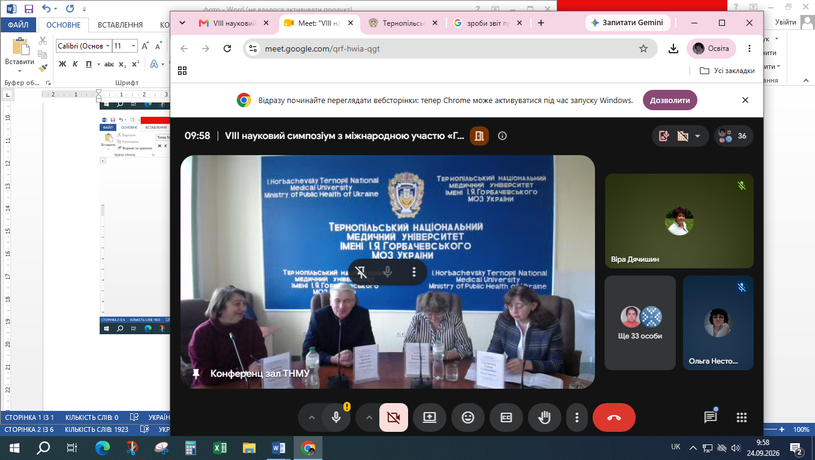
Professor Timo Ulrichs, Doctor of Medical Sciences and Professor at Akkon University of Human Sciences Berlin, also emphasized the continuing importance of international cooperation and an interdisciplinary approach to public health in responding to contemporary challenges. He highlighted the importance of Ukrainian-German cooperation during the war, particularly in protecting population health and ensuring access to healthcare. He also outlined promising areas of cooperation related to Ukraine’s European integration, post-war reconstruction, and rehabilitation, which will require particular attention.

The plenary and sectional sessions placed significant emphasis on intersectoral partnerships and evidence-based approaches to healthcare decision-making.
In his presentation “Democratic Crisis Management,” Matthias Lemke (Akkon University of Human Sciences, Germany) presented the concept of democratic crisis management. He addressed the challenges of organizing actions and implementing tasks during crises, emphasizing the importance of ensuring that crisis-management decisions produce positive outcomes for people and help preserve their dignity.

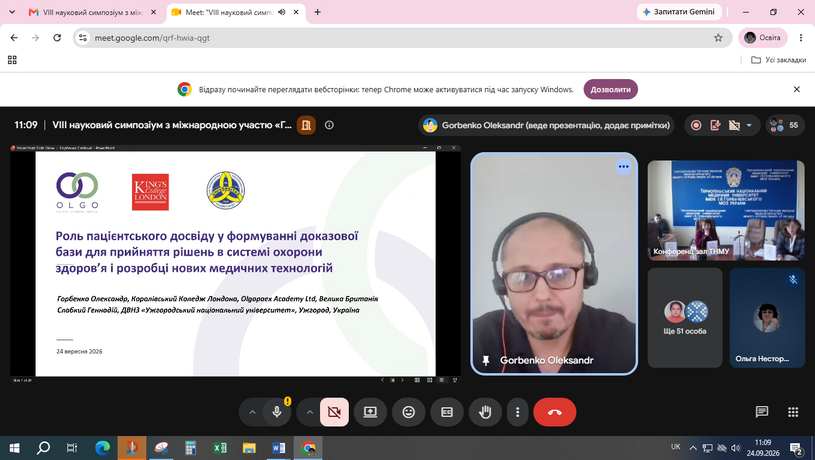
Oleksandr Horbenko (King’s College London, founder of Olgopaex Academy Ltd, United Kingdom) and Hennadii Slabkyi (Professor and Head of the Department of Public Health, Epidemiology and Infectious Diseases at Uzhhorod National University) presented “The Role of Patient Experience in Building the Evidence Base for Decision-Making in Healthcare and Developing New Medical Technologies.” The speakers examined the role of patient experience in generating evidence for healthcare decision-making and the development of new medical technologies. These approaches are particularly important for maintaining a patient-centred focus in healthcare and informing the development of future medicinal products.
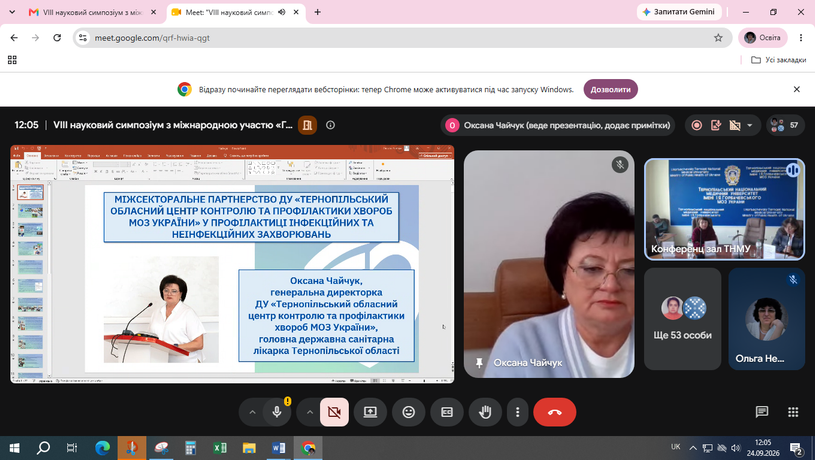
Oksana Chaichuk, Director General of the Ternopil Regional Centre for Disease Control and Prevention of the Ministry of Health of Ukraine, discussed aspects of intersectoral partnership in the prevention of infectious and non-communicable diseases at the regional level. She described the key components of effective intersectoral cooperation and presented a memorandum of cooperation developed within the framework of such a partnership.
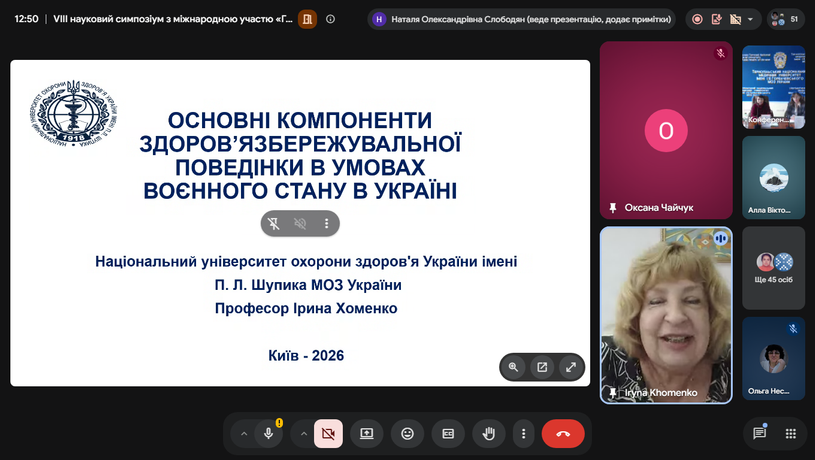
Professor Iryna Khomenko, Head of the Department of Public Health, Epidemiology and Ecology at Shupyk National Healthcare University of Ukraine, focused on the main components of health-promoting behaviour under martial law. She emphasized the need to develop specific health-promotion programmes for citizens in wartime, with particular attention to internally displaced persons, children, and people directly affected by hostilities.
The issue of global health and Ukrainian realities was examined in a joint presentation by Andrii Mokiienko, MD, PhD, Professor Ihor Hushchuk, and Professor Volodymyr Babiienko (National University of Ostroh Academy and Odesa National Medical University). The researchers emphasized the importance of maintaining the safety and quality of drinking water.
Valentyna Nesterenko, Professor and Head of the Department of Public Health and Health Care Management at Kharkiv National Medical University, presented trends in non-communicable morbidity and mortality in the Kharkiv region amid demographic challenges. She noted that chronic non-communicable diseases account for a substantial proportion of deaths worldwide and emphasized that depopulation requires targeted approaches to protecting population health, including screening and preventive measures.
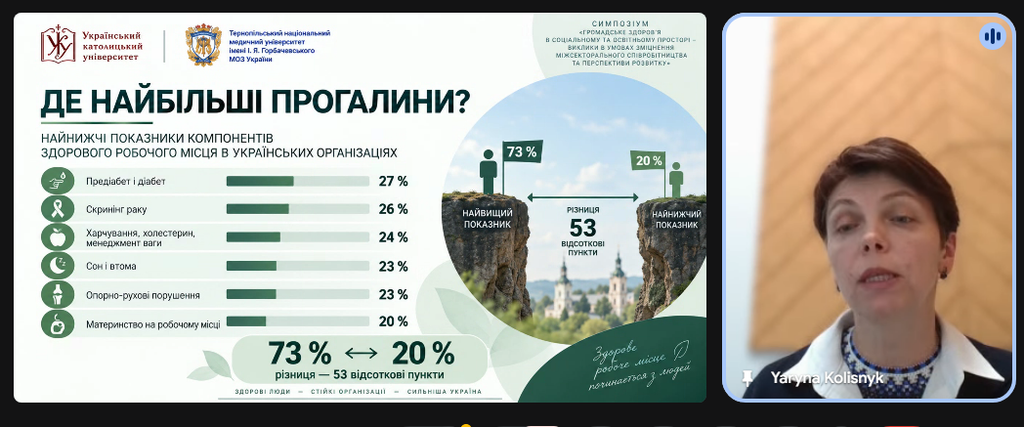
An important issue concerning the imbalance among healthy workplace components in Ukrainian organizations was addressed by Yaryna Kolisnyk, Associate Professor of the Department of Physical Therapy and Occupational Therapy at the Faculty of Health Sciences of Ukrainian Catholic University, and Nataliia Terenda, Professor and Head of the Department of Public Health and Health Care Management at TNMU. They emphasized the need to develop comprehensive programmes ranging from workplace safety to health promotion.
Olena Protsiv, Master of Public Health and Library Director; Arkadii Shulhai, Vice-Rector for Scientific and Academic Affairs at TNMU, Professor; and Ihor Havryshchak, Associate Professor of the Department of the Ukrainian Language at TNMU, presented historical aspects of the medical and sanitary conditions in Galicia and the formation of a national concept of public health. They emphasized the need to establish a national public health model that is accessible to the population.
Yaroslav Basarab, PhD, representing the State Institution “Healthcare Centre of the State Criminal and Executive Service of Ukraine,” addressed competency-based training of family physicians in sexually transmitted infections. His presentation analysed this issue in the context of current WHO recommendations and emphasized the importance of strengthening the practical training of healthcare professionals in this area.
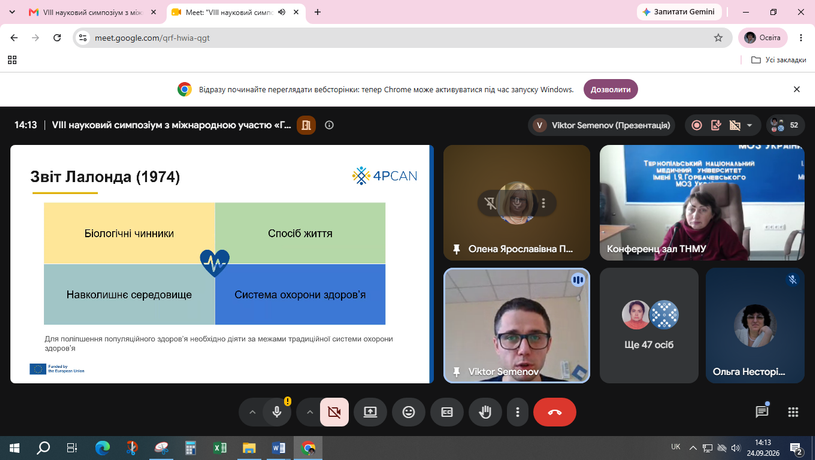
Viktor Semenov, Associate Professor of the Department of Social Medicine, Public Health and Health Care Management; Liliia Kriachkovа, Professor and Head of the Department of Social Medicine, Public Health and Health Care Management at Dnipro State Medical University; and Olha Ustymchuk, Deputy Director of the Department of Health of the Dnipropetrovsk Regional State Administration, discussed primary cancer prevention based on European practices. They emphasized the importance of an intersectoral approach to cancer prevention.
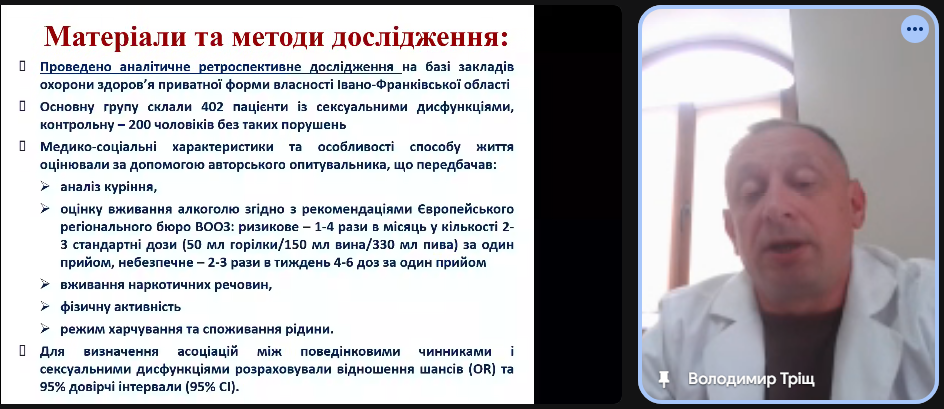
Volodymyr Trishch, Associate Professor representing Ivano-Frankivsk National Medical University, presented an analysis of behavioural risk factors associated with sexual dysfunction in men. In his conclusions, he emphasized the importance of promoting a healthy lifestyle as a means of preventing such disorders.
Petro Tokar, Associate Professor at Bukovinian State Medical University, discussed cervical dysplasia prevention and interaction between the healthcare and education systems. He highlighted the importance of preventing gynaecological diseases and strengthening the immune system, which provides a basis for an interdisciplinary approach.
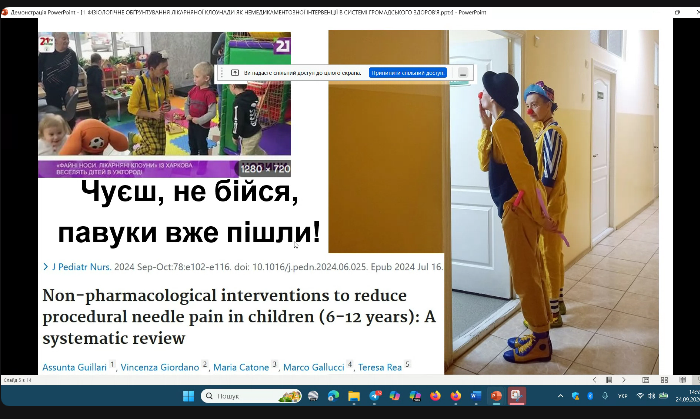
New non-pharmacological interventions were addressed by Nataliia Volotovska, Doctor of Medical Sciences and Associate Professor of the Department of Physiology and Bioethics at TNMU, and Nina Romaniuk, Associate Professor of the Department of Public Health and Health Care Management at TNMU. Their presentation focused, in particular, on the physiological rationale for hospital clowning and emphasized the need to move from individual initiatives towards systematic approaches.

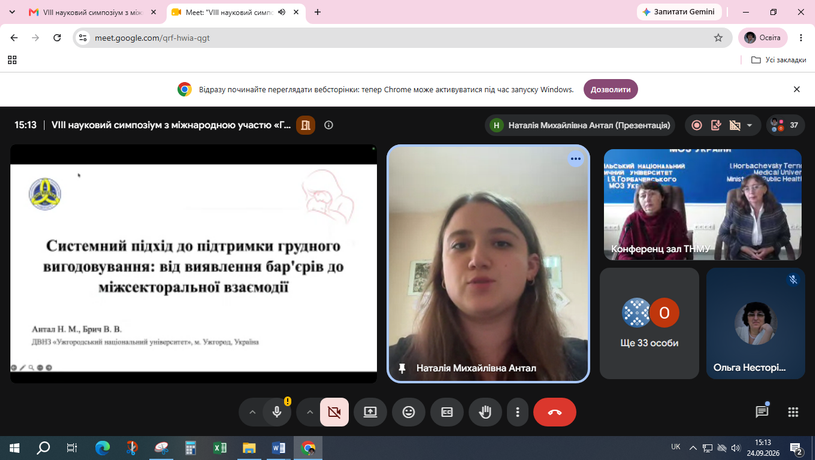
Nataliia Antal and Valeriia Brych, Head of the Department of Health Sciences at Uzhhorod National University, presented a systematic approach to supporting breastfeeding at the level of local communities and emphasized the need for coordinated intersectoral cooperation.
Further detailed discussions took place during three specialized sectional sessions. The participants addressed healthy lifestyles, healthcare management, investment in health, responses to water-supply crises, including the experience of Nikopol District presented by O. Ulka, and the implementation of NATO standards in the Armed Forces of Ukraine. A poster presentation session was also held, covering clinical and statistical characteristics of reproductive health and person-centred healthcare.
At the conclusion of the symposium, the participants summarized the outcomes of the sessions and adopted a resolution aimed at strengthening intersectoral cooperation and implementing preventive health programmes.
Overall, the Eighth International Scientific Symposium brought together leading educators and professors, international partners from Germany and the United Kingdom, organizers, and healthcare professionals from Ukraine. The exchange of expertise and knowledge generated through the discussions will contribute to establishing a strong scientific foundation for strategic decision-making and the further development of public health in Ukraine.
The Ukrainian-English interpretation and language support for the presentations were provided by Associate Professor Yurii Petrashyk. Technical support and event coordination were provided by Professor Nataliia Terenda and Associate Professor Nataliia Slobodian.