

TNMU Hosts Discussions on the Development of Palliative Care in Ukraine
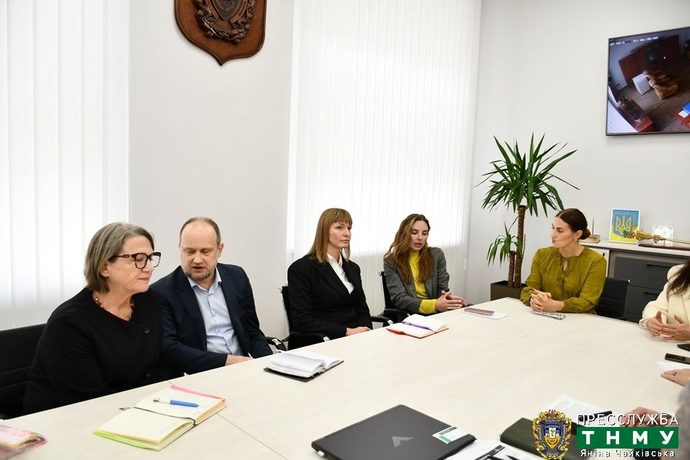
On 5 October 2026, I. Horbachevsky Ternopil National Medical University hosted a working meeting with representatives of the World Health Organization (WHO) to discuss the development of palliative care and the improvement of relevant educational programmes.
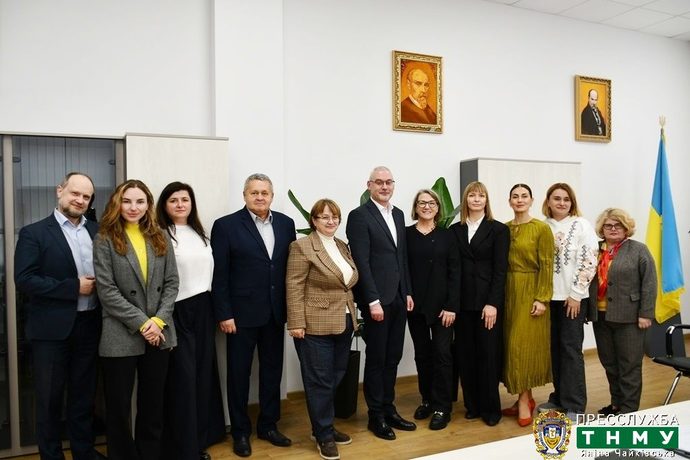
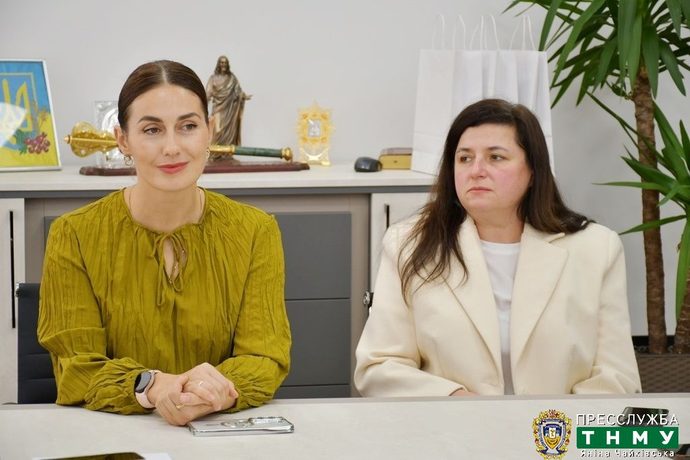
The WHO delegation included Julie Ling, Palliative Care Specialist at the WHO Regional Office for Europe; Polina Huk, Nursing and Midwifery Officer at the WHO Country Office in Ukraine; and Khrystyna Chaika, Human Capital in Health, Education and Medical Science Specialist at the WHO Country Office in Ukraine.
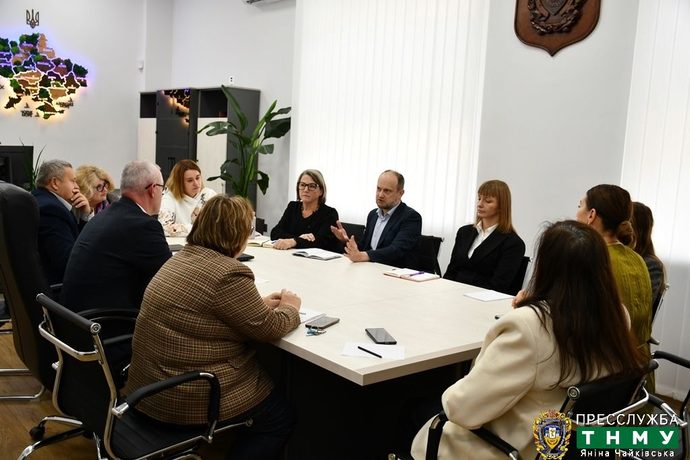
TNMU was represented by Rector Petro Lykhatskyi; Vice-Rector for Research Oleksandra Oleshchuk; Vice-Rector for Science, Educationj and Clinical Affairs and Clinical Work Stepan Zaporozhan; Director of the Nursing Institute Svitlana Danchak; and representatives of the Department of Higher Nursing Education, Patient Care and Clinical Immunology: Associate Professors Nadiia Reha and Olha Zarudna, and Assistant Professor Yuliia Kotsaba.
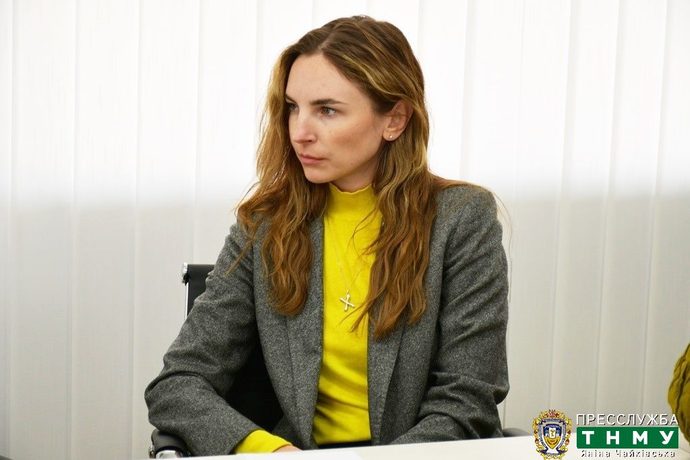
Welcoming the guests, Khrystyna Chaika highlighted the fruitful cooperation with TNMU in nursing and medical education and research. She noted that, following a review of educational programmes, establishing palliative care as a separate, comprehensive area of study had been identified as one of the key recommendations made by external experts.
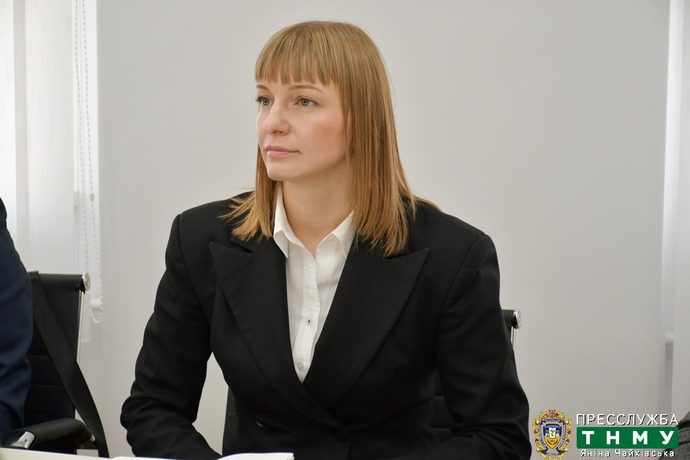
In her welcoming remarks, Polina Huk stated: “This is already the second mission on palliative care, and today we want to emphasise the need for high-quality education at both undergraduate and postgraduate levels, in line with the WHO’s global strategic directions for nursing and midwifery. The quality of education directly affects the quality of health care.”
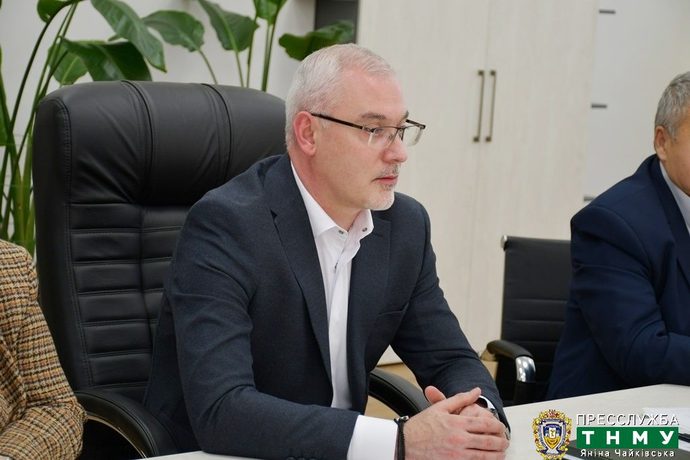
TNMU Rector Petro Lykhatskyi explained that the University was working on opening a nursing care facility intended to provide palliative care. He noted that discussions were ongoing to determine the specific type of palliative care that would be offered there.
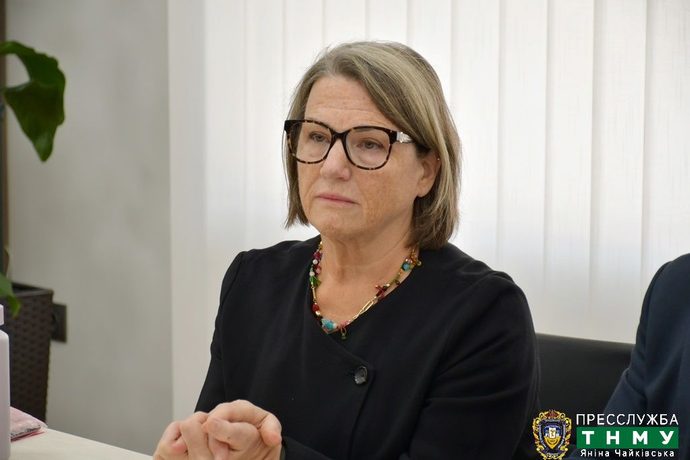
Julie Ling thanked the TNMU representatives for their warm welcome and for sharing the educational programme in advance.
“The WHO invited me to join the mission on the development of palliative care in Ukraine. I have been working with the World Health Organization for almost five years, and all my work there has focused on palliative care. Before that, I served as Chief Executive of the European Association for Palliative Care for ten years. Having devoted a total of 35 years to palliative care, I know how it should be established and developed. At present, the development of palliative care in Ukraine appears to share many similarities with the experience of other countries in the Eastern European Partnership. Ukraine is facing many of the same challenges and problems,” Julie Ling said.
In her view, Ukraine has a window of opportunity to transform the palliative care services available to patients. However, there is still insufficient understanding of what palliative care entails. It is therefore essential to focus on its fundamental principles, starting with a clear definition. All parts of the health care system must share a common understanding of what palliative care is, who needs it, and who provides these services.
Julie Ling also highlighted the Ministry of Health of Ukraine’s initiative to review Order No. 1308 of 4 June 2020, “On Improving the Organisation of Palliative Care in Ukraine,” describing it as a positive step. Another important development, in her view, is the establishment of a new expert group on palliative care.
At this stage, education and higher education institutions are among the key drivers of palliative care development in Ukraine. According to Julie Ling, palliative care should have a dedicated specialisation and relevant academic departments, while research in this field should also be integrated into the education and health care systems.
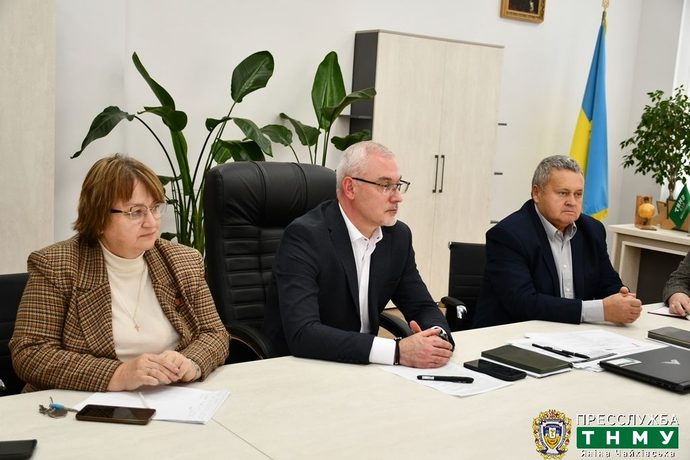
Svitlana Danchak noted that TNMU’s Nursing Institute has more than 30 years of experience and an extensive network of international partnerships. This has enabled the Institute to study palliative care teaching methods used in different countries and identify approaches best suited to Ukraine. The Director expressed hope that Julie Ling’s visit would help promote a unified educational approach to palliative care.
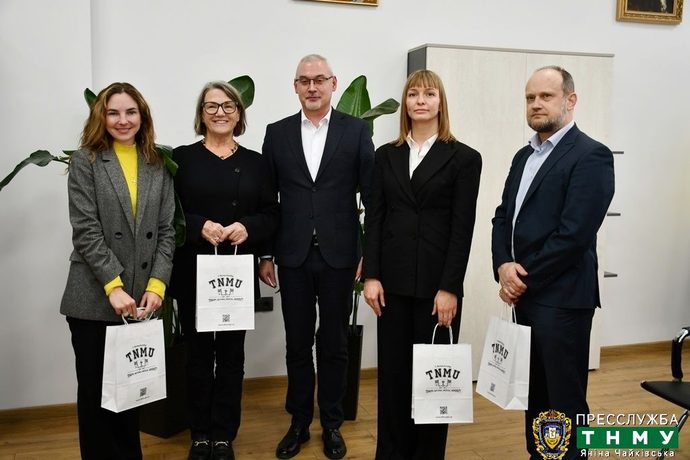
“A comprehensive national approach is needed, and this cannot be achieved without revising the professional standard. The training of qualified specialists at medical universities must ensure that the health care system has the palliative care professionals it needs. Ukraine requires fundamental changes in this area,” emphasised TNMU Rector Petro Lykhatskyi.
At the conclusion of the meeting, Julie Ling called on the medical academic community and leaders of higher education institutions to present a united and consistent position to the Ministry of Health of Ukraine in order to achieve the desired transformations in palliative care.