


Digi-CHange Project Results Presented at TNMU Scientific Conference
The outcomes of the Digi-CHange (Digital Transformation and Curriculum Development for Healthcare Teams) Erasmus+ KA2 project were presented through two poster presentations at the 69th Scientific and Practical Conference “Achievements of Clinical and Experimental Medicine”, held on June 11–12, 2026, at I. Horbachevsky Ternopil National Medical University.
The posters highlighted key achievements of the project and demonstrated contemporary approaches to the digital transformation of medical education, scientific research, and healthcare.
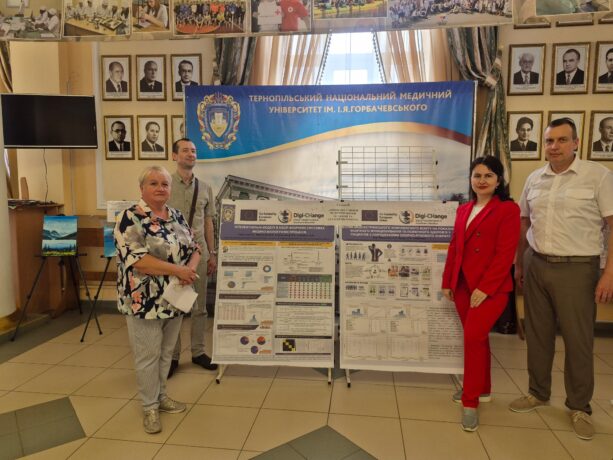
The first presentation, “Intelligent Models in Cyber-Physical Systems for Medical and Biological Processes,” was prepared by Professor Andrii Sverstiuk, Professor Dmytro Vakulenko, Associate Professor Oksana Bahrii-Zaiats, and Associate Professor Andrii Semenets.
The presentation explored modern approaches to developing intelligent models within cyber-physical systems that combine mathematical modelling of biological processes with machine learning, artificial neural networks, and artificial intelligence technologies. Particular attention was given to the development of intelligent models of biological systems, patient monitoring technologies, and predictive models for assessing treatment outcomes. The findings highlighted the importance of developing digital competencies among future healthcare professionals and directly support the objectives of the Digi-CHange project aimed at modernizing educational programmes and integrating innovative digital technologies into medical education.
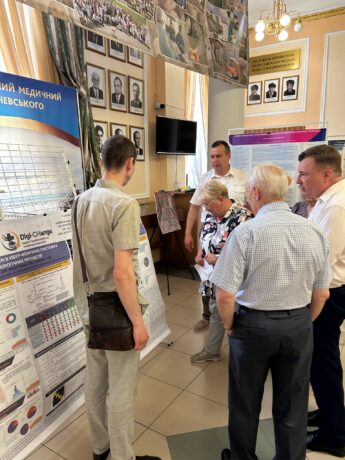
The second poster, “A Scientometric Analysis of Scopus-Indexed Literature on the Prevention and Prediction of Musculoskeletal Disorders,” was presented by Professor Andrii Sverstiuk, Associate Professor Liudmyla Mazur, and Assistant Lecturer Dmytro Kovalchuk.
The study focused on the application of modern digital scientometric tools to analyse global research trends related to the prevention and prediction of musculoskeletal disorders. The authors demonstrated how the Scopus database can be used for systematic literature analysis, identification of major risk factors, mapping leading research centres, and exploring emerging digital healthcare technologies, including mobile applications, telerehabilitation systems, artificial intelligence, and wearable sensor devices. The results underline the growing role of digital solutions in health promotion, disease prevention, and the personalization of healthcare services.
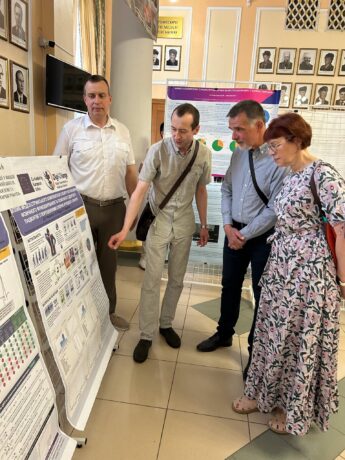
The studies presented at the conference further demonstrate the importance of artificial intelligence, digital technologies, intelligent modelling, and advanced information systems in both medical education and clinical practice. The implementation of the Digi-CHange project contributes to educating a new generation of healthcare professionals capable of effectively applying digital tools to address contemporary healthcare challenges while aligning educational programmes with current European trends in the digital transformation of medicine.
Through the Digi-CHange project, TNMU continues to strengthen healthcare education by enhancing the digital competencies of future healthcare professionals and promoting innovative approaches to teaching, research, and clinical practice in accordance with European standards.