

TNMU Continues the Ukrainian Language Courses for Temporarily Displaced Persons
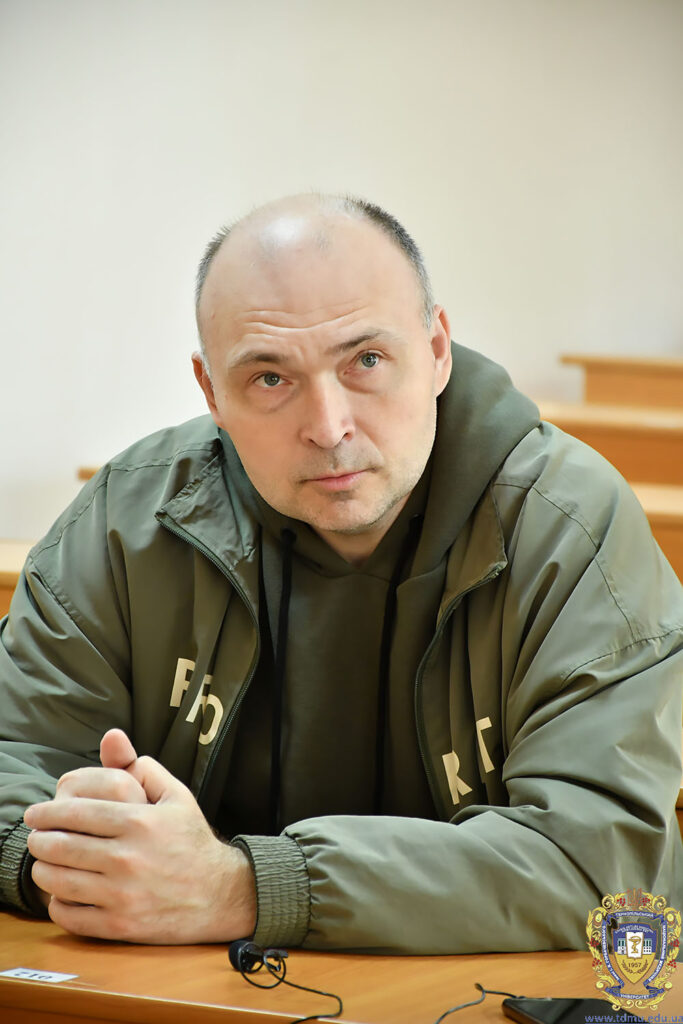
On May 2, 2022, Ivan Horbachevsky Ternopil National Medical University started courses on in-depth study of the Ukrainian language for people who were forced to leave their homes as a result of the war. The introductory lesson was conducted by the Head of the Department of the Ukrainian Language Anatolii Vykhrushch and Lecturer Solomia Hnatyshyn. Anatolii Vykhrushch emphasized the vital role of mother tongue in framing thinking and emotions of people, as well as the importance of language in the system of psychological protection. Listeners read poems by Lina Kostenko, studied the text “Desiderata”, which for almost a hundred years has helped people overcome difficulties. Solomia Hnatyshyn made a photo session, recorded the needs of the participants, which will be gradually addressed. The classes focused on everyday vocabulary, which will give people the opportunity to feel comfortable in a Ukrainian-speaking environment.
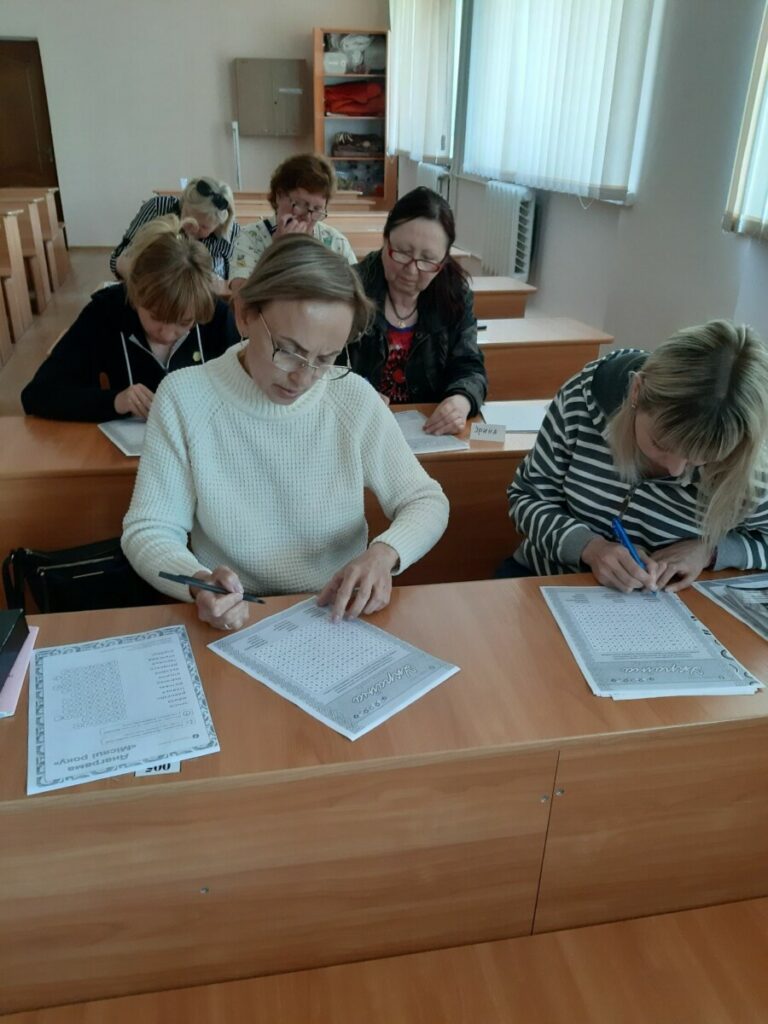
Classes are held twice a week, on Mondays and Thursdays at 10.00, in the form of practical classes in the classroom, which is located in TNMU Dormitory №3 (Ternopil, Kotsiubynsky Street, 18-A). A separate group for children was created. Solomia Hnatyshyn and Oksana Novitska taught children. In the form of games, children repeated the basics of the native language, basic grammar rules, learned the names of colours, months, how to pronounce dates, figures and numbers, read texts, learned noun cases. After the classes, all the children resumed their studies in schools.
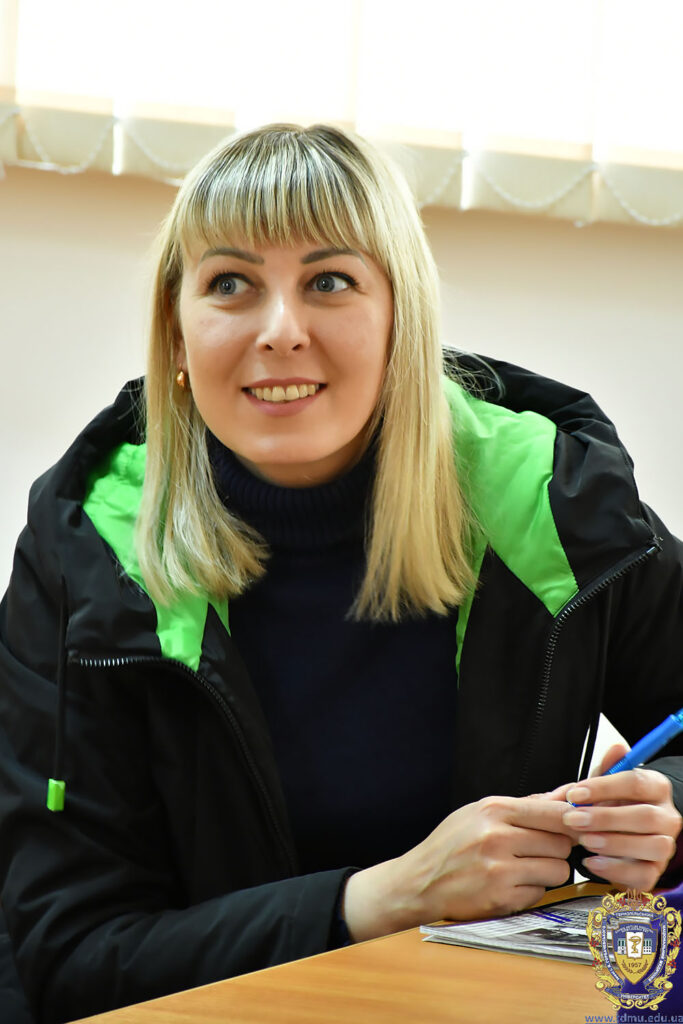
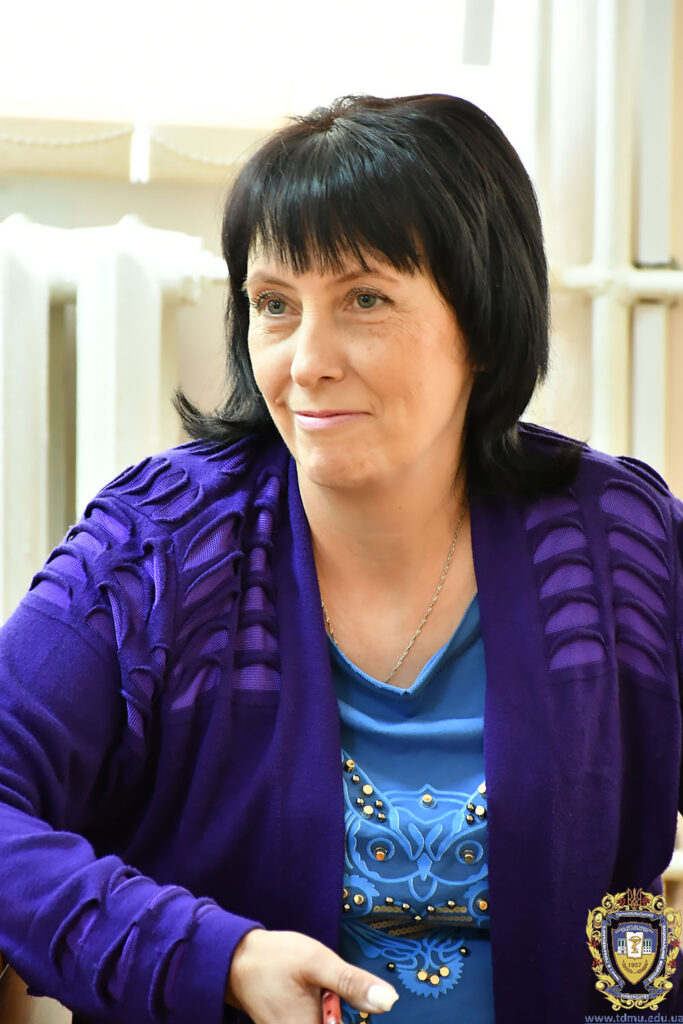
All teachers of the department are involved in the implementation of the course. Classes were conducted by Associate Professors Iryna Zalipska, Tetiana Melnyk, Lecturer Nadiia Oliinyk. From May 30, 2022, the courses will be taught by Associate Professor Marta Rudenko.
Iryna Zalipska studied etiquette formulas of greeting, apology, gratitude, request for better mastery of the Ukrainian language. They learned to get acquainted correctly, practiced the pronunciation of sibilants and correct accents in Ukrainian words, also learned the seasons, names of months, days of the week, food products etc.
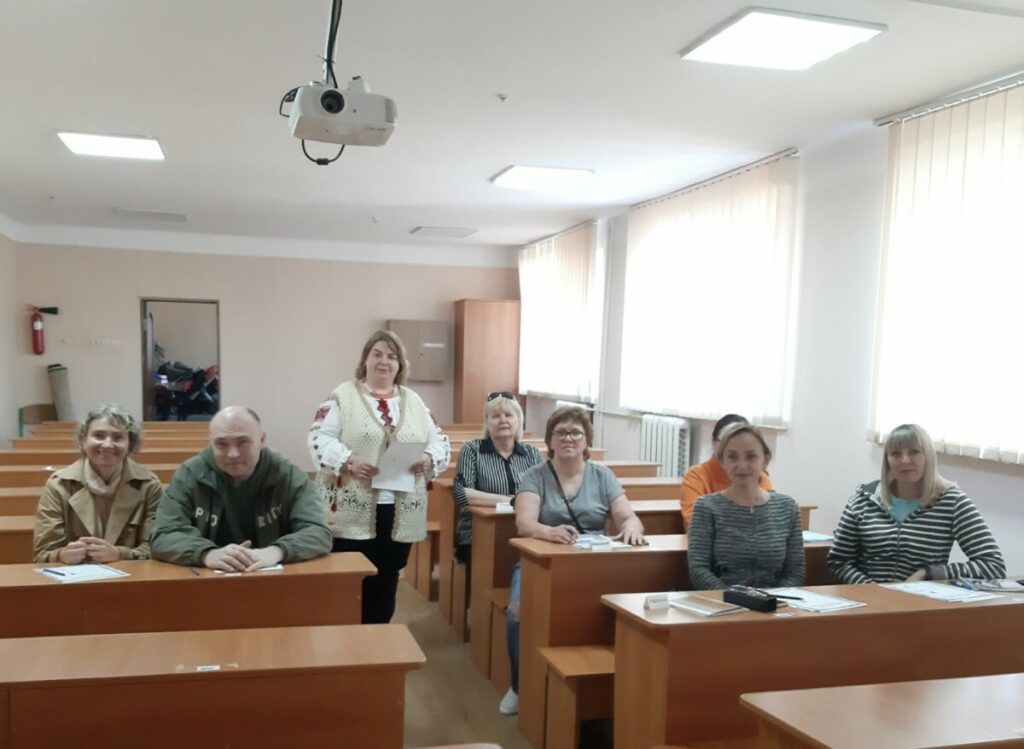
Nadiia Oliinyk noted that Ukrainian language courses for internally displaced persons are organized in such a way that different forms of educational activities are used (individual work, work in pairs, groups, independent work), different types of tasks are involved (cognitive, creative, role plays). It is important for the teacher to create a favourable psychological atmosphere in the classroom, conditions for comfortable learning for people experiencing stress and anxiety, with different levels of Ukrainian, different motivation, life experience, psychological state of experience, vision of future developments, plans and expectations. During her classes, she suggested topics such as “The most important thing about me”, “I want to tell about my family”, “In the supermarket”, “At the train station”, “In the bank”, “My friends”, “My preferences”. »… Nadiia Oliinyk also used creative tasks to consolidate the material: “Stories with parts of speech” (compose a story with the words you have found),”Making compliments”, “Ukrainian phraseology”.
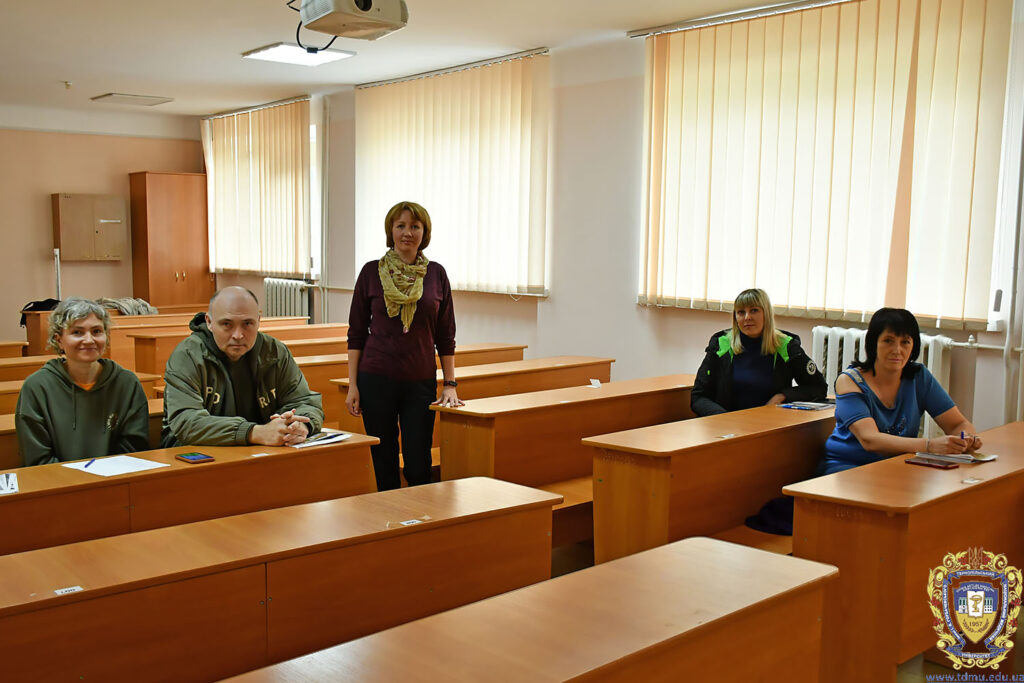
“While conducting courses for temporarily displaced persons I took the key words related to the purchase of food and clothing; prepositions of motion and place. Dialogues were built on how to get to a place in Ternopil (based on the text about Ternopil). I gave them some resources to learn the language, and the result has been achieved. People really want to talk and try to switch to Ukrainian, so it is worth choosing topics that are relevant to them now and build dialogues on their basis and talk about Ukrainian counterparts. Children actively join the conversation, help adults, express their desire to talk, so they do not need to be separated,” said Tetiana Melnyk.
It will be recalled that the purpose of Ukrainian language courses for displaced persons is to develop students’ internal motivation to learn Ukrainian, the need to communicate with it, to give experience in using the Ukrainian language in everyday life.
TNMU Press Secretary Yanina Chaikivska.
Photographs by Mykola Vasylechko and Nadiia Oliinyk.