

TNMU Students Studied the Culture of World Countries
The Department of Physiology, Bioethics and Biosafety distantly conducted an educational event with students of curatorial groups on “Online Travel to the USA, Burundi, Morocco, Zimbabwe, Pakistan”.
Professor Vadziuk S.N., the head of the department, opened the meeting. The teachers of the department regularly meet with students, are interested in the traditions of their peoples, customs. That is why it was decided to organize an on-line meeting with speakers who are representatives of the United States, Burundi, Morocco, Zimbabwe, and Pakistan. Information about the history, culture, health care, architectural monuments, famous people of these countries was reported by English-speaking students in English and Ukrainian.
The teaching staff and the students of the curatorial groups listened to an interesting presentation by Unachukwa Victoria Mary Chinechem, a student of the group 376, on “USA – American symbols, culture, education, economy, health care”.
The United States is a large country located in North America, with a total of 50 states: Alaska, Hawaii, 48 states on the area between the Atlantic and Pacific Oceans and between Canada and Mexico and the District of Columbia. The climate varies depending on the geographical position: hot and humid in summer, warm and dry in winter. Hurricanes and tornadoes can hit the south-eastern States.
The country is famous for the largest mountain range, large rivers (Hudson, Mississippi, Missouri), lakes (Huron, Michigan, Erie), the Grand Canyon located in the northwestern corner of Arizona, Yellow Stone National Park, Golden Gate Bridge in San Francisco etc..

So famous throughout the planet as a symbol of freedom and democracy in New York as Lady Freedom represents hope and freedom for immigrants from other countries. The symbol of the United States symbolizes courage, strength and freedom. It is usually found on the US flag or on a dollar bill.
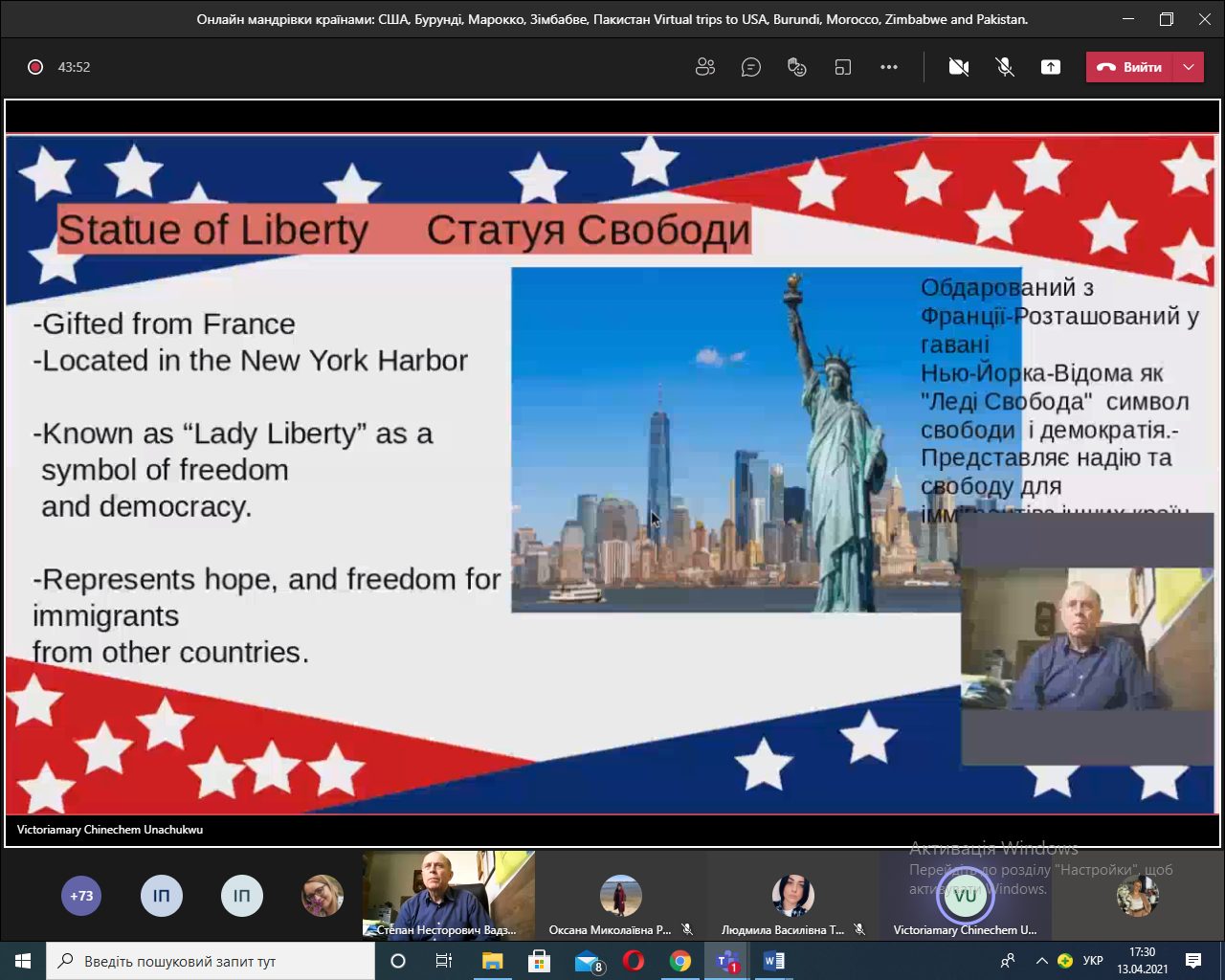
It was interesting to hear about the architectural monuments (Mount Rushmore, the Washington Monument), Hollywood, which significantly stimulates the economy, the White House. The United States is also famous for celebrities, singers, actors, athletes. Many of the best universities, such as Harvard, Yale and Stanford, are in the United States.
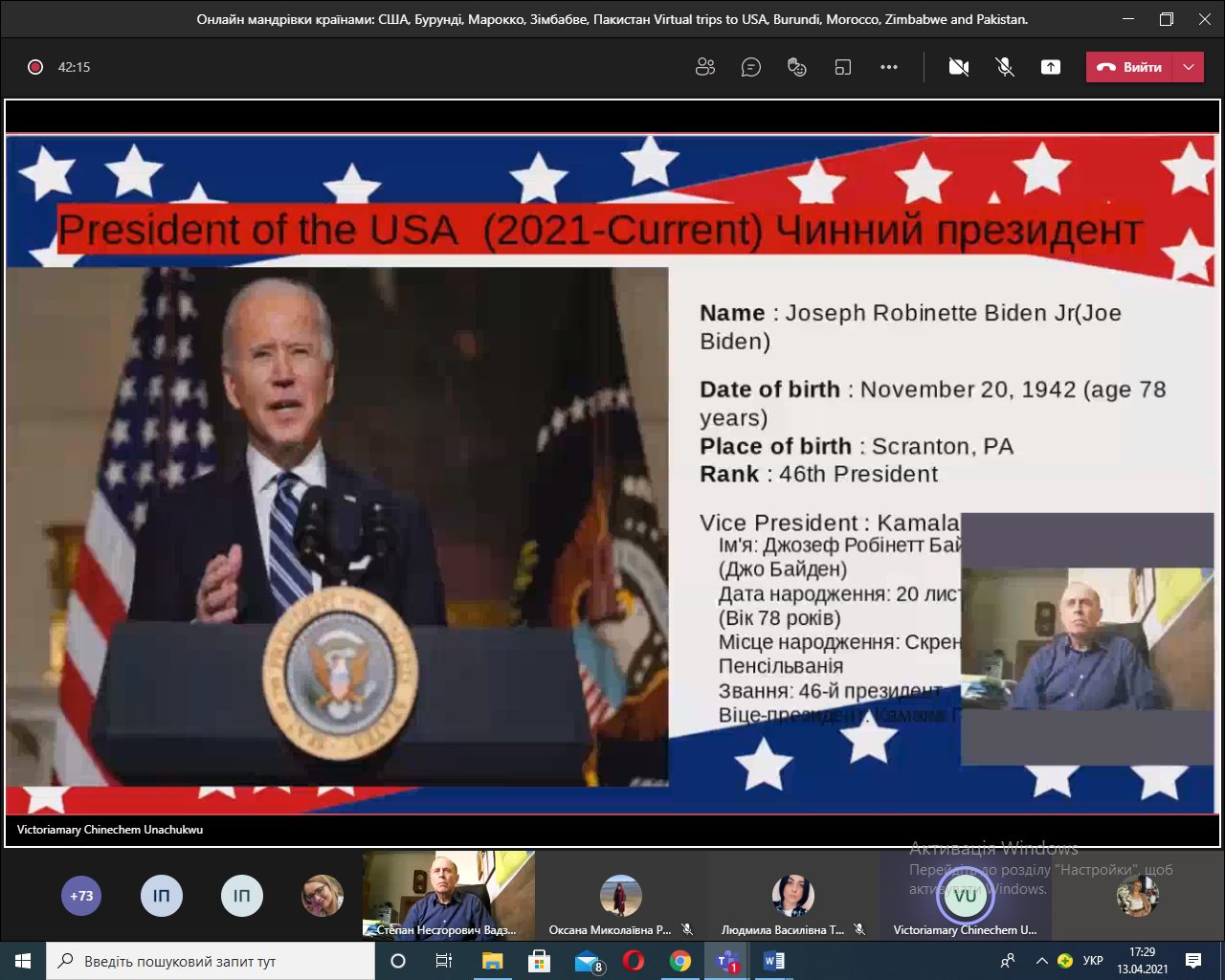
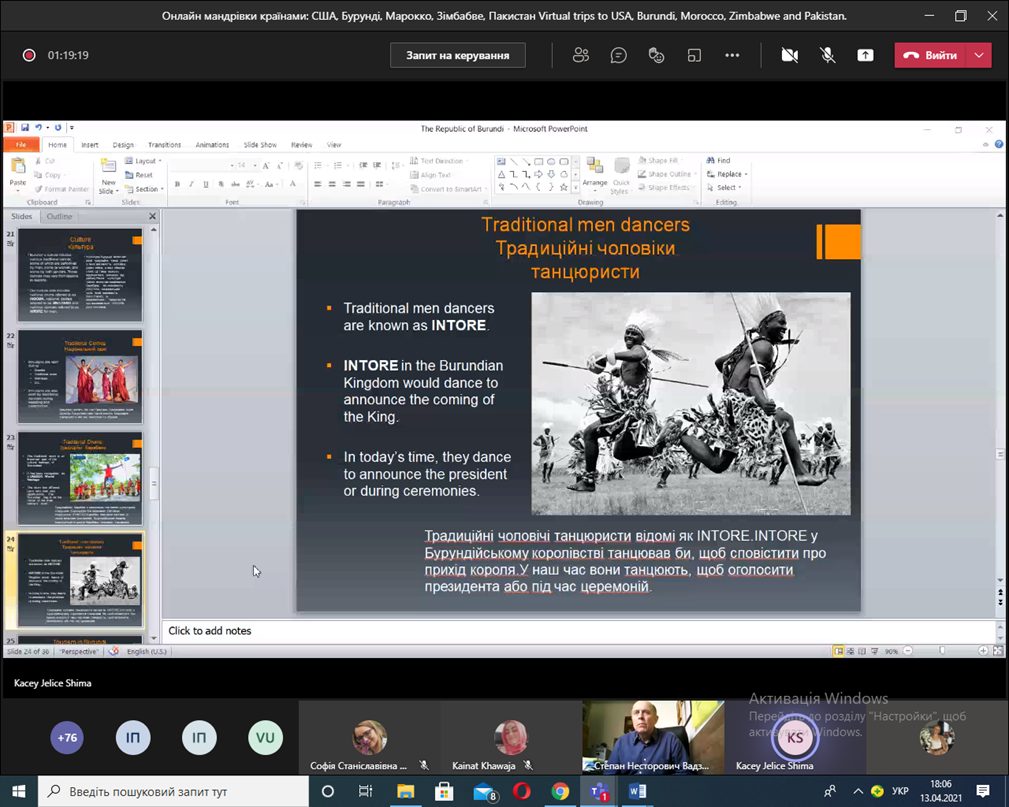
Shima Kesi Jelis, a student of the group 376 of the Faculty of Medicine, delivered an interesting presentation about the resources, cultural monuments, and outstanding people of Burundi. The country is sitiated in eastern Africa and consists of 18 regions. Bujumbura is the economic capital, based on such activities as agriculture and animal husbandry. Export crops are: coffee, tea and cotton, beans, bananas, corn, sweet potatoes and wheat. Remarkably, the traditional drum is an important part of Burundi’s cultural heritage and has been recognized as a UNESCO World Heritage Site.
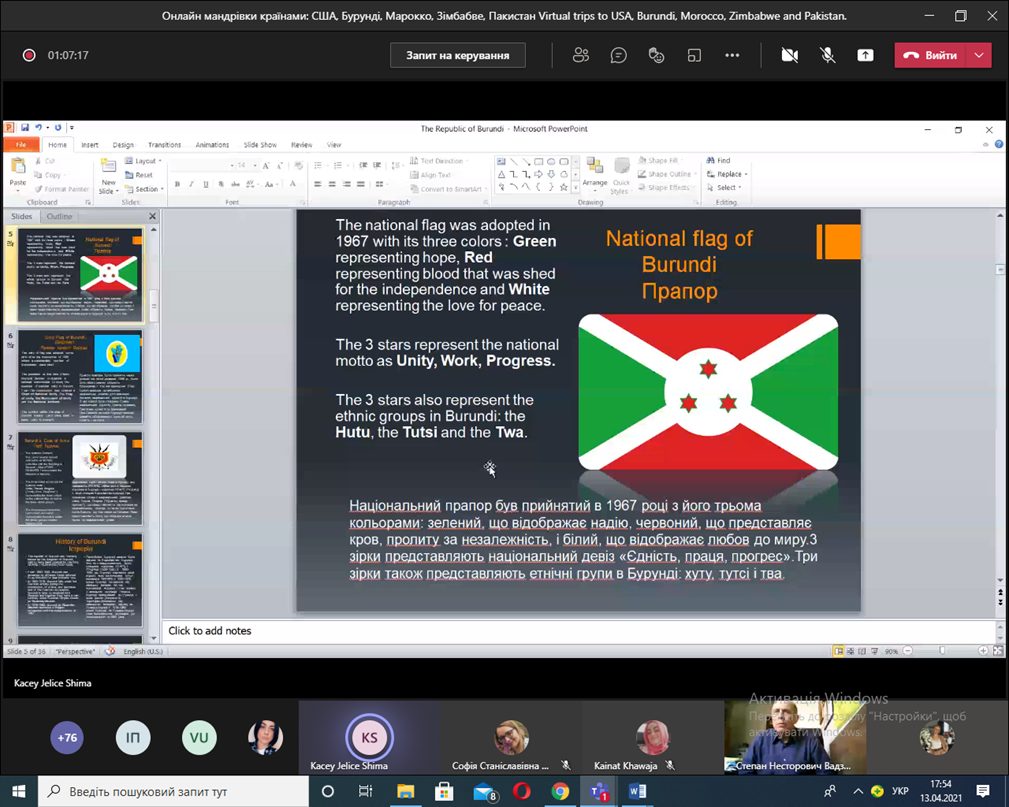
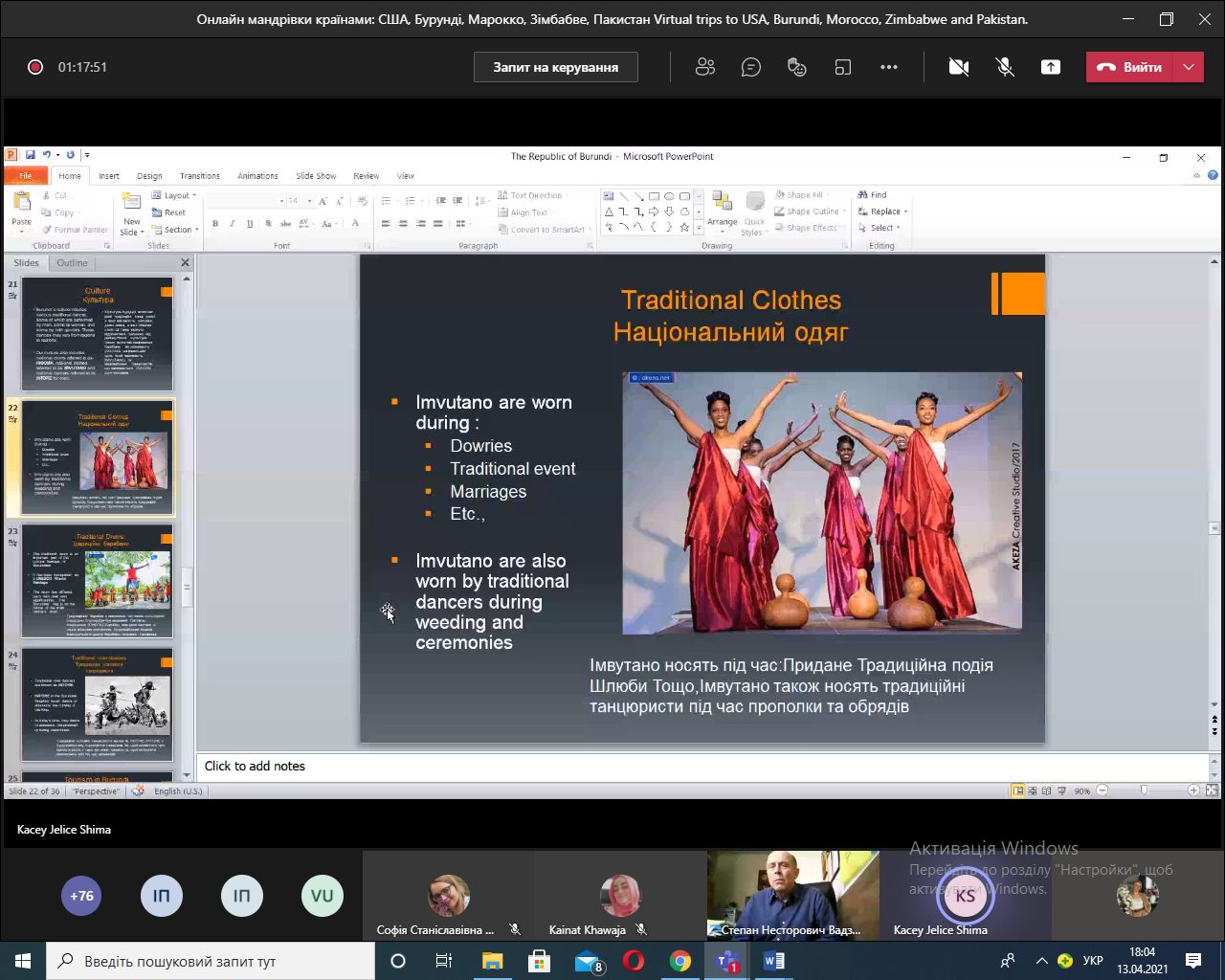
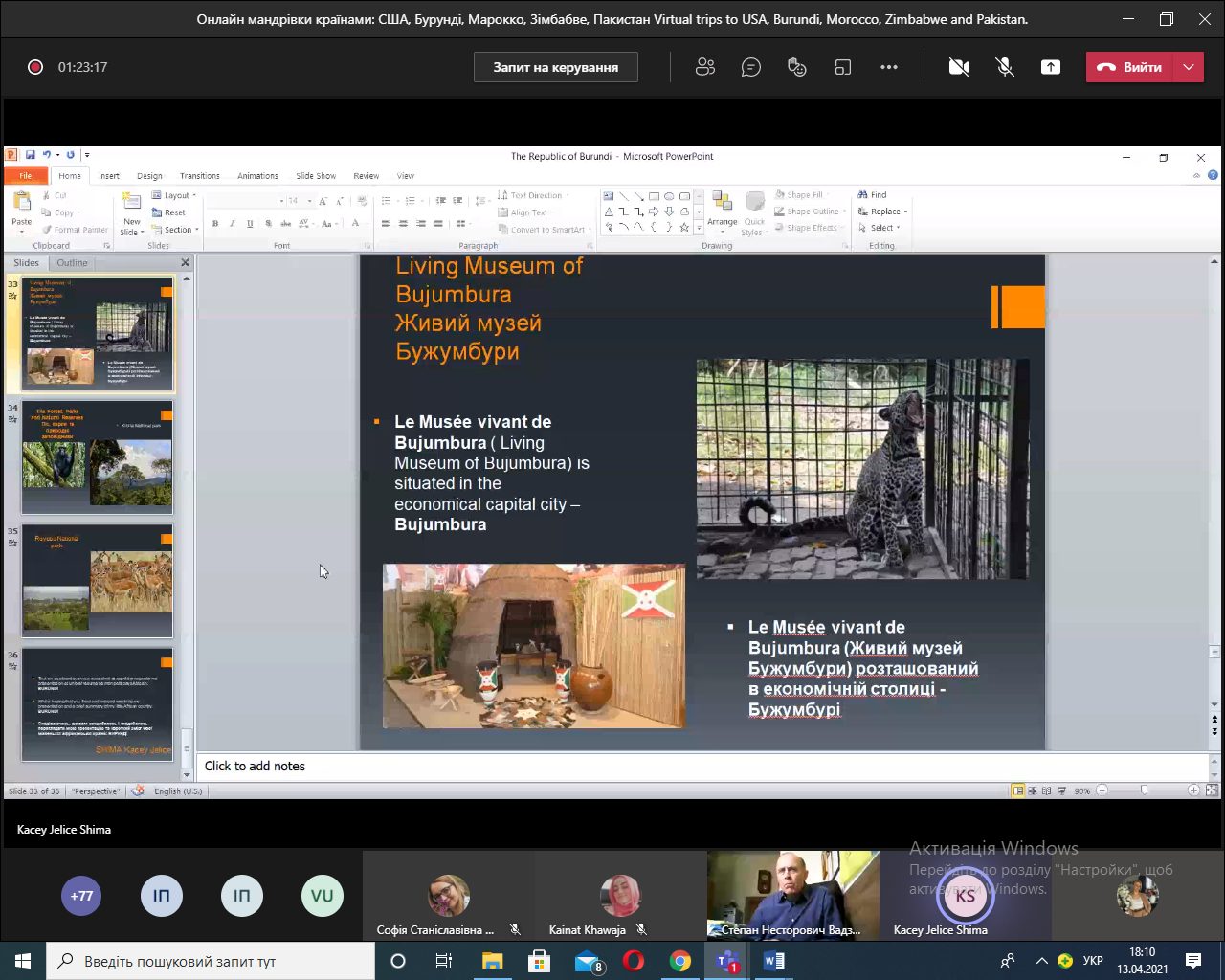
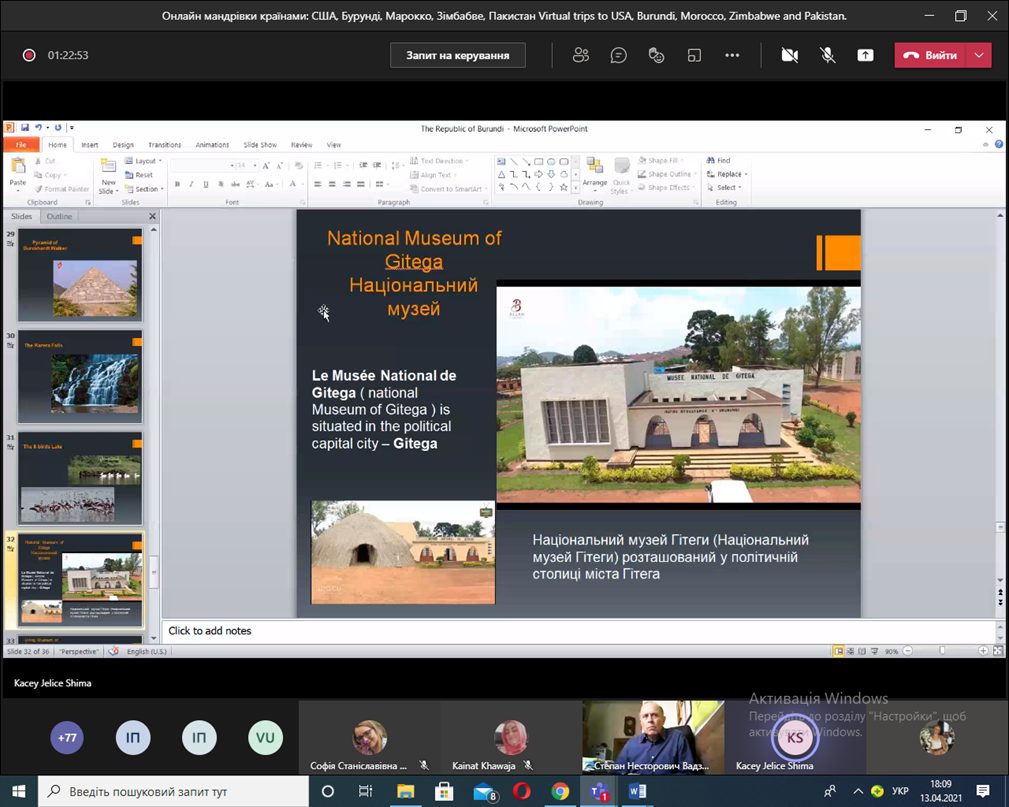
Burundi includes various tourist sites: the mausoleum of Prince Louis Ruvagazor, Stanley and Livingston Stone, the pyramid of Burkhardt Walker, Carrera Falls, the National Museum of Gitega.
The presentations by El Kasiti Ussama, the student of the group 376, about the population, famous people, national holidays, culture of Morocco were very interesting. It is fascinating that Morocco is located in the Northern Sahara, in Arabic it is translates as “the place where the sun sets”. Morocco is of the same area as California. Rabat is the capital of Morocco, and the largest city is Casablanca.
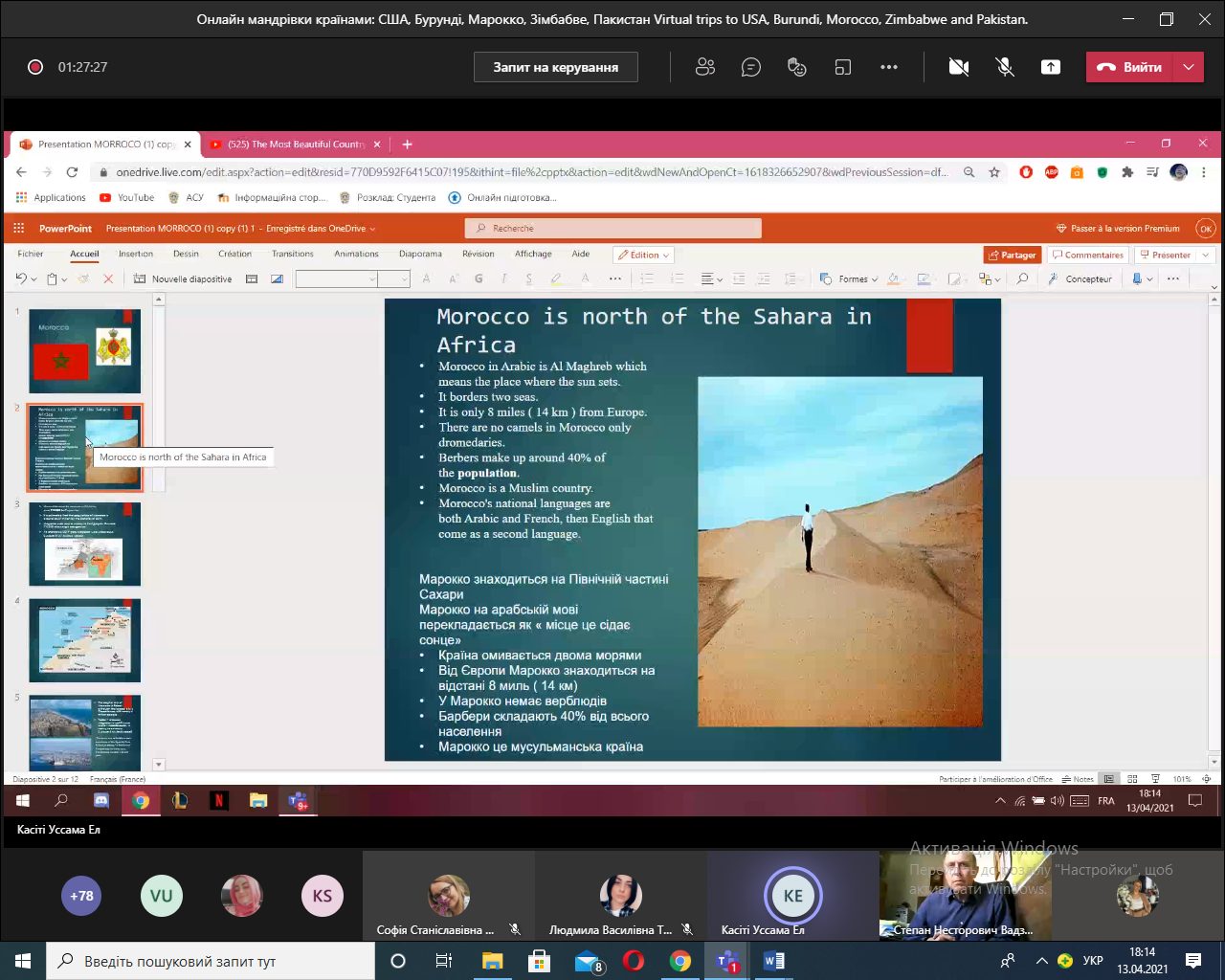

The main industries are agriculture, textile and mining, tourism. Couscous is the national dish of Morocco; it is also famous for its pastries.


Blesd Ndaba, a student of the group 375 of the Faculty of Medicine, also delivered a very interesting presentation on the cultural monuments of Zimbabwe’s famous people. The name Zimbabwe comes from the phrase “zimba ramabwe”, which in Shona means “great house of stone”. The capital is Harare; two grand festivals are held there: an agricultural show that brings together farmers from all over the country and the Stone Houses Festival, which combines performances by traditional music groups.
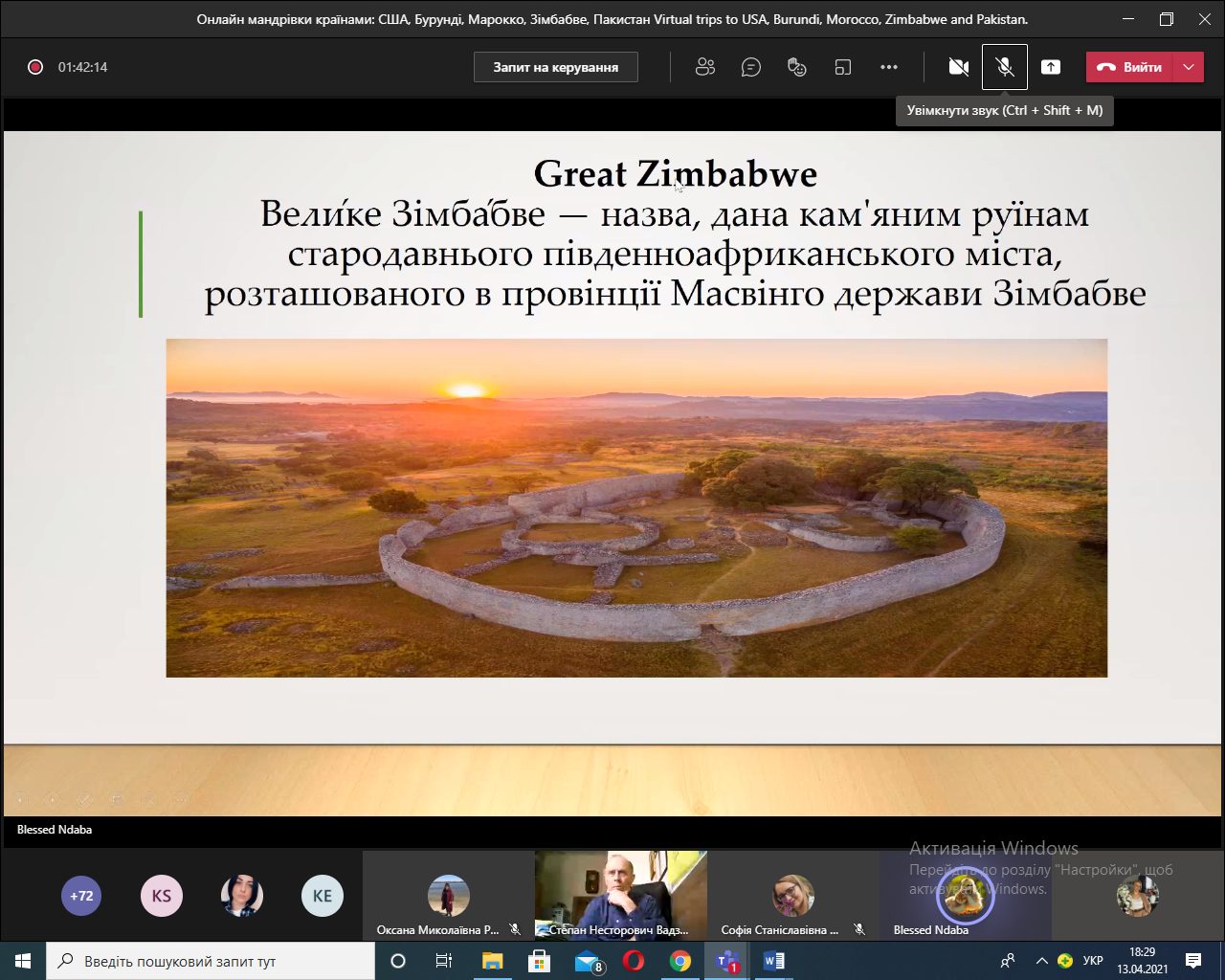
Zimbabwe includes various tourist destinations: Victoria Falls, the largest waterfall in Africa, Greater Zimbabwe – the stone ruins of an ancient South African city, Matobo, Hwange National Park.
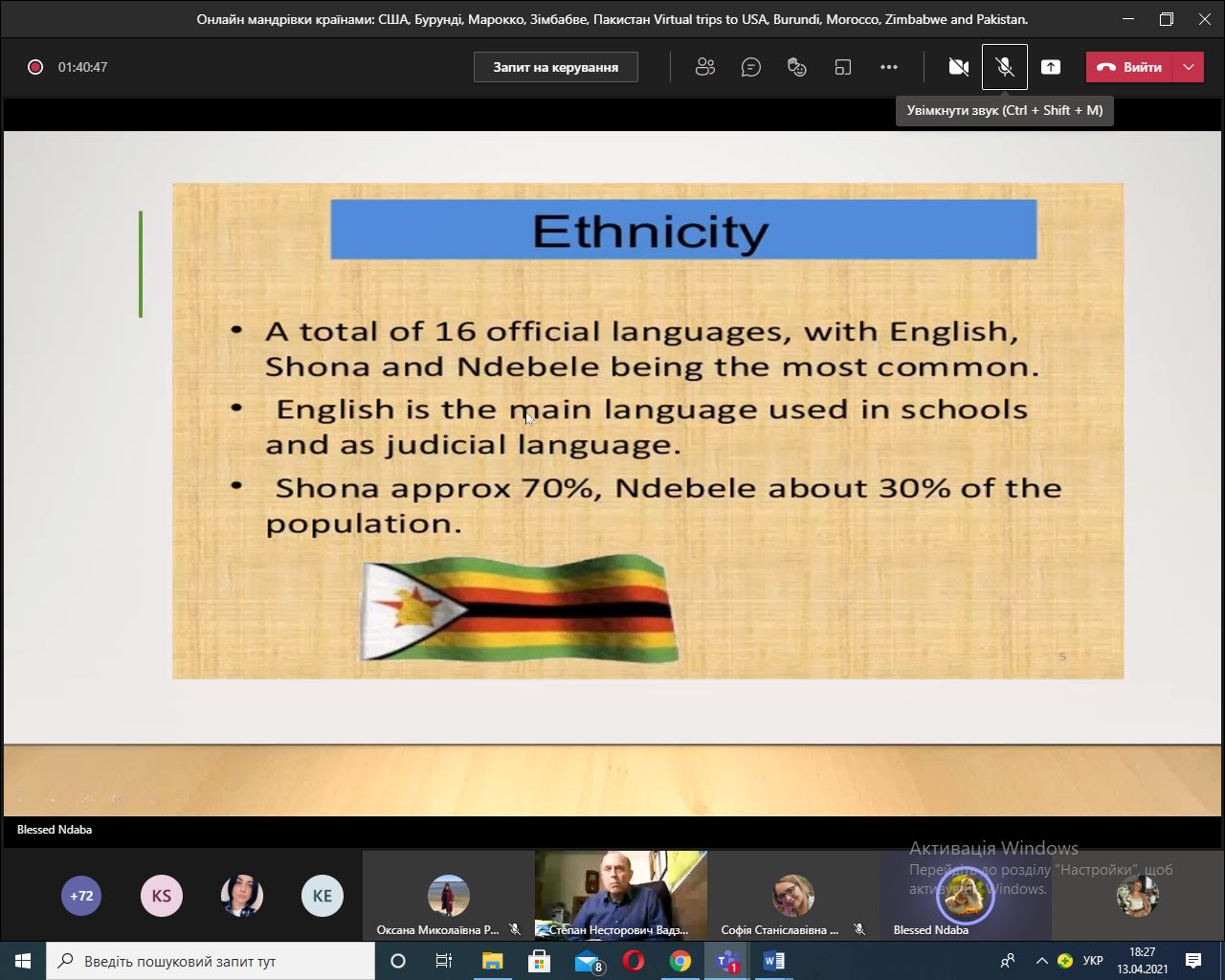
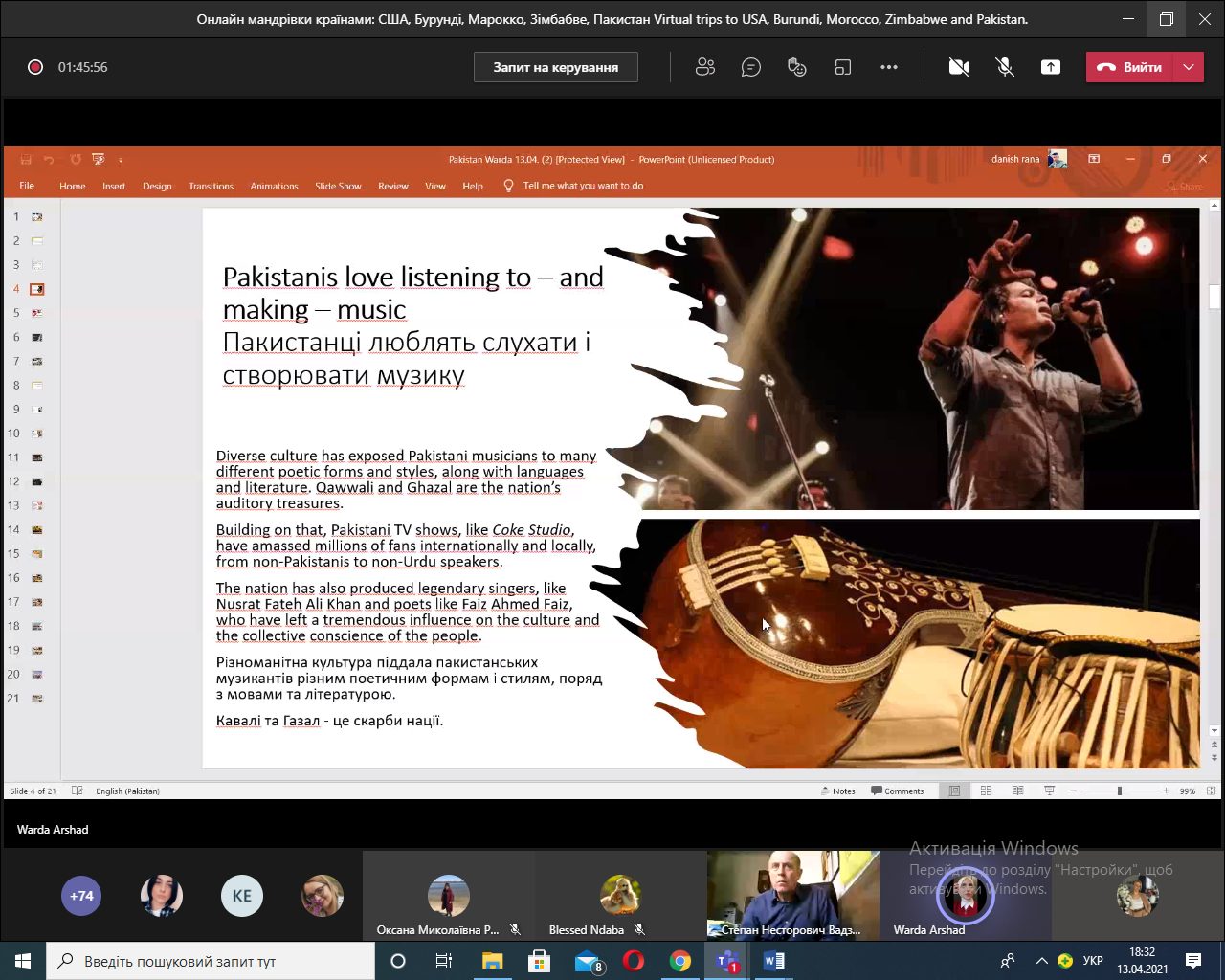
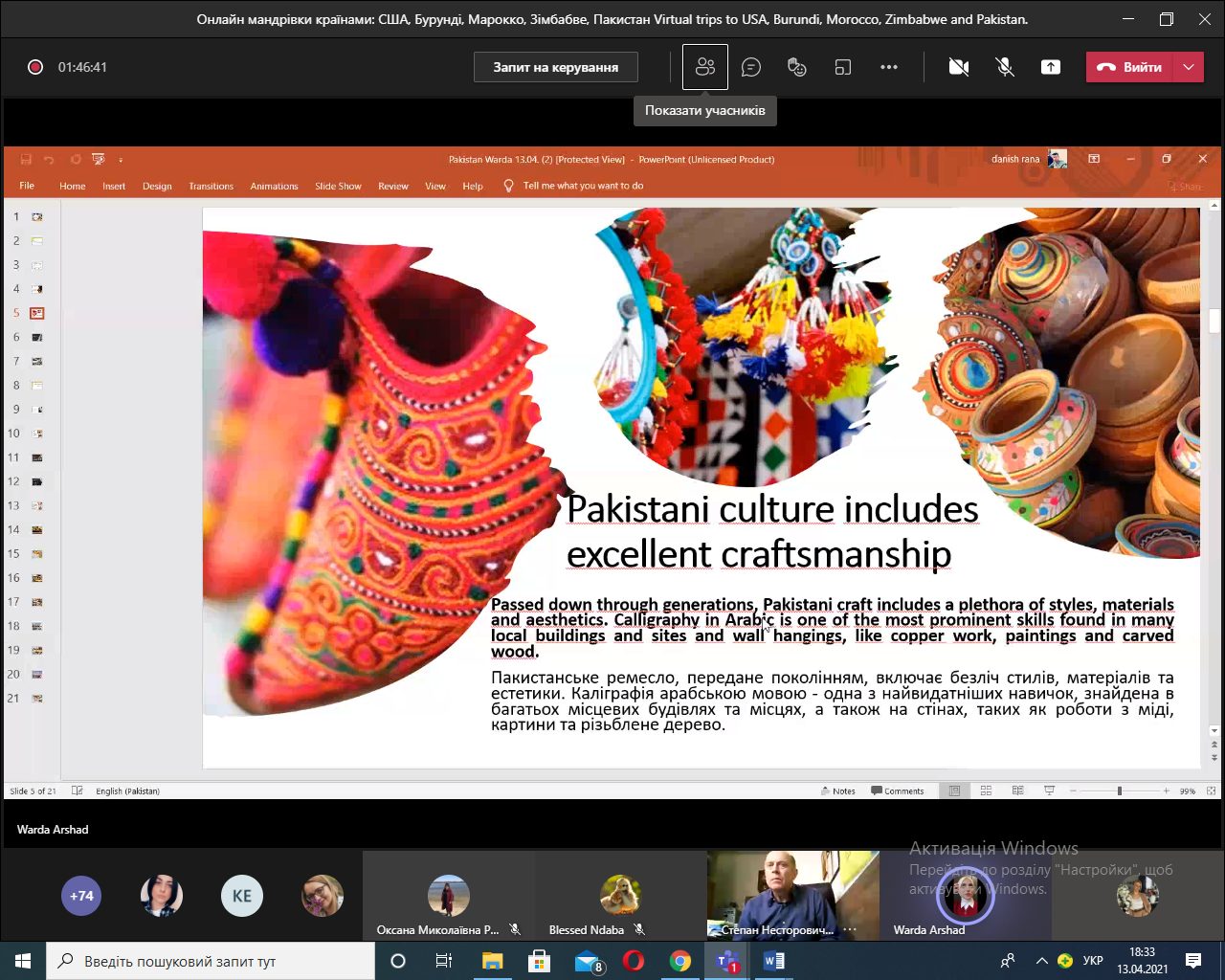
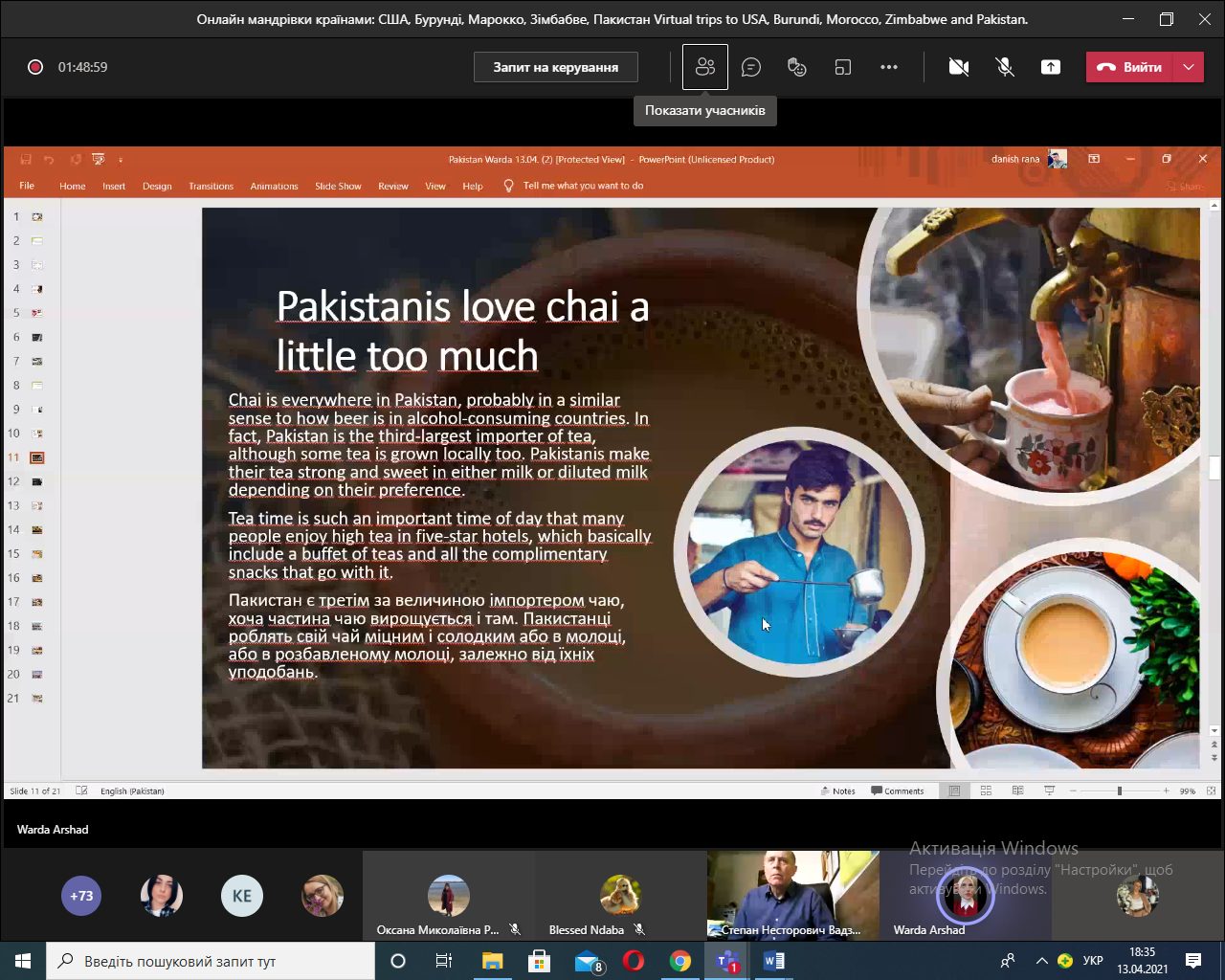
At the end of the educational event, a student of the group 375 of the Medical Faculty Varda Arshad presented on “Culture of Pakistan”. Most languages in Pakistan are of the Indo-Iranian language group, including Urdu, the national language. Pakistan is the third largest importer of tea. Most local weddings last from three to six days. Celebrations usually begin with a day dedicated to the use of henna, followed by a musical night and a night of traditional rituals to bless the couple. Then there are two-day dinners organized by the bride and groom.
Pakistan Flower Show is an annual flower show; the festival is held annually in Karachi.
Kashchak T.V., Assistant Professor of Department of Physiology, Bioethics and Biosafety