

Students of the Institute of Nursing Visited the Hospice Service in Ternopil.
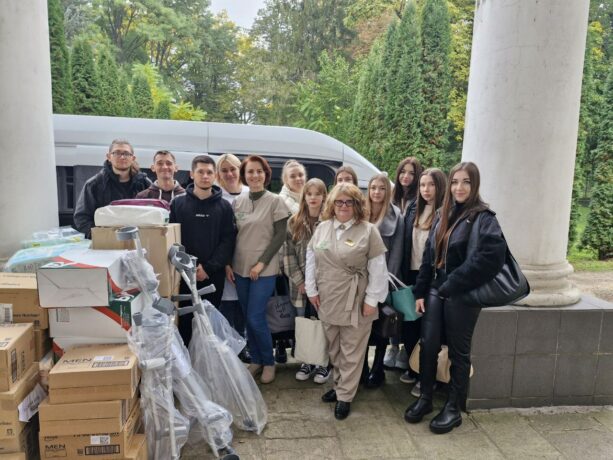
On the World Hospice and Palliative Care Day and as part of cooperation between I. Horbachevsky Ternopil National Medical University and the hospice branch of the Ternopil Regional Clinical Hospital, on October 11, 2024, students of the MBv-341 group from the Educational and Scientific Institute of Nursing, together with the faculty of the Higher Nursing Education, Patient Care, and Clinical Immunology Department — Associate Professor N.I. Reha, Assistant Y.Ya. Kotsaba and Assistant I.V. Yavorska — delivered necessary supplies from TNMU for the needs of palliative care patients (personal hygiene products, patient care items, nutritional mixtures, and rehabilitation tools).
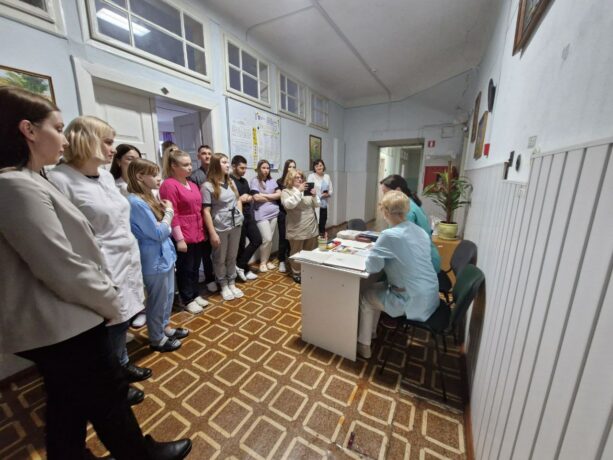
The students learned more about the healthcare facility’s structure, the principles of its work, and the functional duties of the staff.
At the nursing station in the hospice, they paid particular attention to the study of mandatory documentation and its features.
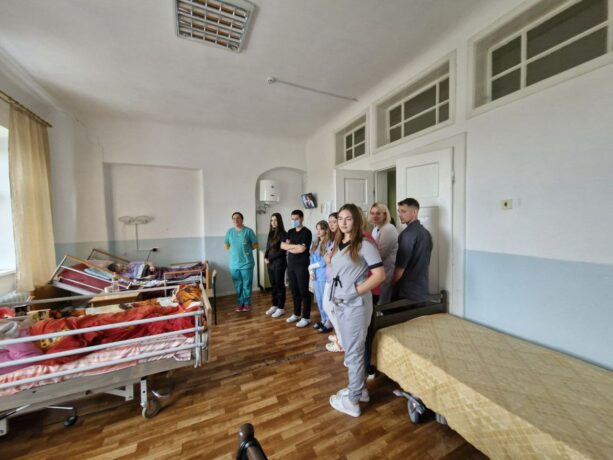
The students could communicate with patients by visiting the wards, improving their communication skills.
Students participated in the process of preparing for nurses before performing procedures, familiarized themselves with the peculiarities of maintaining medical records, and learned about the rules for storing opioid medications, which are an integral part of hospice work.
During discussions with the department staff, they explored in detail the care processes for terminally ill patients, symptom management, and psychological support for both patients and their families.
The students observed the interaction of nurses with other multidisciplinary team members, which ensures the provision of quality palliative care, helping them better understand the importance of a professional and compassionate approach to patient care.
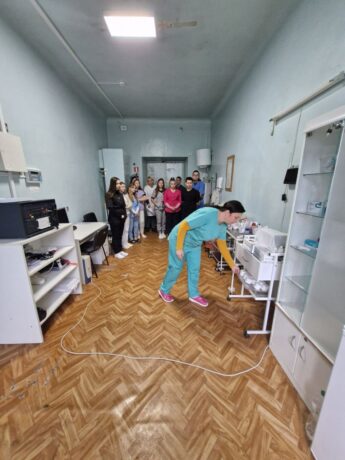
Participating in the process during their studies is crucial, as it helps to deepen their understanding of the essence of palliative care. They learned that a nurse performs technical procedures and plays a significant role in ensuring the patient’s dignified end of life, providing comfort and attention. This experience is invaluable for developing professional and ethical approaches to caring for terminally ill patients, which is particularly important for nurses.