


TNMU Pharmacy Students Explored the Work of the State Medicines Service in Ternopil Region
On February 25-26, 2025, fifth-year students of the Faculty of Pharmacy at TNMU participated in an educational excursion to the State Service of Ukraine on Medicines and Drug Control in Ternopil Region. The visit aimed to enhance their understanding of the elective course “Industrial Pharmaceutical Practice in Pharmaceutical Chemistry.”
The State Medicines Service is a central executive body that implements state policy in medicinal products’ quality and safety control, including medical immunobiological preparations, medical equipment, and medical devices. It also oversees the circulation of narcotic drugs, psychotropic substances, and precursors, as well as counteracts their illegal distribution.
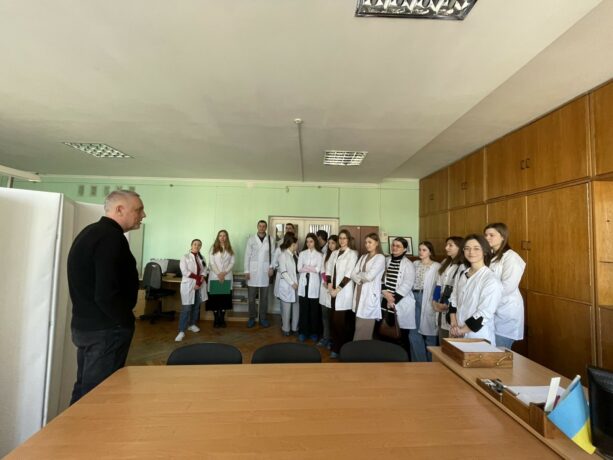
Insights into the Work of the State Medicines Service
The head of the service, Taras Proniv, provided an overview of the agency’s key responsibilities and highlighted recent legislative changes
State control measures cover a broad range of inspections aimed at ensuring the quality and safety of medicinal products, including:
Compliance checks related to the cultivation, development, production, storage, transportation, sale, import, and disposal of narcotic drugs, psychotropic substances, and precursors.
Inspections of pharmaceutical production, wholesale and retail trade, and import (excluding active pharmaceutical ingredients);
Quality control of medicinal products entering the market;
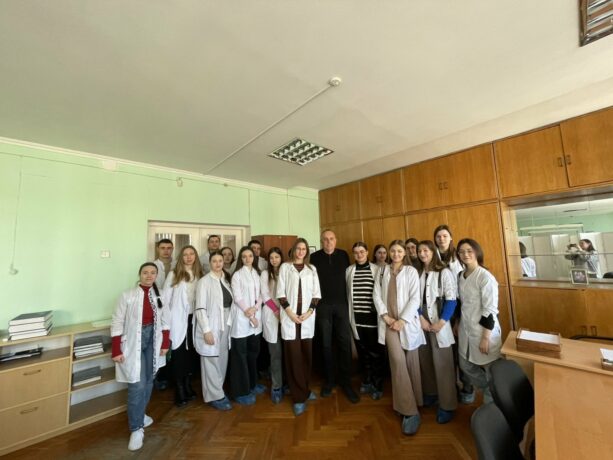
Laboratory Quality Control of Medicines
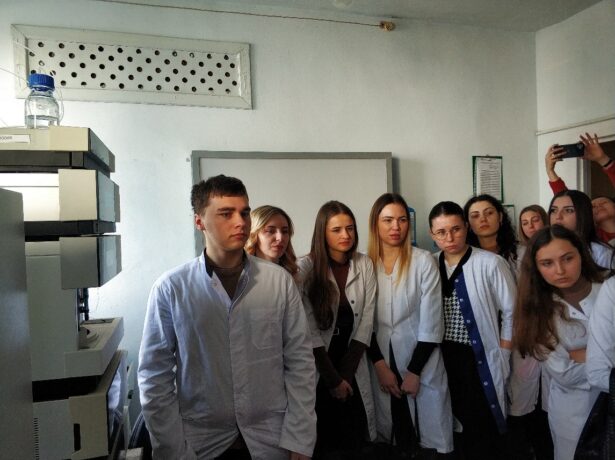
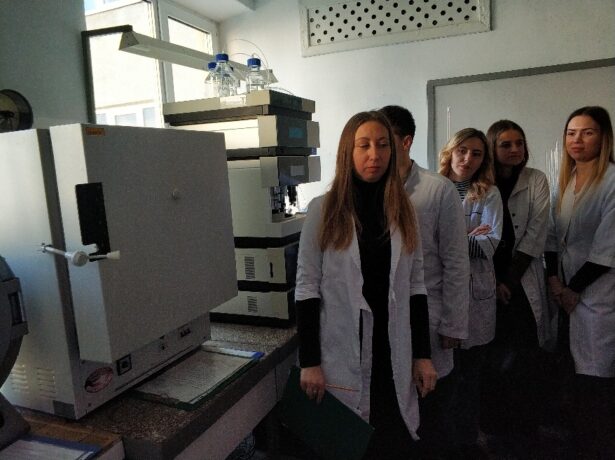
A special focus was placed on the activities of the Laboratory for Quality Control of Medicines and Medical Products. Laboratory head Maria Tkach and leading specialist Maria Stetsiuk explained the quality control process, the research methods used, and the laboratory’s crucial role in ensuring the effectiveness and safety of medicinal products.
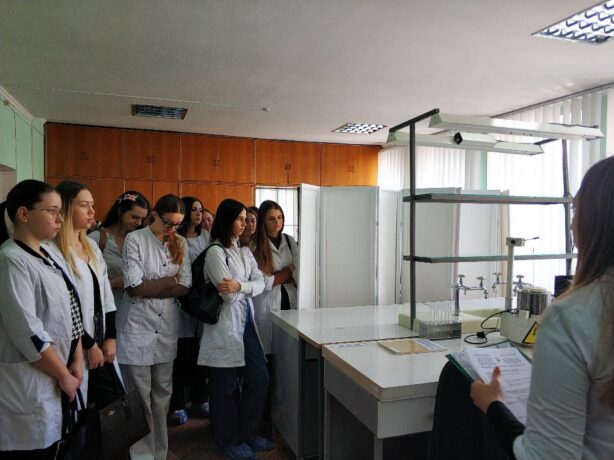
Students learned about the laboratory analysis of various pharmaceutical forms, including tablets, powders for oral solutions, topical solutions, injectable solutions, ointments, capsules, and granules. Special attention was given to the sampling procedures, the issuance of quality assessment reports, and analytical methods that comply with established regulatory standards.
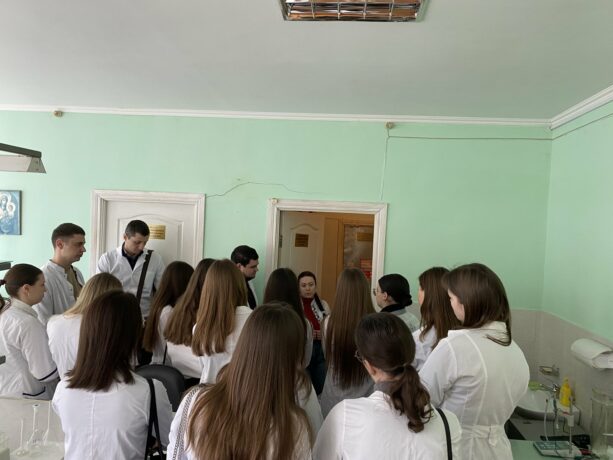
During the tour, students familiarized themselves with key quality indicators subject to verification, such as:
- Description, identification, content mass, uniformity of dosage units, disintegration, transparency, and color intensity of liquid forms;
- Detection of mechanical inclusions, and moisture loss during drying;
- The laboratory is equipped with analytical techniques such as UV-visible spectrophotometry, conductivity measurement, non-aqueous titration, potentiometric pH determination, and high-performance liquid chromatography (HPLC).
This hands-on experience provided future pharmacists with a deeper understanding of quality requirements in the pharmaceutical industry and the critical role of laboratory control.
New Regulatory Measures
Students also learned about the procedures for handling substandard medicines, proper storage of reagents, and documentation management. Additionally, specialists highlighted a new regulatory measure introduced in October 2024—implementing visual quality control for medicines imported into Ukraine. This innovation aims to strengthen safety regulations and prevent low-quality pharmaceutical products from entering the market.