

Internship of TNMU Faculty Members at the Medical University of Warsaw under the Erasmus+ Academic Mobility Program
From May 12 to 16, 2025, faculty members of I. Horbachevsky Ternopil National Medical University participated in a professional internship under the “Erasmus+ KA171 Project Training Staff Mobility” program at the Medical University of Warsaw (Poland) (https://www.wum.edu.pl/en). The purpose of the visit was to strengthen the partnership between our institutions of higher education, exchange professional experience, and familiarize ourselves with the educational and research processes of one of Europe’s leading medical universities.
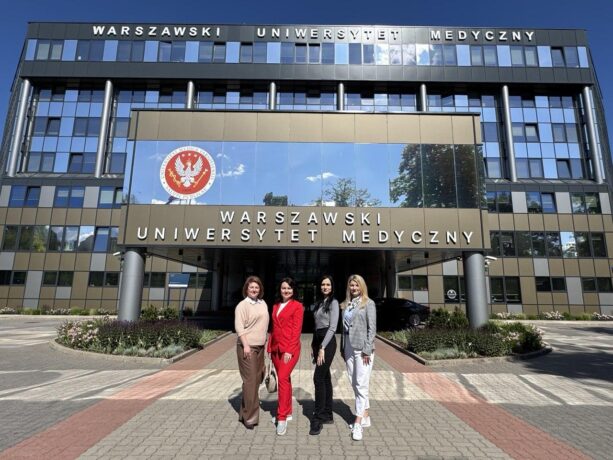
The Medical University of Warsaw (Warszawski Uniwersytet Medyczny) is the largest medical higher education institution in Poland, offering education in 14 specialties, as well as postgraduate education, doctoral studies, specialization, and advanced training courses. The university has over 9,000 students, including more than 700 international students, and approximately 1,700 academic and research staff, including 167 professors.
A bilateral cooperation agreement has been signed between our universities to facilitate the exchange of educational experience, implementation of academic exchange programs, research projects, seminars, conferences, symposia, and more.
Achieving modern high standards in training future specialists is primarily possible through active expansion of international cooperation. Measures to improve the quality of professional training for future doctors in accordance with global and European standards, and optimizing criteria for international faculty mobility, are closely linked to cooperation at the international level with European universities. This is the foundation for the development of academic mobility and collaboration with the Medical University of Warsaw. The ultimate goal of such cooperation is to exchange teaching experience in medical disciplines, implement innovative teaching methods, improve the quality of education, and provide detailed exposure to advanced practices for participants in the educational process.
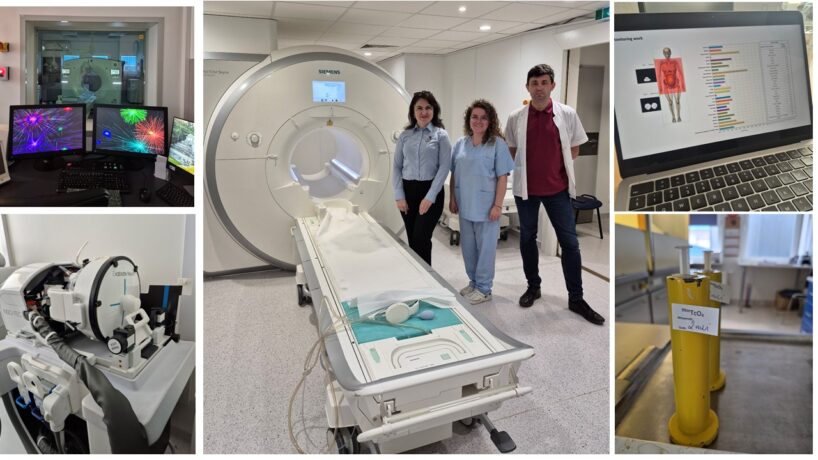
Associate Professor Oksana Bahrii-Zaiats, from the Department of Medical Physics of Diagnostic and Therapeutic Equipment, completed a professional internship at the Department of Nuclear Medicine of the Medical University of Warsaw under the supervision of Professor Jolanta Kunikowska, a member of the Polish Society of Nuclear Medicine, President of the European Association of Nuclear Medicine, and an expert in nuclear medicine, radioisotope therapy, and PET/CT.
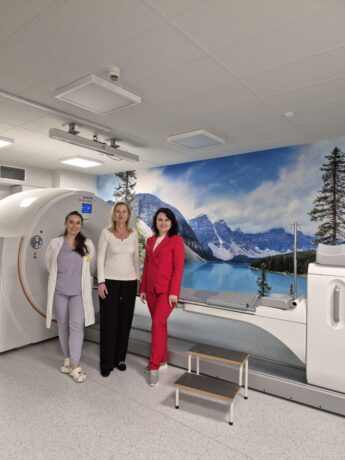
The Department of Nuclear Medicine specializes in modern medical imaging methods, such as:
SPECT (Single Photon Emission Computed Tomography) — primarily used in cardiology and nephrology to assess organ function.
PET/CT (Positron Emission Tomography/Computed Tomography) — used to detect and monitor oncological processes, assess treatment effectiveness, and identify relapses;
MRI (Magnetic Resonance Imaging) — enables detailed visualization of soft tissues, abdominal organs, and the pelvis;
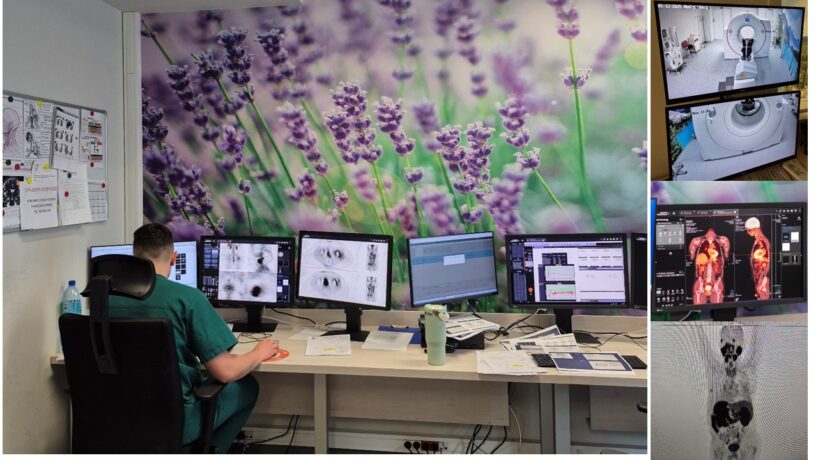
The department is equipped with state-of-the-art devices, including hybrid systems that combine anatomical and functional imaging. These technologies significantly improve diagnostic accuracy, allow for personalized patient treatment, and support research in medical imaging. During the internship, I observed the full cycle of work: from patient preparation and administration of radiopharmaceuticals to data processing and result interpretation.
A meeting with Dr. Radosław Kulinski, a specialist from the Center for Radiological Protection and the CORiso Quality Management System, an expert in medical physics and a radiological protection inspector of type R (GIS) and IOR-3 (PAA) was also held at the Bronowski Clinic. Under his guidance, the procedures for ensuring radiation safety for patients and staff, as well as quality control systems in departments using radioactive radiation, were thoroughly examined.
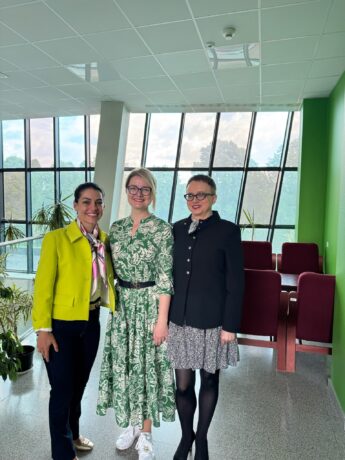
Associate Professor Halyna Loi of the Department of Pharmacology with Clinical Pharmacology completed a professional internship at the Department of Experimental and Clinical Pharmacology.
The internship was supervised by Professor Dagmara Mirowska-Guzel, Head of the Department, a specialist in clinical pharmacology, author of numerous publications in prestigious international journals, and participant in many European scientific initiatives. She introduced the educational programs of the department, modern teaching approaches in pharmacology, and the use of digital tools in the learning process. Together with Associate Professor Ceren Postula, common scientific interests were identified and opportunities for future cooperation were discussed.
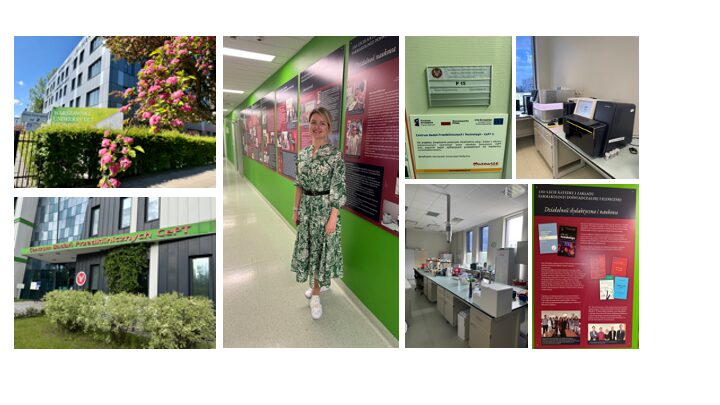
Special attention during the internship was paid to the research activities of the department, carried out at the CePT Preclinical Research Center (Centrum Badań Przedklinicznych CePT) – one of Poland’s most advanced biomedical research centers. The center is equipped with high-tech devices that allow for comprehensive interdisciplinary preclinical studies at the highest level.
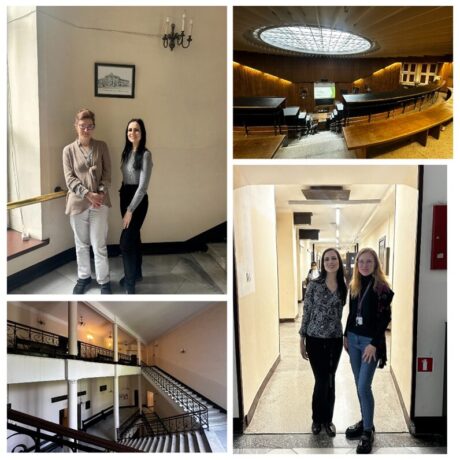
As part of professional development and international cooperation, Senior Lecturer Violetta Kulbitska of the Department of Histology and Embryology underwent an internship at the Department of Histology, Embryology, and Cytophysiology at the Medical University of Warsaw. The internship was supervised by MD PhD Dr. hab. n. med. Łukasz Biały. An introductory tour of the department, located in the historic Collegium Anatomicum on the Lindley Campus, was led by Dr. Izabela Młynarczuk-Biały. The department combines traditional and innovative methods of teaching histology, embryology, and cytophysiology for medical and dental students, emphasizing a structural-functional approach and preparation for studying pathomorphology.
Particular attention during the internship was given to the Tissue Engineering Laboratory, which became part of the department in 2013 and was presented by Dr. Kateryna Shevchenko. The lab is equipped with modern equipment: laminar flow hoods, cell culture incubators, light and fluorescent microscopes, automated hemocytometers, -80°C and -70°C freezers for long-term biomaterial storage, PCR thermocyclers, and autoclaves. Research focuses on cell proliferation, differentiation, the influence of biomaterials, and culture conditions.
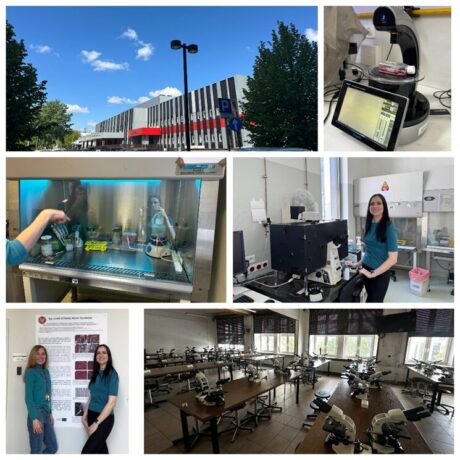
The internship also included familiarization with teaching methods using digital platforms for visualizing morphological material and interactive approaches. Key features of the educational process include:
- Integration of histology with embryology and physiology;
- Lessons using binocular microscopes and histological preparations produced by the department, and extensive use of online platforms with high-resolution digital slides;
- International orientation – instruction is provided in both Polish and English, with the department participating in exchange programs (including Erasmus+), engaging international students and staff;
- Active research in regenerative medicine, neurobiology, and tissue engineering, with frequent publications in international scientific journals;
- Student involvement in research – the department hosts a student scientific group, actively involving students in research and conferences.
Associate Professor Nataliia Haliash of the Department of Pediatrics №2 completed her internship at the Children’s Clinical Hospital of the Medical University of Warsaw, a modern multidisciplinary medical facility with 535 beds and 28 clinical departments, funded by the EU. Training took place in the Department and Clinic of Pediatric Pulmonology and Allergology under the supervision of Prof. dr hab. n. med. Marek Kulus. Prof. Kulus, a former university vice-rector and president of the Polish Society of Allergology, was among the initiators and advocates for building this new children’s hospital as part of the university.
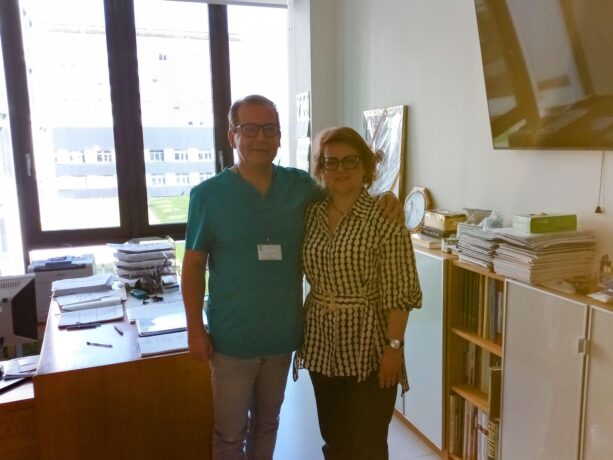
This department is a highly specialized tertiary care center providing assistance to children with respiratory and allergic diseases. It has 35 beds and focuses on diagnosing and treating conditions such as bronchial asthma (including biological therapy), atopic dermatitis, allergic rhinitis, insect venom and drug allergies, food allergies, respiratory tract infections, pneumonia complications (e.g., lung abscesses, pleural empyema), and congenital respiratory anomalies. Annually, over 3,000 patients are hospitalized.
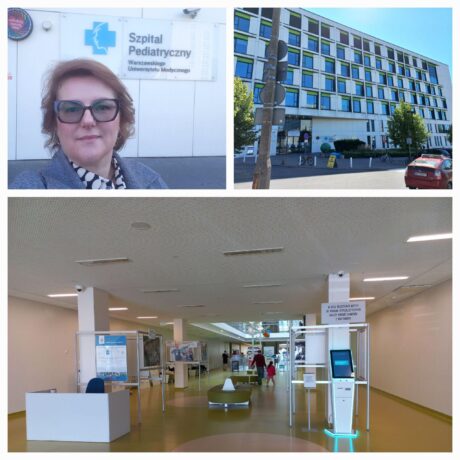
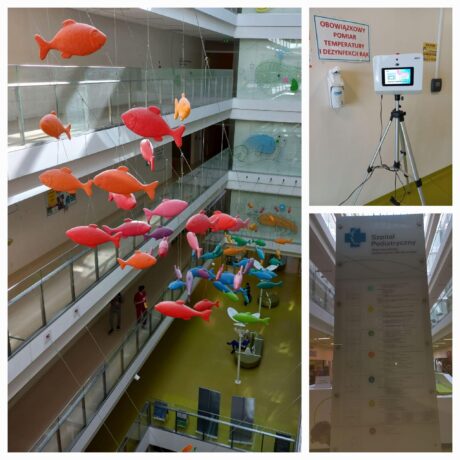
During the internship, valuable hands-on experience in pediatric pulmonology and allergology was gained. Under the guidance of Dr. Agnieszka Szczukocka-Zych, the latest diagnostic and treatment approaches for IgE-mediated and non-IgE-mediated food allergies were studied, particularly the use of oral food challenge tests. Special attention was given to allergic reactions to proteins of egg, milk, nuts, and gluten (barley and wheat). The oral food challenge, applied after skin prick tests, is considered the most reliable method for confirming food allergies. Children are hospitalized for 2–3 days to monitor reactions and provide emergency treatment if necessary. Research by the department staff shows this method is effective in developing tolerance to these allergens.
The Simulation Center features an ambulance vehicle for paramedic training. This is part of a complex simulating the hospital’s emergency department and enables full scenario-based training, from street or home care to intensive care unit admission.
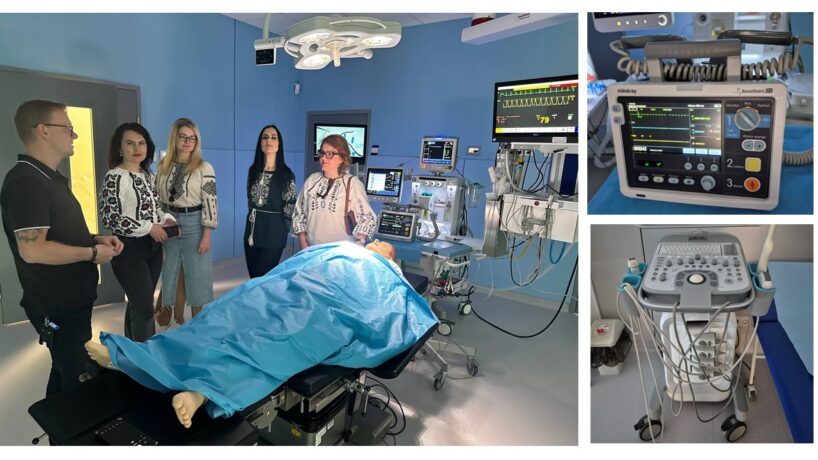
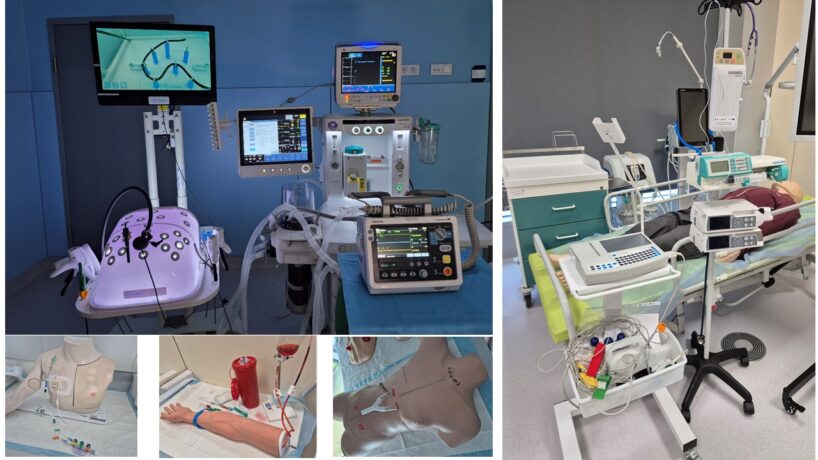
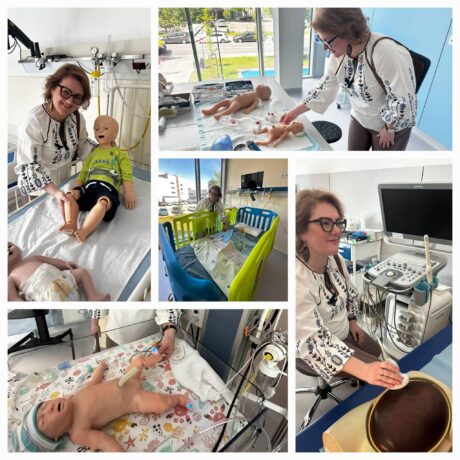
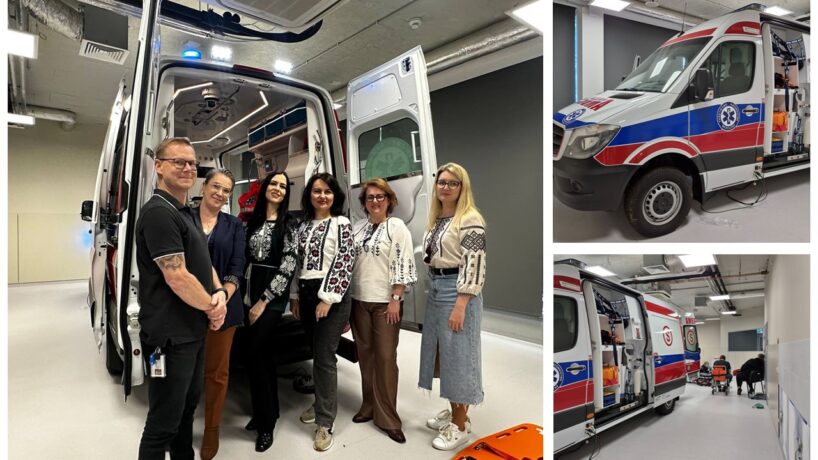
During the visit, participants became thoroughly acquainted with the technical, scientific, and educational resources of the Medical University of Warsaw. The professional internship became a valuable source of new knowledge, professional experience, and international contacts. Insights gained on modern imaging methods (such as PET/CT, MRI, and SPECT) and the structure of the educational and research process will be used to enhance curricula, implement innovative teaching methods, and improve the quality of medical education.
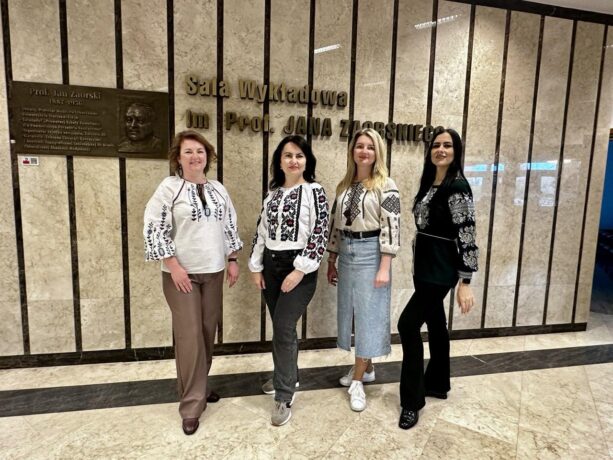
We extend our sincere gratitude to the administration and International Relations Office of Ternopil National Medical University for organizing the visit, to Prof. Zbigniew Gaciong, Rector of the Medical University of Warsaw, and Lidia Przepióra-Dziewulska, Head of the International Relations Office of the Medical University of Warsaw, for the invitation and support in facilitating the internship.