

Participation of the Representatives of Obstetrics and Gynecology №2 Department in the EASL Clinical School of Hepatology 2025 – Management of Liver Disease in Pregnancy and the RCOG World Congress in Obstetrics and Gynaecology
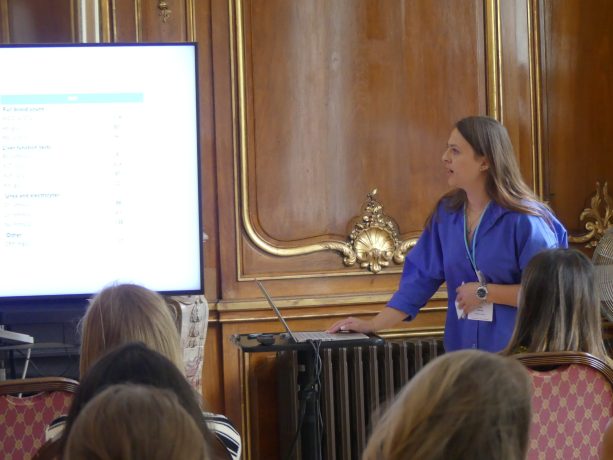
On June 20–21, 2025, Lina Bahnii, an assistant at the Department of Obstetrics and Gynecology №2 of Ternopil National Medical University, participated in the international EASL (European Association for the Study of the Liver) Clinical School of Hepatology: “Management of Liver Disease in Pregnancy”, held at Imperial College London (London, UK).
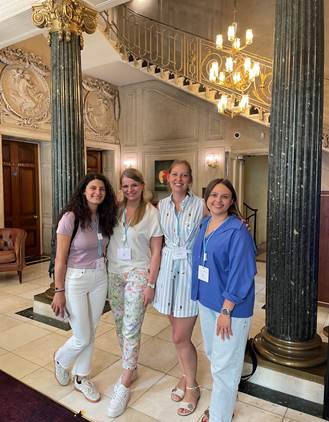
The professional clinical school “EASL Clinical School of Hepatology 2025 – Management of Liver Disease in Pregnancy” focused on the treatment of liver diseases during pregnancy and was conducted by world-leading experts in obstetrics, gynecology, and hepatology from the UK. The event emphasized topics highlighted in the recently published EASL 2023 Clinical Practice Guidelines on the management of liver diseases in pregnancy. These annual schools are hosted by Imperial College London, a world top-five university that ensures excellence in providing a unique research experience. The course organizers, Catherine Williamson and Melanie Nana (Imperial College London, Department of Metabolism, Digestion and Reproduction), together with international lecturers and local specialists, delivered a high-quality lecture program.
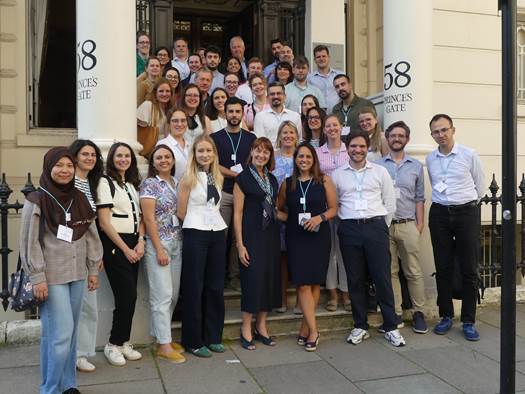
The faculty focused participants’ attention on preconception counseling to optimize women’s health and to manage extra-genital hepatobiliary pathology prior to pregnancy, as well as raising public awareness of the impact of gestation on existing diseases and potential risks. This scientific platform provided delegates with the best available evidence in the field, contributing to its application in clinical practice to reduce perinatal complications.
EASL schools aim to support and encourage training of the next generation of clinicians and researchers. Through personalized work, team collaboration, and discussion with faculty, students gained invaluable insights into new experimental techniques and clinical approaches. Referring to the EASL Clinical Practice Guidelines 2023 on the management of liver diseases in pregnancy, participants had the opportunity to discuss evidence-based treatments and identify gaps.
The program was designed using the “flipped classroom” model. The format, limited to 25 students, was student-centered and problem-based. Preparation for on-site learning consisted of online courses and study materials provided by the organizers on the EASL Campus. Students were expected to complete the online course and pre-assessment during the month prior to the EASL school. Upon arrival, participants worked in small groups under the supervision of experienced instructors, analyzing clinical cases (with an emphasis on teamwork and collaboration), and later presented their findings to all attendees.
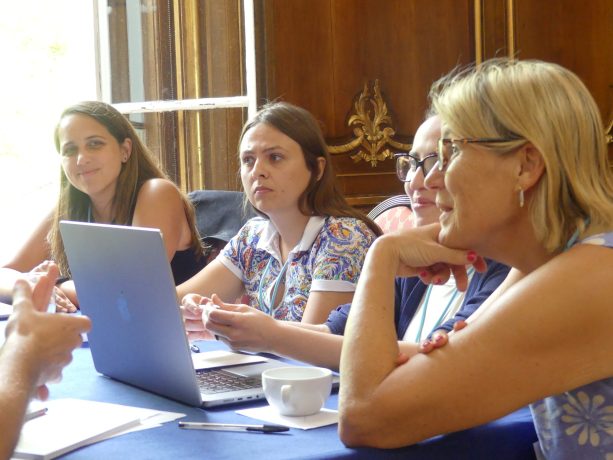
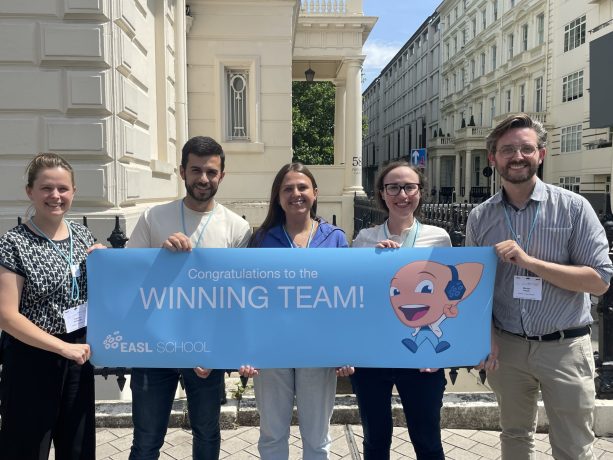
Thanks to the excellent guidance of Prof. Catherine Nelson-Piercy, Lina Bahnii’s team won the clinical case competition, which involved open questions from the faculty on the topic: “Investigations for liver disease (including normal ranges and safety data for radiological and invasive tests)” and was awarded a grant to attend the EASL Liver Summit 2026, to be held in Barcelona, Spain. Post-assessment and surveys were conducted on the EASL Campus after the completion of the school.
On June 23–25, 2025, the Department of Obstetrics and Gynecology №2 team – Associate Professor Nataliia Bahnii and Assistant Lina Bahnii – attended the RCOG World Congress 2025, held at the ExCeL Exhibition Centre in London, UK.
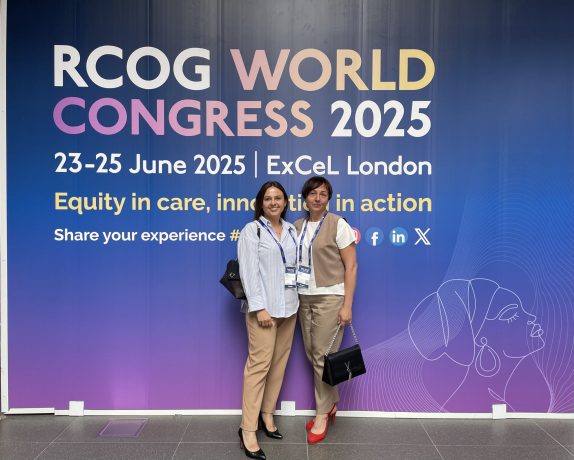
The flagship RCOG Congress 2025 featured an innovative three-day program covering current topics and the latest innovations in clinical practice, presented by an outstanding selection of experienced international speakers. It was the largest scientific program in RCOG’s history, featuring 7 parallel streams and over 200 speakers.
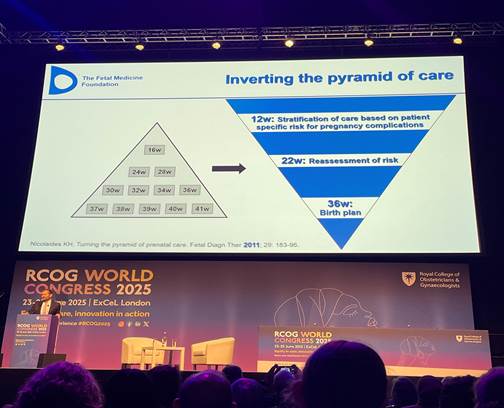
Prof. Kypros Nicolaides delivered an outstanding lecture on “The New Pyramid of Pregnancy Care,” highlighting the latest predictive markers for preeclampsia screening, diagnostic indicators of fetal anomalies, and preventive steps for preterm birth management. Jeffrey Ahmed presented innovations in robotic surgery in gynecology, concluding that: “More complex conditions favor robotic surgery, which provides more stable outcomes even during challenging operations.”
The Royal College of Obstetricians and Gynaecologists (RCOG) works to improve women’s health worldwide and aims to enhance access to and quality of education, training, and assessment for doctors specializing in obstetrics and gynecology.
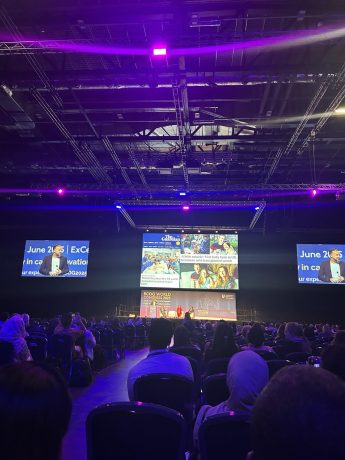
The RCOG World Congress in Obstetrics and Gynaecology 2025 was a unique opportunity to explore the latest innovations in women’s health. Prof. J. Richard Smith impressed the scientific community with his pioneering experience in uterus transplantation in the UK.
These scientific platforms offer unique opportunities for presenting research findings, as well as for gaining insights into new clinical protocols and therapeutic approaches through clinical case discussions in obstetrics and gynecology.
Sincere gratitude to the administration of I. Horbachevsky Ternopil National Medical University and to EASL Scientific Coordinator Mathias Girod for their support, assistance, and the opportunity to participate in the EASL Clinical School of Hepatology and the RCOG World Congress.