


TNMU Implements AI-Based Virtual Patient for the First Time in Ukraine
Scientists at the I. Horbachevsky Ternopil National Medical University are working on a state-funded project titled “Development of a Personalized AI-Based Tele-Diagnostic Platform for Doctors and Patients” in collaboration with the Institute of Cybernetics of the National Academy of Sciences of Ukraine. The project is scheduled for 2025–April 2026. The scientific supervisor is Professor Dmytro Vakulenko, Head of the Department of Medical Informatics.
The TNMU project team includes Associate Professor Andriy Semenets (Department of Medical Informatics), Associate Professor Nadiya Pasyaka (Department of Pediatrics, Faculty of Postgraduate Education), Associate Professor Nataliya Haliyash (Department of Pediatrics No. 2), Associate Professor Nataliya Petrenko (Department of Obstetrics and Gynecology No. 2), and Associate Professor Andriy Hospodarsky (Department of General Surgery, PhD).
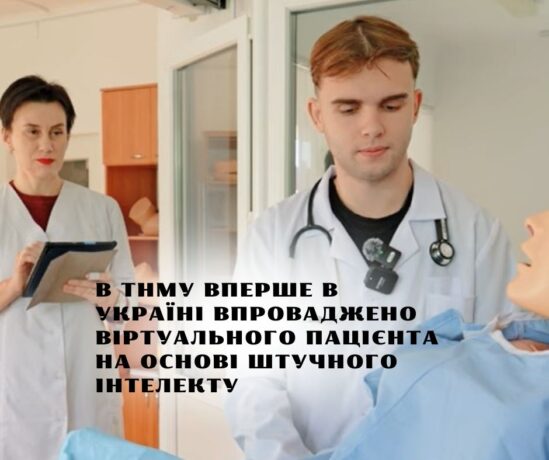
The AI-based virtual patient will be used at stations for the curation of pediatric, surgical, and gynecological patients during the Objective Structured Practical Skills (OSPI(K)) exams as the second stage of the Unified State Clinical Exam (USCE) in the 2025–2026 academic year.
Technical implementation of the project involves specialists from the Simulation Training Center: Oleh Kosinsky, Pavlo Davybida, and laboratory assistant Valeriy Zhizhnomirsky from the Department of Emergency and Stimulative Medicine.
At TNMU, the Objective Structured Clinical Examination (OSCE) format has long been established as an effective tool for assessing students’ practical skills and professional competencies. It also allows evaluation of communication skills, history-taking abilities, and the ability to establish trustful contact with patients.
At TNMU, assessment of communication skills is included in most OSCE stations and follows standardized criteria. At certain stations, this process involves standardized patients — specially trained actors who simulate clinical scenarios.
Recent challenges have highlighted the importance of alternative solutions that do not rely on the physical presence of people.
For this reason, TNMU has implemented Ukraine’s first AI-based virtual patient to assess communication competencies and history-taking skills. This marks a confident step toward the future of medical education, where modern technologies enhance the quality of physician training and ensure patient safety.