

TNMU Representatives Receive Certificates from the School of Conscious Communication
The third session of the School of Conscious Communication, organized within the Ukrainian-Swiss project “Development of Medical Education,” took place on December 10–11, 2025, in Zhytomyr. During this final meeting, the focus was on leadership, empathy, and the ability to respond calmly and effectively to crisis situations in both external and internal communications. The trainings and workshops aimed at developing practical skills of constructive dialogue will enable participants, in the future, to make mature communication decisions within their higher education institutions and to shape the culture of the educational environment on a daily basis.
During the training “Political School of Strategic Thinking,” Matvii Khrenov, co-founder of the Ukrainian Center for Health Care and lecturer at the National University of “Kyiv-Mohyla Academy,” noted that strategy is a balance of interests, power, and coalitions. According to him, political thinking enables effective decision-making in real-life circumstances, allows for understanding the field of forces, and facilitates the implementation of a mature strategic behavior. At the same time, decisions resulting from a political process are a compromise, a balance of interests, recognition of legitimacy, mutual guarantees, and coordination of priorities. Matvii Khrenov also introduced the participants of the School of Conscious Communication to various tools, including the “power map” and “coalition building,” among others. Particular attention was paid to political acumen as sensitivity to context, orientation toward long-term goals, and the ability to maintain dignity and constructiveness.

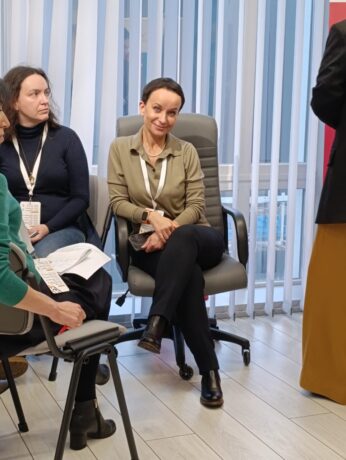
Journalist, Director of the Strategic Analysis Department of Suspilne Broadcasting, and trainer in trauma-informed communication, Tetiana Troshchynska focused her attention on empathy in communication. She emphasized that empathy is a broad concept related to our cognitive and emotional responses to observing another person’s experience. This process is socially motivated and comprises two important components: behavioral and moral empathy. Tetiana Troshchynska emphasized that empathy has economic benefits, as evidenced by improved patient quality of life, increased patient engagement, greater honesty in reporting symptoms, and better adherence to treatment regimens. At the same time, empathy has its shadow side, associated with emotional overload, burnout, and emotional distress.
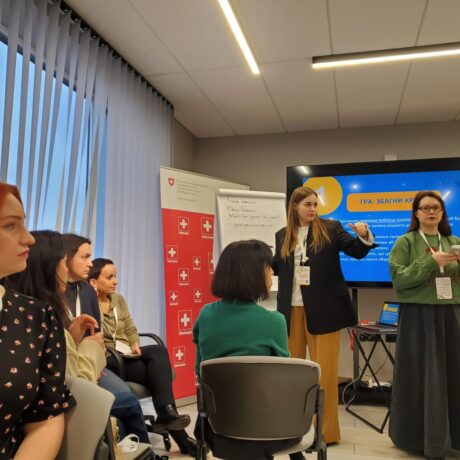
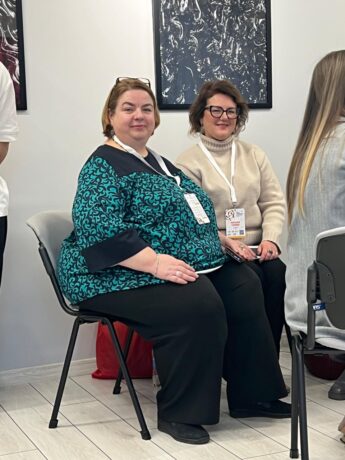
Deputy Head of the Implementation Office of the Ukrainian-Swiss project “Development of Medical Education,” Anastasiia Pylypak, and the project’s Communications Coordinator, Yuliia Martynenko, focused on crisis communications. They began their training with a practical exercise that allowed participants to experience firsthand how a communication crisis develops, what mistakes can be made in the first minutes, and why it is so important to act as a team. The trainers also noted that communication risks mature slowly, develop over time, occur daily, and become visible only upon careful examination; major crises are former risks, and most risks provide sufficient time to develop a response. During the training, it was emphasized that to preserve one’s reputation, it is essential to think carefully about what one says when representing one’s organization. The trainers identified criteria for assessing a crisis, namely the ability to analyze preconditions (why did the crisis occur?), threats (what does this crisis threaten?), and consequences.
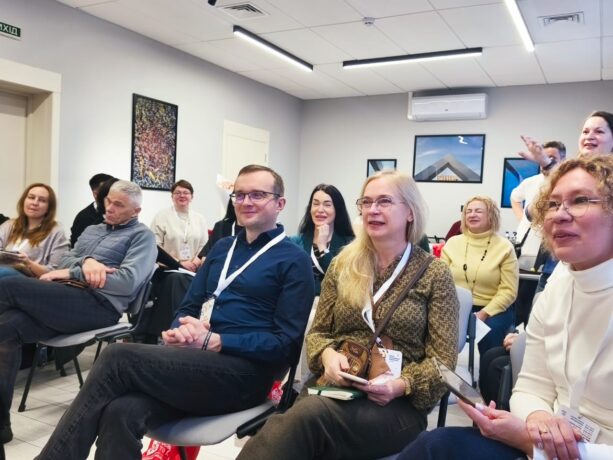
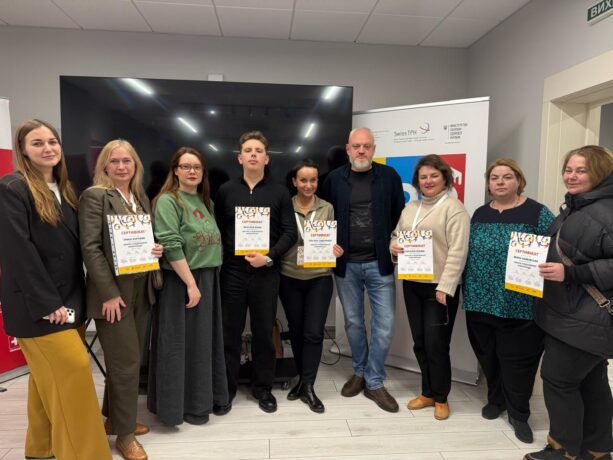
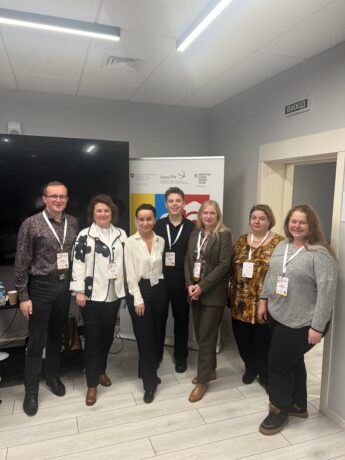
At the end of the third session, participants received certificates. It should be noted that representatives of Ternopil National Medical University—Associate Professor of the Department of Emergency Medical Care Oksana Sydorenko, Associate Professor of the Department of Public Health and Healthcare Management Yurii Petrashyk, Associate Professor of the Department of Pediatrics No. 3 Nataliia Haliiash, Associate Professor of the Department of Ukrainian Language and Head of the Communications and Marketing Department Nadiia Oliinyk, Associate Professor of the Department of Therapy and Family Rehabilitation Iryna Borovyk, TNMU Press Secretary Yanina Chaikivska, and fifth-year medical student Yaroslav Bilyk—formed an active and cohesive team.