

Modern Leadership in Education: TNMU Representative Participates in the International CARE-TEAM Program
Associate Professor of the Department of Therapy and Family Medicine and member of the Faculty Pedagogical Excellence Center at the I. Horbachevsky Ternopil National Medical University, Ministry of Health of Ukraine, and Iryna Borovyk are participating in the international educational project THEA Ukraine LEAD.
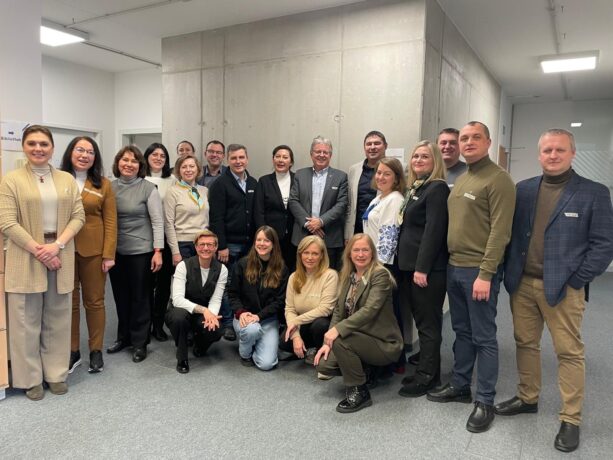
The THEA Ukraine LEAD program (Training for Higher Education Administrators and Leaders in Ukraine) is coordinated by the FH Münster University of Applied Sciences (Germany) in partnership with Sumy State University and funded by the German Federal Ministry of Education and Research, with the support of the German Academic Exchange Service (DAAD). The program aims to develop leadership and management competencies among representatives of Ukrainian higher education institutions in times of transformation and crisis.
Participation in the program became possible after successfully passing the competitive selection in September 2025, during which an idea for an internal university project to develop team collaboration, effective communication, and conflict resolution among university faculty was presented.
The THEA Ukraine LEAD program combines online and on-site learning modules. The first stage – an introductory online intensive – took place on October 29–31, 2025, and included introductions and meetings with speakers, trainers, mentors, and facilitators. During this stage, participants worked on topics such as strategic management, academic leadership, and crisis communication and took part in facilitation sessions exploring possible development scenarios for Ukrainian universities in the current environment. Special attention was given to practical crisis management cases, including the experience of Sumy Medical University. More information about the first project session (Kick-off Workshop) is available here.
A key outcome of the first stage was laying the foundations for project planning and beginning work on an individual Project Action Plan – a structured roadmap outlining goals, implementation stages, resources, responsible persons, and timelines.
The second stage of the program – the on-site workshop – took place on January 26–29, 2026, at FH Münster University of Applied Sciences (Germany). This stage focused on transforming the academic environment and covered topics such as academic leadership in change management, the development of a research culture, talent management, and strategic management, including a critical analysis of performance indicators and international rankings in the context of educational quality. It also addressed crisis management, including communication in emergencies and methods for de-escalating conflicts.
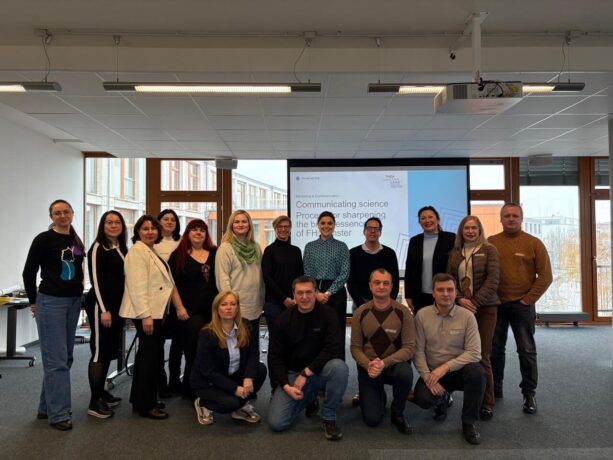
A key outcome of the on-site stage was the presentation of participants’ own projects. Iryna Borovyk presented the CARE-TEAM project (Communication, Alignment, Resolution, and Engagement in Academic Medical Teams), which aims to develop effective communication and conflict management in the medical university academic environment. The project includes establishing an institutional framework for diagnosing communication issues among participants in the educational process, implementing a training program on constructive feedback, empathetic communication, and integrative conflict-resolution models, and institutionalizing new interaction practices to create a safe, transparent, and supportive educational environment.
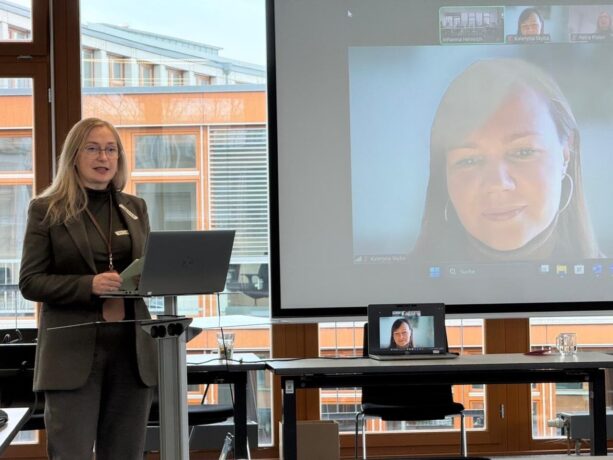
During the stay in Germany, visits were organized to the offices of the German Academic Exchange Service (DAAD) and the German Rectors’ Conference (HRK) in Bonn, where topics such as educational policy, international partnerships, and support for Ukrainian universities during the war were discussed. The program also included familiarization with FH Münster University of Applied Sciences’ educational infrastructure, as well as intercultural and informal events that facilitated professional exchange, networking, and strengthened international cooperation.
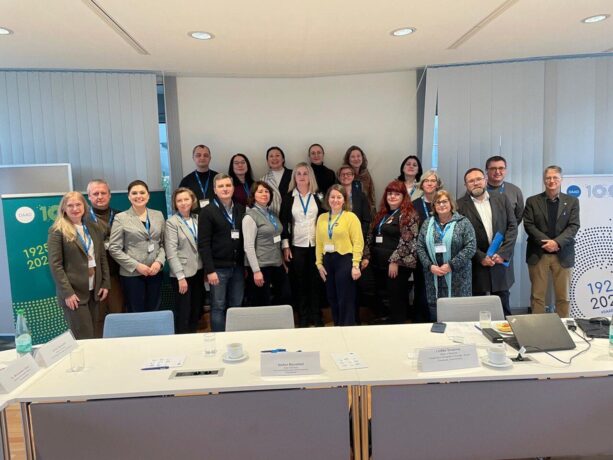
As a result of the internship, a working group was formed to implement the CARE-TEAM project. Plans include conducting an anonymous staff survey to identify key communication challenges and integrating the tools and methods acquired during the program into the faculty’s professional development system.
The experience gained and the materials developed provide a solid foundation for fostering a culture of communication, strengthening leadership potential, and implementing modern approaches to academic management at Ternopil National Medical University.