


Kick-off Meeting of the Erasmus+ ARIVE Project
The kick-off meeting of the Erasmus+ KA2 Capacity Building in Higher Education project – “Advancing Research and Innovation in Higher Education through Virtual Exchanges (ARIVE)” – took place on February 3, 2026, in an online format.
A key milestone in the project’s implementation was the first international meeting of the ARIVE consortium, which officially marked the transition to the implementation phase. The meeting brought together academic leaders, faculty members, healthcare professionals, and digital innovation experts from Georgia, Ukraine, Norway, and Portugal, reflecting the project’s shift from preparation to coordinated action and confirming a shared commitment to long-term educational reform. The Ternopil National Medical University working group participating in the kick-off meeting included the Head of the Department of Medical Informatics, Dmytro Vakulenko, Professor of Medical Informatics, Andrii Sverstiuk, Associate Professor of Medical Physics of Diagnostic and Therapeutic Equipment, Oksana Bahrii-Zaiats, and Associate Professor of Medical Informatics, Andrii Semenets.

The ARIVE project (ERASMUS-EDU-2025-VIRT-EXCH-101250610) unites a consortium of eight universities and research institutes from European Union and Eastern Partnership countries to create an innovative environment for international research and learning collaboration.
The ARIVE consortium includes:
- Riga Technical University (Latvia) – project coordinator;
- Petre Shotadze Tbilisi Medical Academy (Georgia);
- Ilia State University (Georgia);
- I. Horbachevsky Ternopil National Medical University (Ukraine);
- University of Minho (Portugal);
- University of South-Eastern Norway (Norway);
- Institute of Food Biotechnology and Genomics of the NAS of Ukraine (Ukraine);
- University of Business and Technology (Georgia).
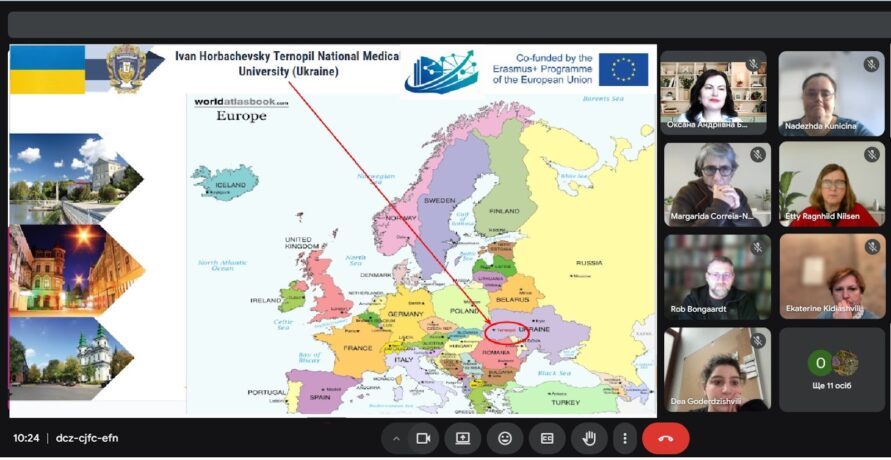
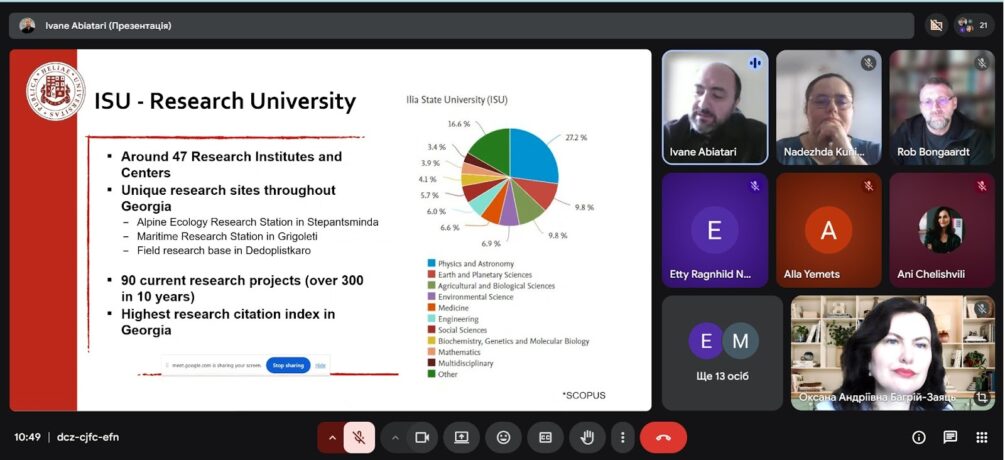
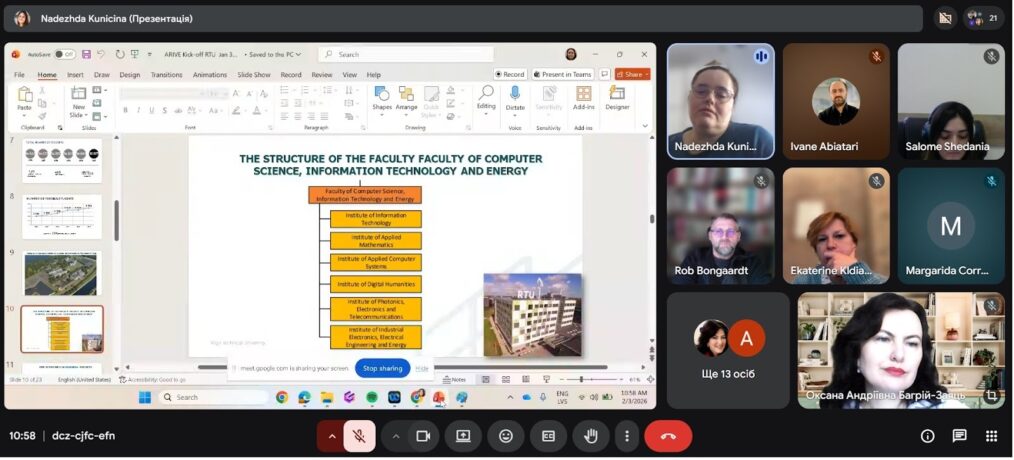
УAll partners presented their institutions, focusing mainly on their roles in the project and previous experience in researcher training and digital education. The consortium highlighted the diversity of institutional profiles as a strong point of the partnership.
The overall goal is to develop research potential, innovation, and international cooperation through structured virtual exchanges, with a particular emphasis on medical sciences.
The main objectives of the project include:
- Enhancing research capacity and digital skills;
- Promoting international research collaboration and virtual mobility;
- Supporting displaced Ukrainian students and researchers;
- Increasing participation in EU research programs and applying AI-based e-learning, open science, and virtual mentoring (with a focus on healthcare).
Within the project framework, virtual research semesters (VRS) will be developed, AI-driven research training will be conducted, and structured virtual mentorship will be implemented.
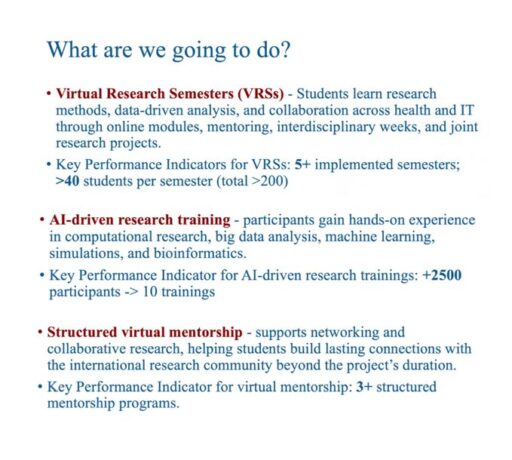
Through a centralized virtual platform, students and young researchers will be able to participate in project-based research (5+ virtual research semesters), complete AI-based learning modules, and collaborate with faculty and colleagues from partner universities via cross-border virtual exchanges.
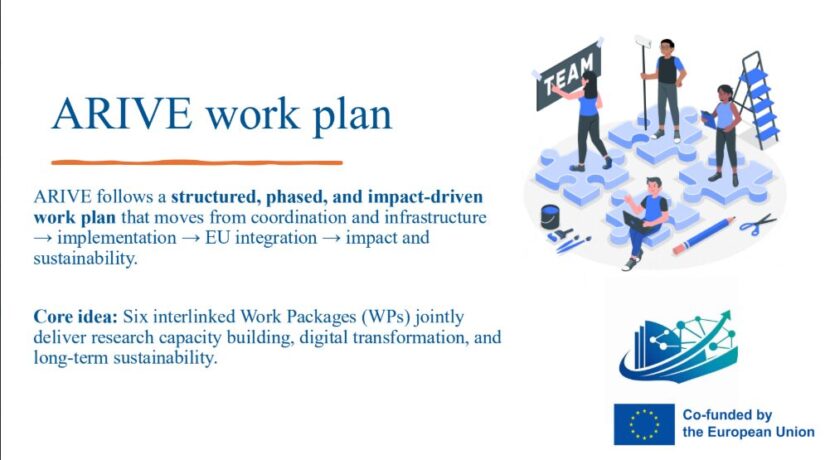
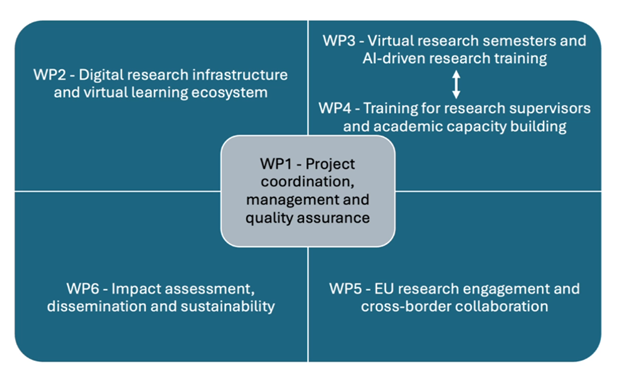
The ARIVE project will contribute to the creation of a digital academic ecosystem, opening new opportunities for international scientific collaboration, enhancing students’ and young researchers’ research skills, and fostering innovative education in higher education institutions in Ukraine and partner countries.
During the kick-off meeting, an administrative and financial briefing was held to review contractual obligations among partners, clarify reporting rules, and outline internal document submission deadlines. Special attention was given to financial management responsibilities and ensuring compliance with Erasmus+ rules. Participants also agreed on internal communication procedures and a shared structure for storing project documentation and results, as well as the implementation of short-term actions, responsibilities, and planning of future meetings.
At the conclusion of the meeting, participants summarized key decisions and determined the next steps for project implementation, including the allocation of responsibilities and scheduling of subsequent online consortium meetings.