


OSCE as a New Standard for the Certification of Master’s Students in Prosthetics and Orthotics
The Cabinet of Ministers of Ukraine has adopted a decision to introduce a mandatory Objective Structured Clinical Examination (OSCE) for master’s students specializing in Prosthetics and Orthotics within the specialty “Technologies of Medical Diagnostics and Treatment.” From now on, this examination will become a component of the Unified State Qualification Examination (USQE) and a mandatory stage of certification for future specialists.
The level of professional training of prosthetists and orthotists directly determines the degree of functional independence, quality of life, and opportunities for social integration of people with amputations and other musculoskeletal disorders. Therefore, in the educational process, it is essential not only to provide a solid theoretical foundation but also to ensure an objective assessment of students’ practical skills and clinical competencies.
An effective modern tool for such evaluation is the Objective Structured Clinical Examination (OSCE), which is widely used in the medical education systems of many countries worldwide. At I. Horbachevsky Ternopil National Medical University, this assessment format has been introduced and successfully implemented since 2010.
Future prosthetists and orthotists had their first experience of taking the OSCE after completing their Introductory Clinical Practice. The examination was conducted at a prosthetic enterprise, which ensured assessment conditions as close as possible to real professional practice and allowed for an objective evaluation of the students’ level of preparation.
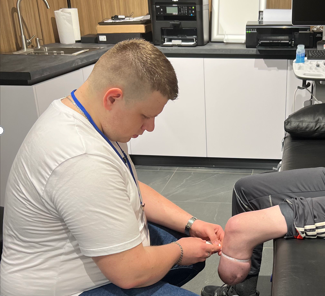
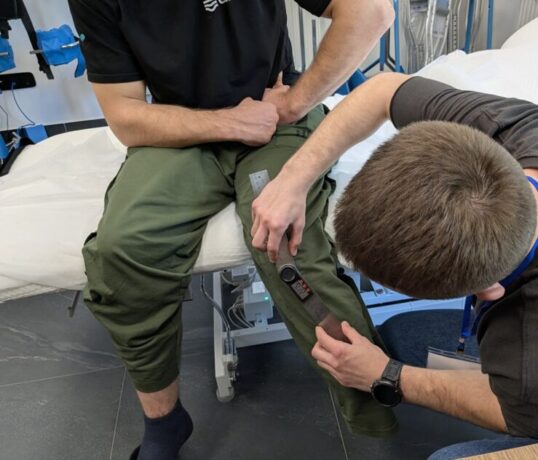
For prosthetists and orthotists, it is extremely important that upon completing their studies, students demonstrate confident mastery of basic professional skills. This stage is fundamental, as it is during this period that future specialists must acquire key clinical skills, principles of patient communication, fundamentals of biomechanical analysis, measurement, modeling, and adaptation of prosthetic and orthotic devices.
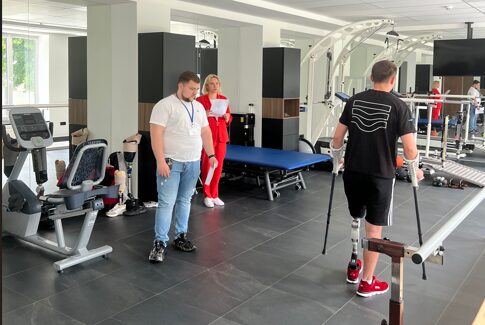
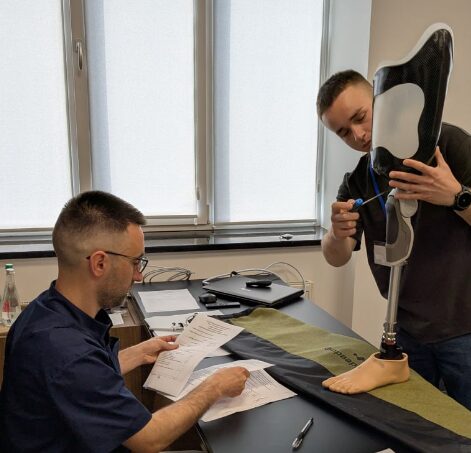
The initial results of the pilot implementation of the OSCE for master’s students in Prosthetics and Orthotics have shown that this format is an effective tool for objectively assessing students’ practical skills and clinical reasoning. The use of standardized stations ensured a unified approach to assessment, helped identify students’ training strengths and weaknesses, and contributed to improving the educational process in accordance with international standards. Such an examination represents an important step toward enhancing the quality of specialist training and developing a high professional level among future prosthetists and orthotists.
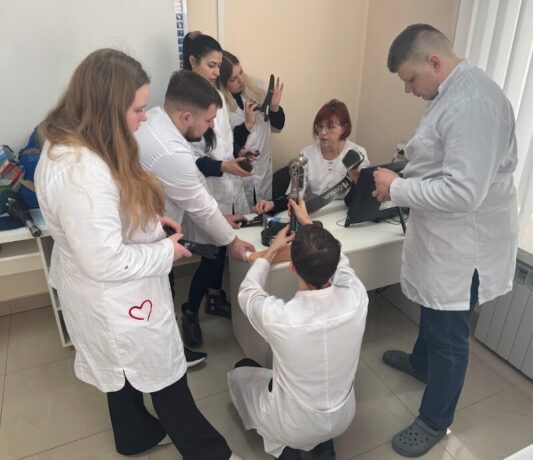
Preparations are currently underway for conducting the OSCE after industrial practice. Faculty members of the Department of Medical Rehabilitation, together with certified prosthetists and orthotists, are developing OSCE stations for assessment during the state certification.
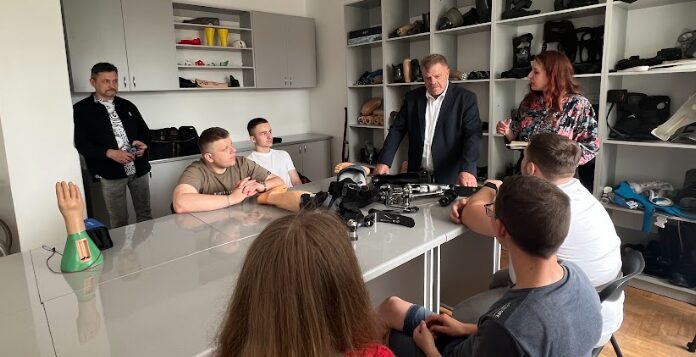
The OSCE encourages students to prepare comprehensively, builds confidence in applying prosthetic and orthotic solutions in practice, and emphasizes the importance of effective collaboration within a multidisciplinary team, including physicians, physical therapists, and other rehabilitation professionals. This approach ensures that graduates are prepared for safe, high-quality, and professionally responsible work with patients, contributing to the improvement of rehabilitation services.