

Department of Pediatric Diseases with Pediatric Surgery at TNMU Held Stage I of the All-Ukrainian Student Olympiad in “Pediatrics” and “Medical Genetics”
On March 11, 2026, I. Horbachevsky Ternopil National Medical University hosted an Olympiad in Pediatrics and Medical Genetics, bringing together students interested in in-depth study of modern aspects of pediatrics and hereditary pathology. The event became an important platform for demonstrating both theoretical knowledge and clinical thinking of future physicians.
The Olympiad program included a brainstorming session (analysis of clinical cases and situational tasks related to emergency conditions and urgent care), evaluation and interpretation of laboratory and instrumental test results across various pathologies, and analysis of clinical manifestations based on photographic materials. The tasks covered a wide range of topics — from diagnosis and treatment of common pediatric diseases to the analysis of genetic syndromes.
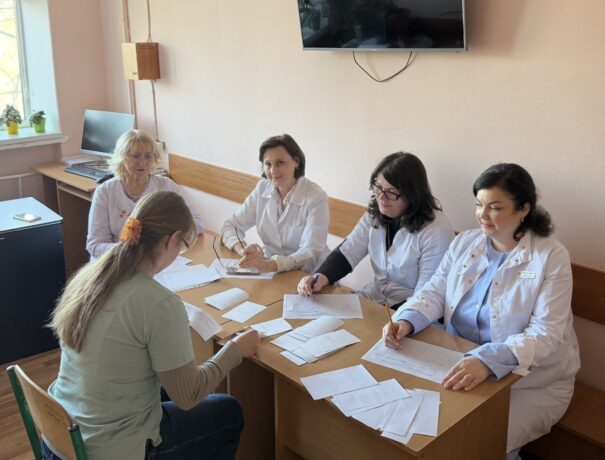
Participants demonstrated their level of preparation, ability to work with clinical information, formulate diagnostic hypotheses, and justify patient management strategies. The Olympiad contributed to the development of professional competencies, increased motivation for learning, and engagement in scientific activity.
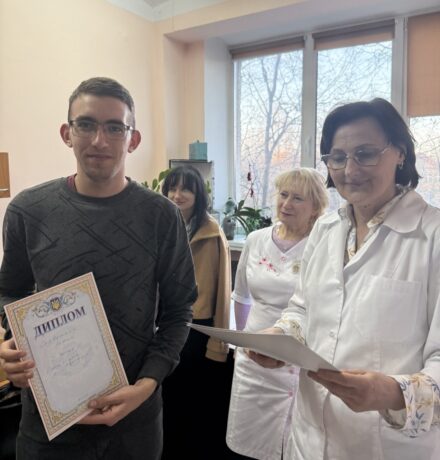
Head of the Department, Professor Oksana Boiarchuk, presents a diploma to the winning student, Zakhar Servetnyk (Group 415), who took first place in Stage I of the All-Ukrainian Olympiad in “Pediatrics.” Also pictured are Professor Olha Fedortsiv and Associate Professor Nataliia Yarema.
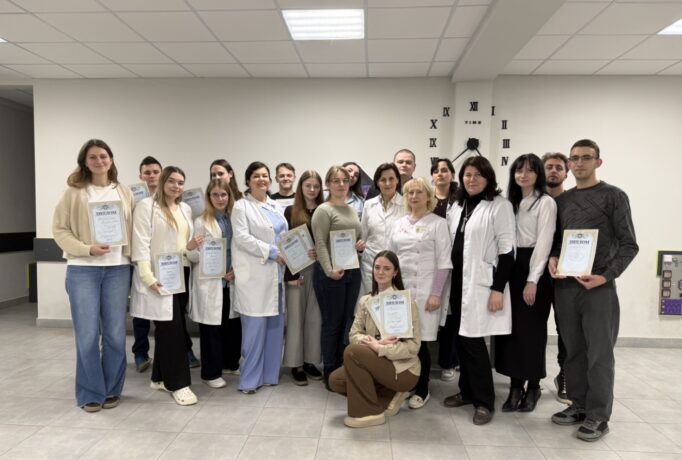
Based on the competition results, winners were determined and awarded diplomas.
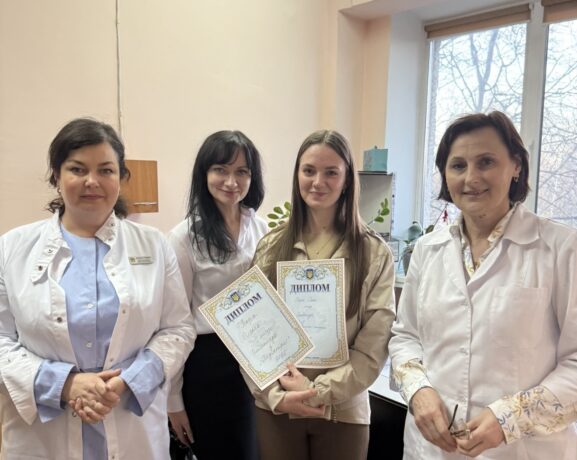
Head of the Department, Professor Oksana Boiarchuk, sixth-year student Olena Iskra, Associate Professor Tetiana Hariian, and Associate Professor Nataliia Yarema.
The organizers congratulated the winners and emphasized the importance of such educational initiatives as a key component in training highly qualified healthcare professionals. Participation in Olympiads encourages independent learning, fosters the development of clinical thinking and communication skills, and plays a vital role in modern medical education. Additionally, such events create a supportive environment for knowledge exchange, communication between students and faculty, and the formation of a professional community of future doctors.