Chornobyl – a Memory That Warns: an Event Marking the 40th Anniversary of the Tragedy was Held at the Department of General Hygiene and Ecology
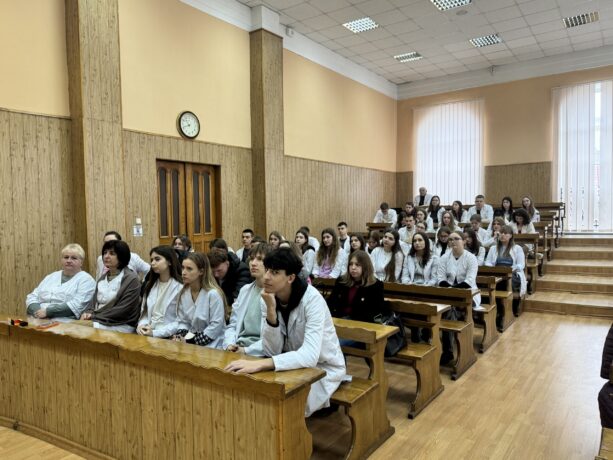
On the eve of April 26, 2026, when Ukraine will commemorate the 40th anniversary of the Chornobyl Nuclear Power Plant disaster, the faculty of the Department of General Hygiene and Ecology, together with future doctors – 6th-year medical students – held an educational event.
The purpose of the meeting was to remind the student community about the scale of the catastrophe, its consequences, and the challenges that remain relevant today.
The event began with a minute of silence in memory of the deceased liquidators and victims of the accident. In her opening remarks, the Head of the Department, Prof. Olena Lototska, emphasized that in light of current events (the occupation of the Zaporizhzhia Nuclear Power Plant and threats of nuclear terrorism), nuclear safety has once again become the number one priority in the world.
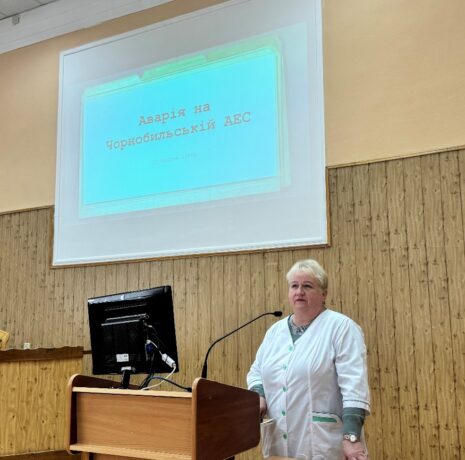
Sixth-year students majoring in Medicine took an active part in the event and prepared substantial presentations:
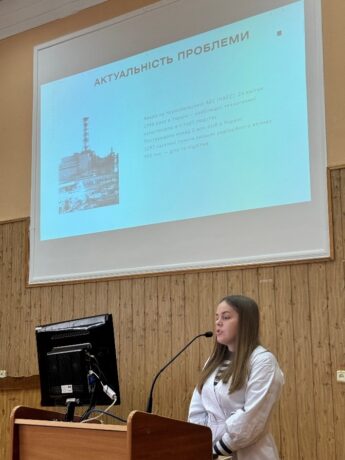
Olena Nesterenko, a student of group 617, in her report “The Chornobyl Nuclear Power Plant Accident of April 26, 1986,” provided a detailed analysis of the chain of human errors and reactor design flaws that led to the disaster.
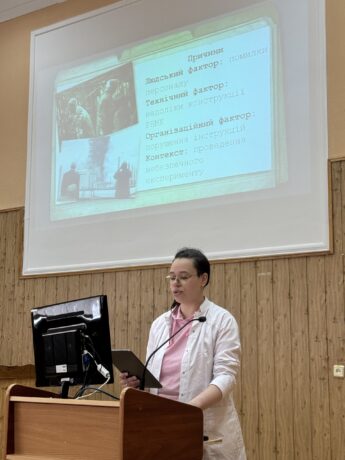
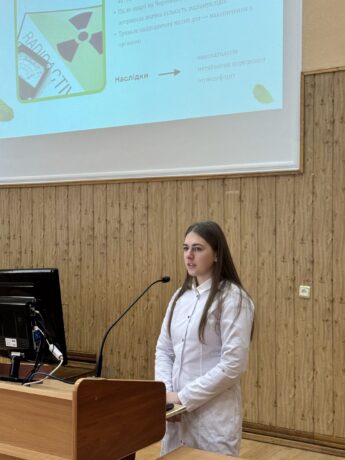
Tetiana Bondarchuk, from the same group, presented a report on the medical and radiological consequences of the accident. She focused on the impact of iodine-131 isotopes in the first weeks after the disaster, which led to a significant increase in thyroid cancer cases, especially among those who were children or adolescents at the time.
Marta Onyshchuk, also a student of group 617, addressed the topic “Nutrition under Radiation Exposure.” She emphasized that a balanced diet is critically important for reducing the accumulation of radionuclides in the body and strengthening the body’s natural defense mechanisms. Following such a diet helps reduce radionuclide buildup, enhance natural protective mechanisms, and improve the health of populations living in radiation-contaminated areas.
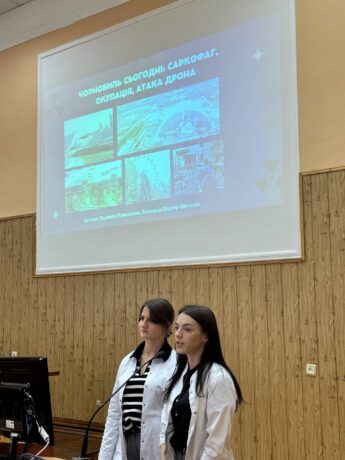
Roksolana Zaremba and Marta-Viktoriia Zaleshchuk, students of group 605, prepared a presentation titled “Chornobyl Today: the Sarcophagus, Occupation, Drone Attack.” They recalled the occupation of the exclusion zone in 2022 and the shocking incident on February 4, 2025, when a Russian drone damaged the roof of the confinement structure. Although radiation levels remained within normal limits at that time, the functionality of the shelter was seriously compromised.
Concluding the event, the participants reached a clear understanding: today, Chornobyl is not only a page in the history of 1986. It is a current point of risk. The occupation and attacks on nuclear facilities have shown that even modern protective structures do not guarantee complete safety, and the main threat lies not only in an immediate accident but also in the gradual erosion of the international nuclear safety system.