

Participation of TNMU Nursing Institute Faculty and Students in the Erasmus BIP Program on Breastfeeding and Early Interaction
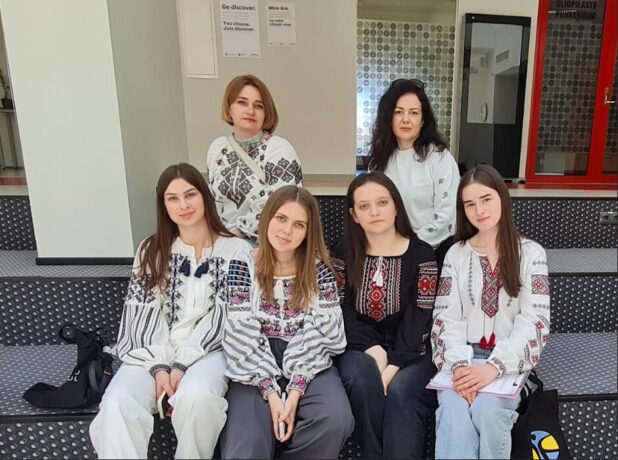
From April 20 to 24, 2026, faculty members of the Department of Higher Nursing Education, Patient Care, and Clinical Immunology at I. Horbachevsky Ternopil National Medical University—Yuliia Danylevych and Yuliia Kotsaba—together with second-year students of the “Nursing” educational program (Lina Boichuk, Svitlana Vlasova, Yuliia Palka, and Anastasiia Stelmakh), took part in the contact week of the international academic mobility program Blended Intensive Program (BIP) “Breastfeeding and Early Interaction Basics and Beyond,” which was held this year in Tallinn, Estonia.
The program combines online learning with in-person international exchange, creating a shared educational environment for students from Estonia, Belgium, Austria, Finland, and Ukraine. Its aim is to deepen knowledge on breastfeeding support, early mother–infant interaction, intercultural aspects of care, and the implementation of modern approaches to maintaining maternal and infant health.
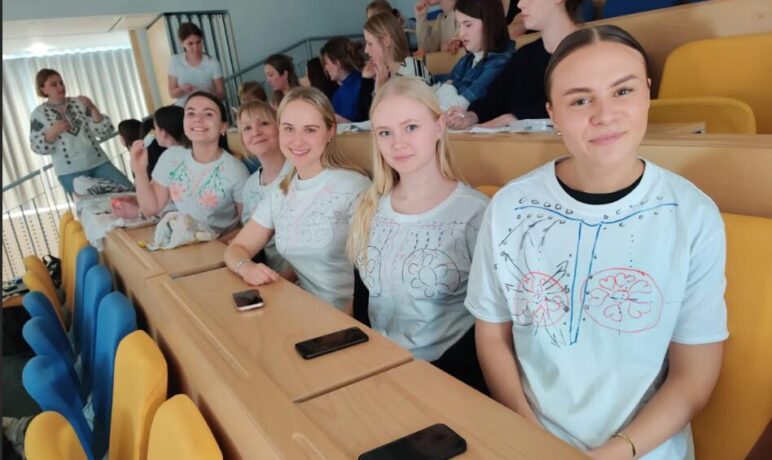
The program lasted three months and was delivered in a hybrid format. The online phase began on February 10, 2026, on the Moodle platform of Tallinn Health Care College, where participants studied theoretical materials based on international guidelines and completed interactive assignments. During the in-person stage in Tallinn, participants worked in multicultural teams on thematic projects focused on breastfeeding support, assistance to women in the postpartum period, ensuring the emotional well-being of vulnerable populations, and developing interprofessional collaboration skills.
The program covered topics such as the physiology of lactation, organization of effective breastfeeding, overcoming common challenges, and specific aspects of care for mothers and infants with special needs.
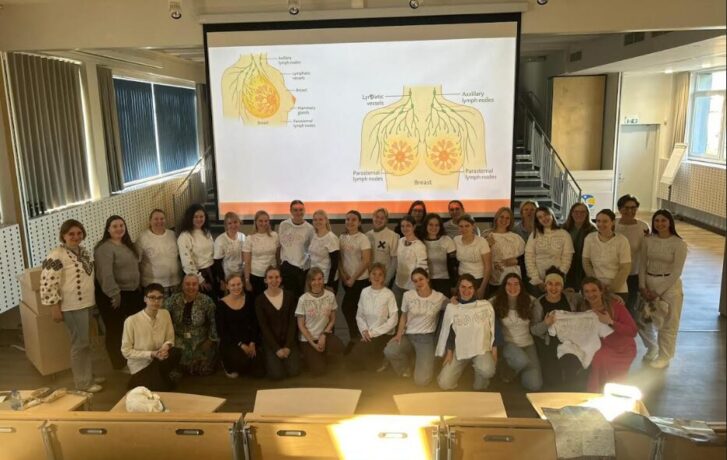
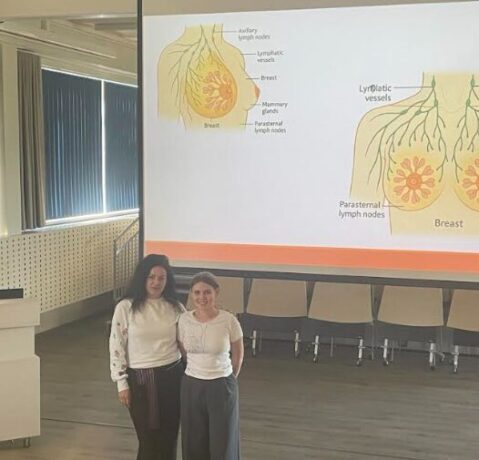
Yuliia Danylevych and Yuliia Kotsaba delivered a lecture, “Anatomy in Action: The Lymphatic System,” and conducted a workshop, “Body Mapping: Visualizing the Lymphatic System of the Mammary Glands.”
Particular attention was paid to interdisciplinary collaboration and effective communication with patients and their families, which became an important component of practical training. In this context, simulation sessions were conducted over two days, focusing on developing skills in early breastfeeding initiation after cesarean section, ensuring skin-to-skin contact, educating parents of preterm infants, and providing counseling and support during home visits. Each simulation case was followed by a structured debriefing, enabling in-depth analysis of participants’ actions, discussion of clinical decisions, and improvement of communication and professional skills.
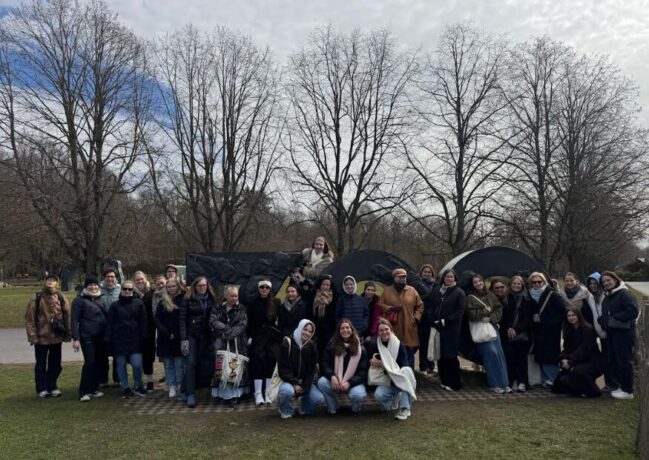
The program also included thematic excursions. The first visit was to a zoo, where participants explored the characteristics of offspring feeding in different animal species, broadening their understanding of the biological basis of lactation, comparative aspects of newborn care, and natural mechanisms underlying feeding behavior.
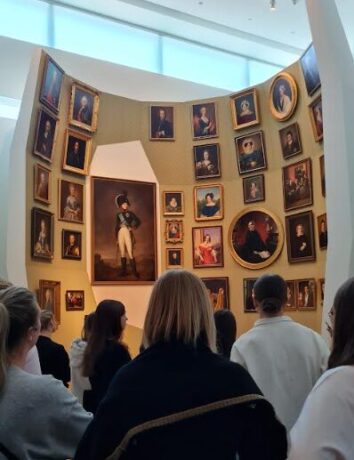
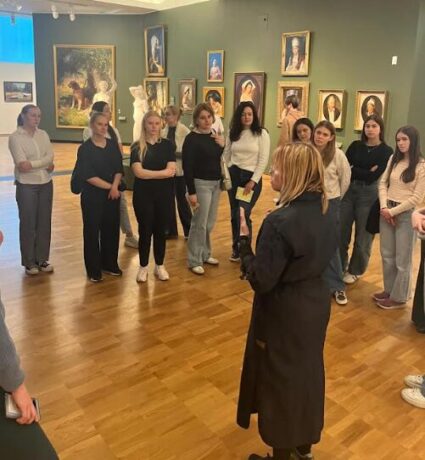
A particularly memorable experience was the visit to the Kumu Art Museum, where special attention was given to representations of women and the theme of breastfeeding in art, contributing to a deeper understanding of the cultural and social dimensions of motherhood across different historical periods.
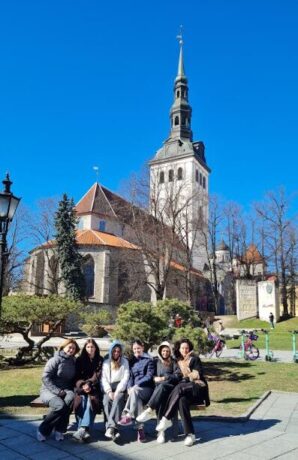
A guided city tour left a lasting impression of Tallinn. It was not only informative but also emotionally engaging, with special emphasis on women’s contributions to the country’s economic and social development across different historical periods. This helped participants better appreciate the significance of women’s influence on societal transformation and state development.
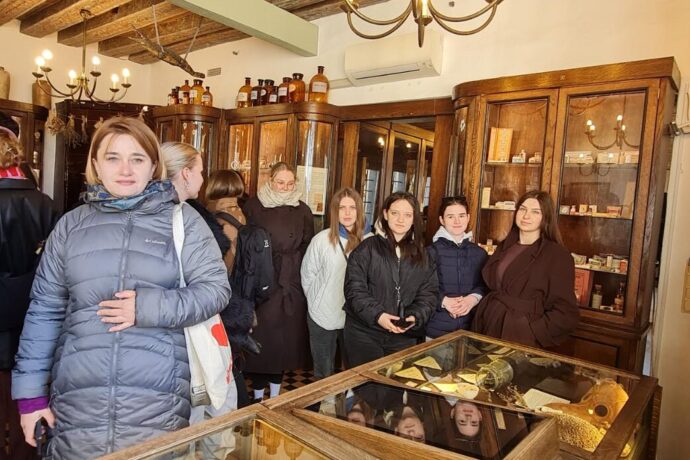
Participation in the program became a valuable professional and personal experience for both faculty and students. It contributed to the development of professional competencies, deepening of knowledge in line with international standards, and enhancement of intercultural interaction. The combination of theoretical learning, simulation-based training, teamwork in a multicultural environment, and cultural-educational activities provided new perspectives on modern approaches to breastfeeding support and early interaction, while also highlighting the importance of interprofessional communication and the humanistic dimension of nursing practice.
The knowledge and experience gained will serve as a foundation for further improvement of the educational process, implementation of innovative teaching methods, and enhancement of the quality of training of healthcare professionals.