

Participation in a Family Medicine Conference: Between the Challenges of Our Time and the Value of Humanity
In April this year, Associate Professor of the Department of Therapy and Family Medicine, Iryna Borovyk, took part in the 4th Conference of the European Academy of Teachers in General Practice/Family Medicine (EURACT), held in Iași, Romania.
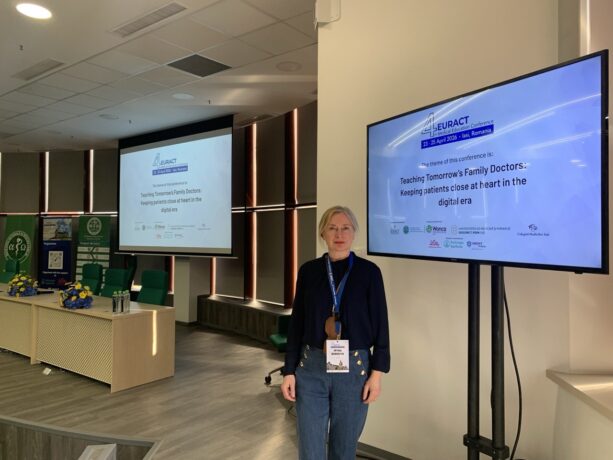
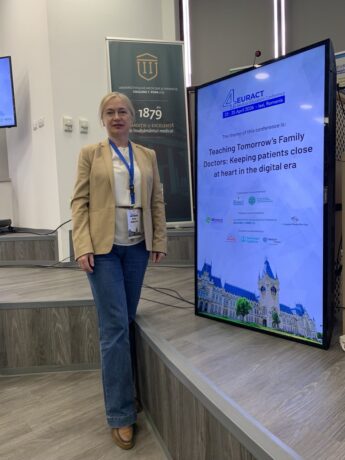
The conference theme — “Keeping patients close at heart in the digital era” — was not merely a slogan, but a meaningful invitation to reflect on how, in a world of rapidly evolving digital technologies, artificial intelligence, and new learning formats, we can preserve what matters most: closeness to the patient, trust, and humanity in medicine.
The conference brought together family medicine educators, general practitioners, and researchers from across Europe, creating a space for open professional dialogue about the future of primary healthcare amid global change. For our university, this event was not only an opportunity to present its own experience, but also a chance to demonstrate how Ukrainian medical education continues to evolve, seek solutions, and move forward even in times of war.
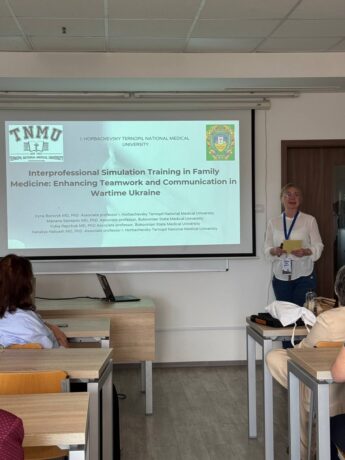
Within the conference, Iryna Borovyk delivered an oral presentation on interprofessional simulation-based learning. Particular emphasis was placed on developing teamwork and effective communication skills that are becoming fundamental to safe, high-quality medical care. The results once again confirmed that simulation-based training creates a safe environment for developing real, essential competencies in future physicians.
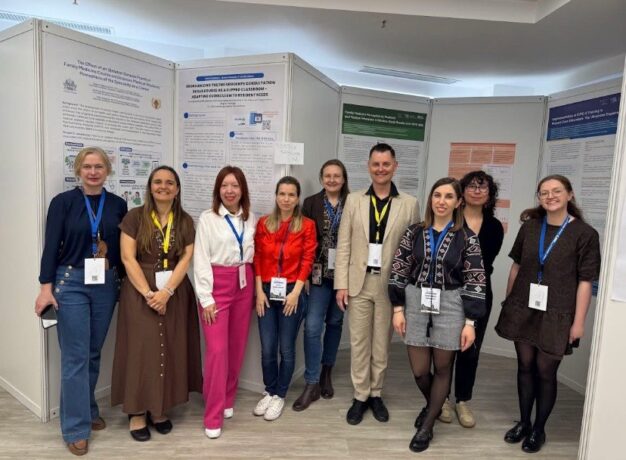
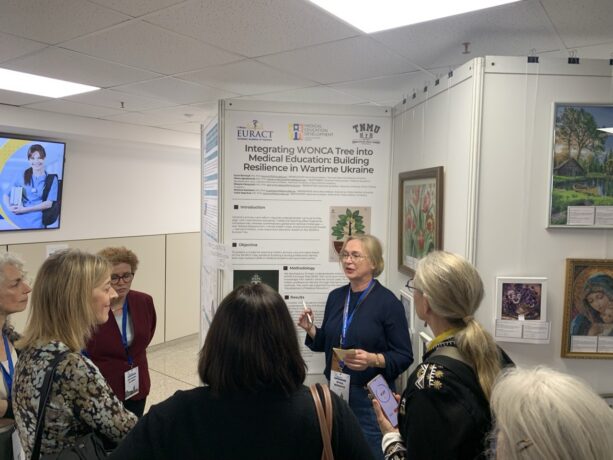
A poster presentation was also delivered, introducing a teaching manual for the discipline “General Practice – Family Medicine,” developed with the support of the Ukrainian-Swiss project “Development of Medical Education.” The presentation highlighted the integration of modern principles of family medicine into the educational process, particularly the use of the WONCA concept (WONCA tree), which helps students not only understand the discipline’s structure but also develop flexible, adaptive thinking in conditions of uncertainty. This provided an opportunity to demonstrate that Ukrainian medical education aligns with European approaches while maintaining its own unique experience shaped by today’s challenging realities.
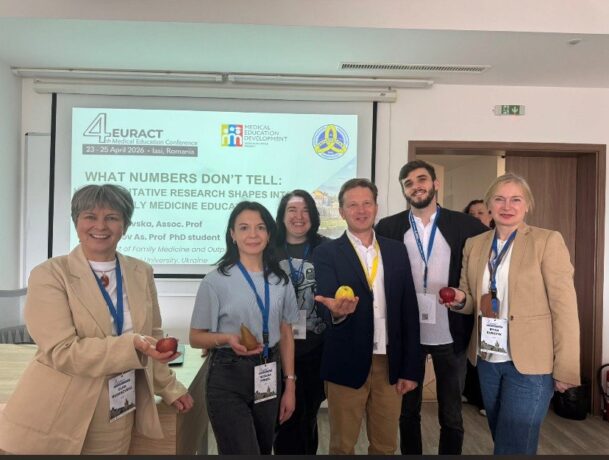
Ukraine was represented at the conference by participants from Uzhhorod National University, Bukovinian State Medical University, and I. Horbachevsky Ternopil National Medical University. Representatives of the Ukrainian-Swiss project “Development of Medical Education,” Olena Ihnashchuk and Olha Korolenko, also took part. This project supports both practicing family physicians in their continuous professional development and higher education institutions, helping them move forward confidently even under difficult conditions. On this occasion, the project also supported the Ukrainian delegation’s participation in the conference.
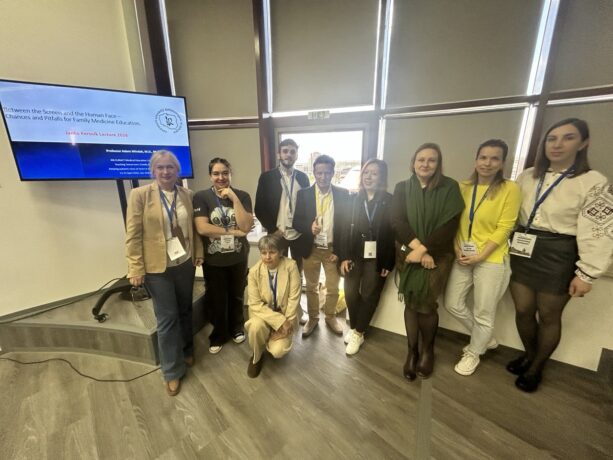
An important outcome was the opportunity to establish new professional connections with family physicians and representatives of European medical universities. This opens up opportunities for joint research and educational projects and strengthens our university’s integration into the European educational space.
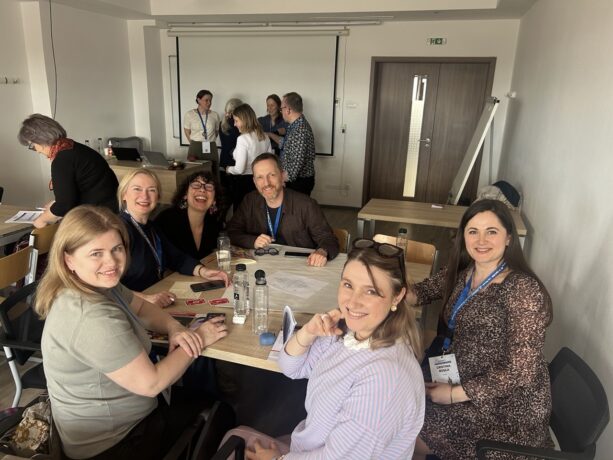
The knowledge and ideas gained will be implemented in the Department of Therapy and Family Medicine’s educational process, particularly in the courses “General Practice – Family Medicine,” “Professional Communication of a Physician,” and “Humanity and Empathy in Medical Practice.” This will further enhance students’ practical training and their readiness to work in the complex conditions of the modern healthcare system. Further modernization of curricula in accordance with EURACT standards is also planned, with a focus on evidence-based approaches, the development of critical and clinical thinking, and the mindful use of artificial intelligence.
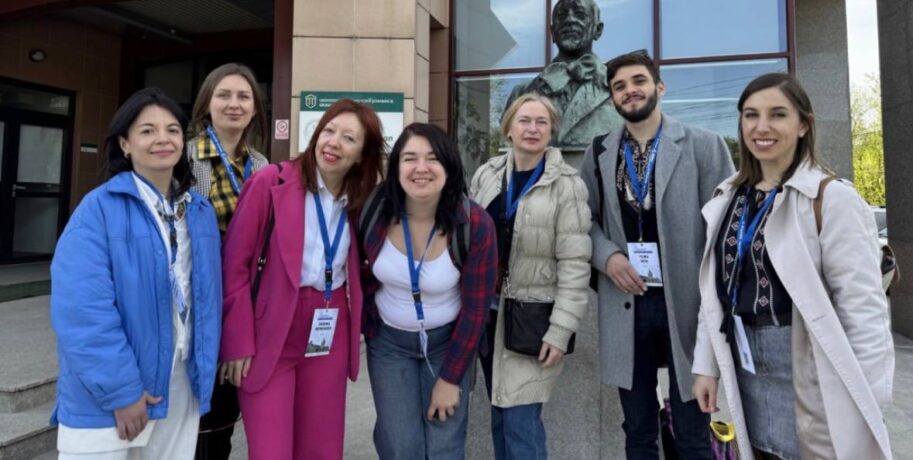
Participation in the EURACT conference was not only a professional experience but also a source of inspiration. It once again reminded us that no matter how fast the world and technologies change, the heart of medicine remains constant—it is the human being beside us. We continue to move forward together with the European community, preserving what matters most: humanity, trust, and a patient-centered approach.