

TNMU Lecturer Presented Her Research Achievements at a Conference in Egypt
The 7th Euro-Mediterranean Conference LifeSciences, Pharma, and Biomedicine (BioNat-7) was held in Cairo (Egypt) on October 7-8, 2021. The aim of this scientific forum was to join all professors, academics, scientists, researchers and students to share experience, knowledge, innovations, new trends in life sciences, pharmacy and biomedicine. In the COVID-19 pandemic, the event was held in a mixed format: the first day (October 7, 2021) – a meeting in Cairo, and the 2nd day (October 8, 2021) – an online webinar.
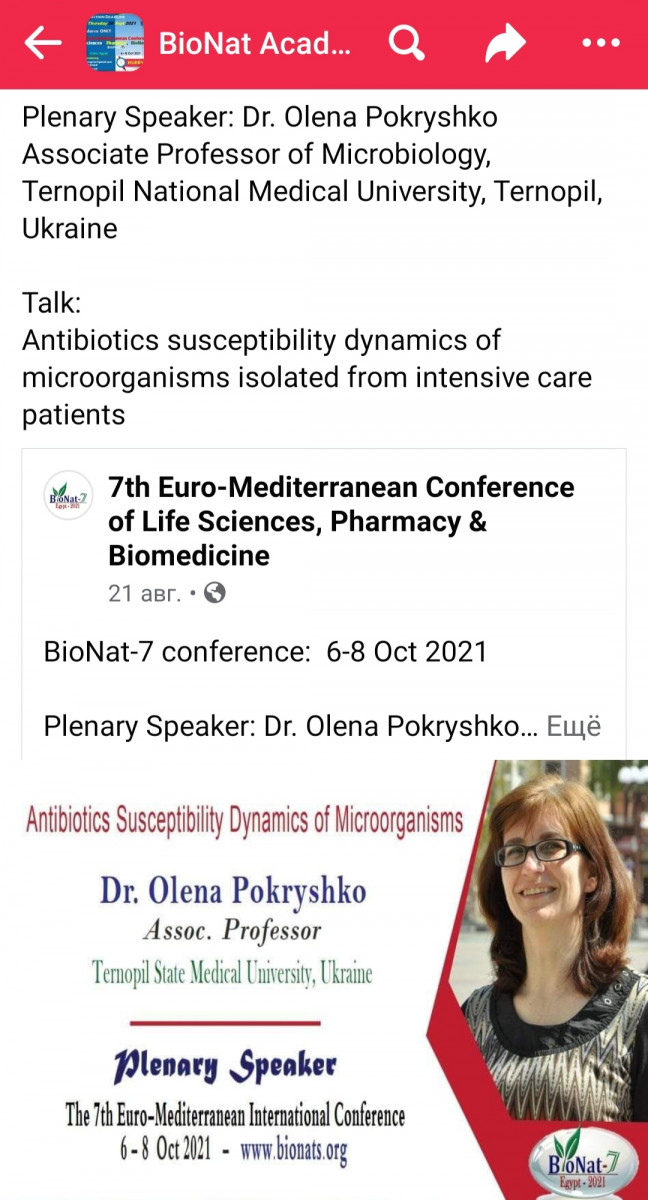
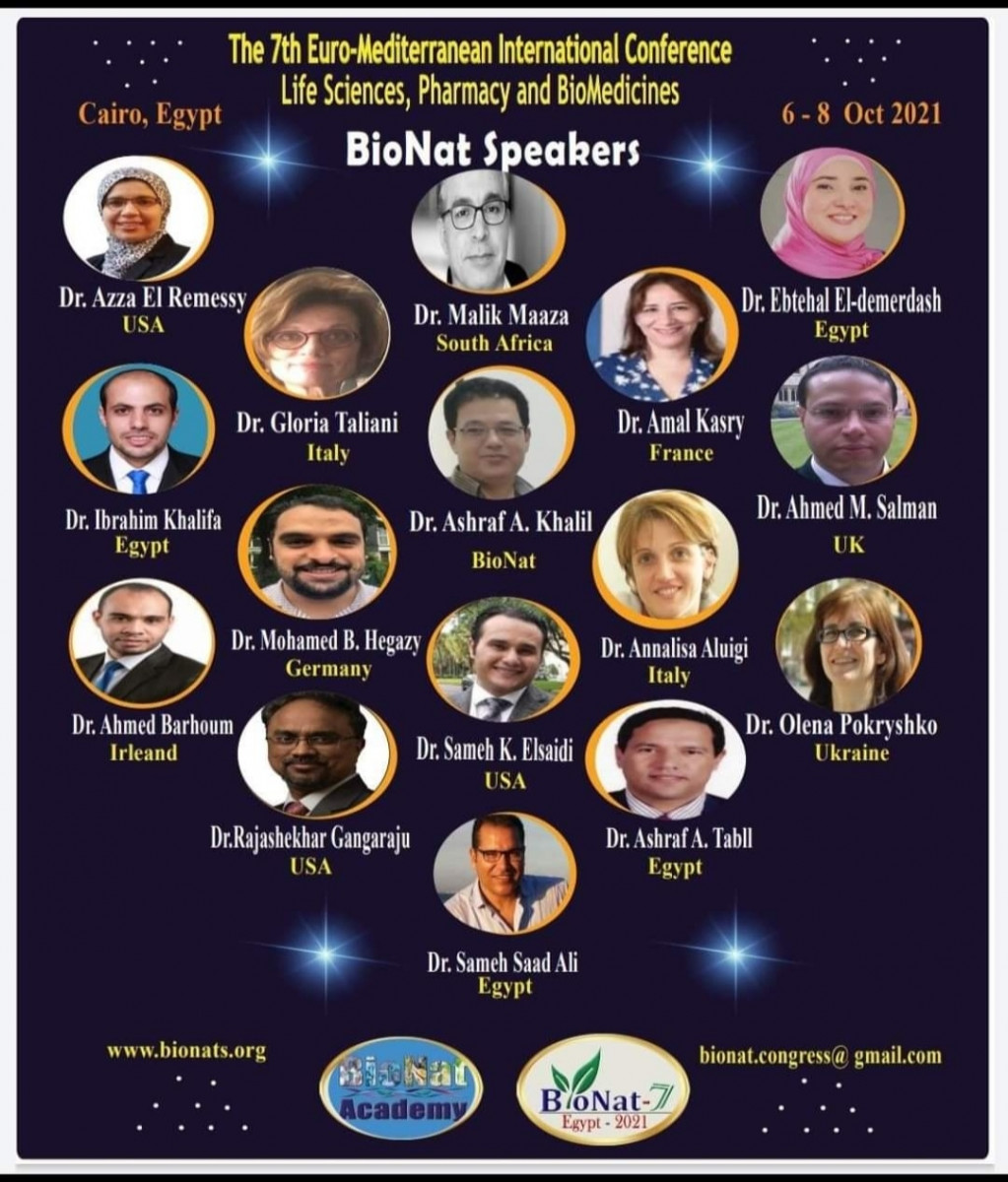
Olena Pokryshko, Associate Professor of Microbiology, Virology and Immunology of TNMU, was invited to join BioNat-7 by the conference chairman Ashraf A Khalil, the Professor of Proteomics and Biotechnology, Institute of Biotechnology and Genetic Engineering, City of Scientific Research and Technology Applications, Borg Elarab, Alexandria, Egypt,. She was a member of the research committee of the conference together with the scientists and researchers from different countries: Dr. Isabel Ferreira (Institute of Braganca, Portugal), Dr. George A. Karikas (Frederick University, Cyprus), Dr. Gary Stoner (Ohio University, USA), Dr. Lutfon Nahar (John Moores University, England), Dr. Kamal M. Mougil (University of Maryland, USA), Dr. K. Kurzydlowski (Warsaw Univ. of Tech., Poland), Dr. Khozirah Shaari (Putra University, Malaysia), Dr. Ioanna Chinou (University of Athens, Greece), Azza B. El-Remessy (Doctors Hospital of Augusta, USA), Prof. Gloria Taliani (Sapienza of Rome University, Italy), Dr. Maria Pantelidou (Frederick University, Cyprus), Dr. Annalisa Aluigi (National Research Council, Italy), Prof. Ibtihal El-Demerdash, (Ain Shams University Egypt), Prof. Ashraf Tabl (National Research Center, Egypt).
The scientists also expanded on the topical issues of coronavirus diseases. There were reports on: The role of oxidative stress in mortality from COVID-19, COVID-19: Rapid vaccine development and lessons learned during the next pandemic; In silico insights a potential target of plitidepsin as an inhibitor of SARS-COV-2 by molecular docking, dynamic modeling and calculations of MM-PBSA; Immunodiagnostic and antibody-based immunotherapy: the role of monoclonal antibodies. The presentations on the latest treatments and the use of pharmacy were really interesting: Biopreparation based on the secretion of mesenchymal stem cells against visual pathologies of traumatic brain injury; Modulation of p75NTR and mesenchymal stem cells for the treatment of diabetic retinopathy: are we still there? Promising antifungal effect of Kombucha tea culture in combination with voriconazole against Candida species causing vulvovaginal candidiasis; Silicone Toxicology: New Computer Approaches to Toxicity Assessment. Many questions were asked after presentations on current nanotechnologies: Sensors based on nanostructured materials: new applications and challenges; Nanoporous materials as drugs with biocompatibility and controlled release; Keratin nanotechnologies for biomedical, pharmaceutical and cosmetic applications. Associate Professor Olena Pokryshko also expanded on an important topic about the increasing resistance of microorganisms to antibiotics. After all, according to the WHO, if resistance to antimicrobials is still increasing steadily, in 2050 the number of bacteria that die from multidrug-resistant strains will be 50 million a year. She presented a report on “Dynamics of antibiotic susceptibility of microorganisms extracted from patients undergoing mechanical ventilation in the intensive care unit”, which triggered a discussion among the world researchers.