

Introducing the Culture and Customs of Nigeria to TNMU Students
At the Department of Physiology, Bioethics and Biosafety, an educational event on topic “Nigeria – population, famous people, national holidays” was held remotely with students of tutor groups.
Russia’s full-scale invasion of Ukraine has dramatically changed the lives of millions, including students at Ternopil Medical University. Due to the uniqueness of the situation, we still try to carry out educational activities.
The meeting was opened by the Head of the Department, Professor S. N. Vadzyuk. He noted that such educational activities at the department are frequently carried out, and it has become a tradition of the department to study the history and the past of the countries and lands where our students come from. As a significant number of foreign students of the tutor groups are Nigerians, we decided to tell our students the peculiarities of the culture, customs and sights of Nigeria.
Information about the history, culture, architectural monuments, famous people of Nigeria was presented by English-speaking students in the English and Ukrainian language.

Teachers-tutors of the Department: Professor S. N. Vadzyuk, Assistant S. S. Nakonechna and others.
The teaching staff together with the students of the tutor groups listened to an interesting presentation of the students of Group 367 Abigail Olamide Fovodu and Gloria Eitaio Ajala on the topic “Nigeria – population, famous people, national holidays”.

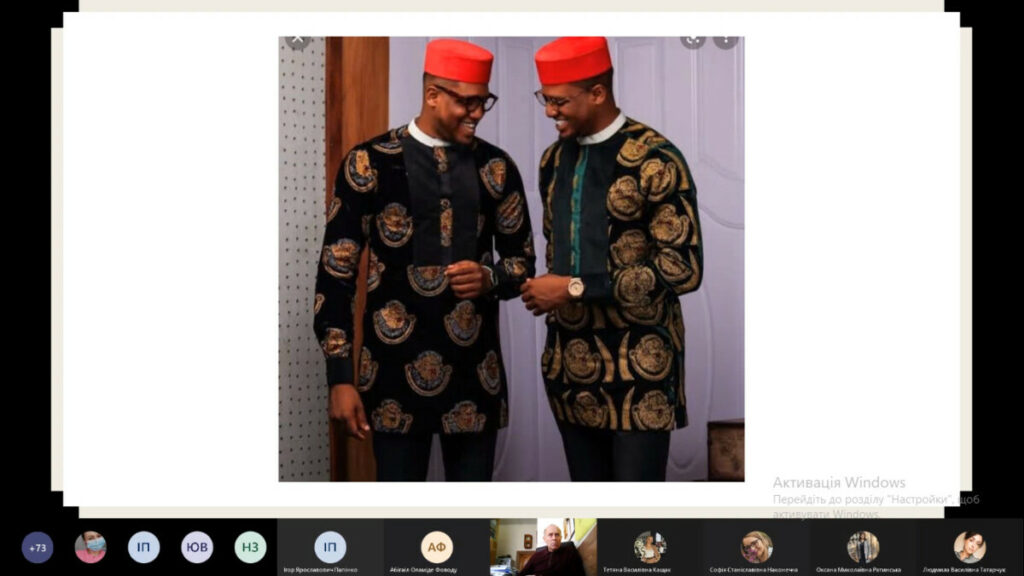
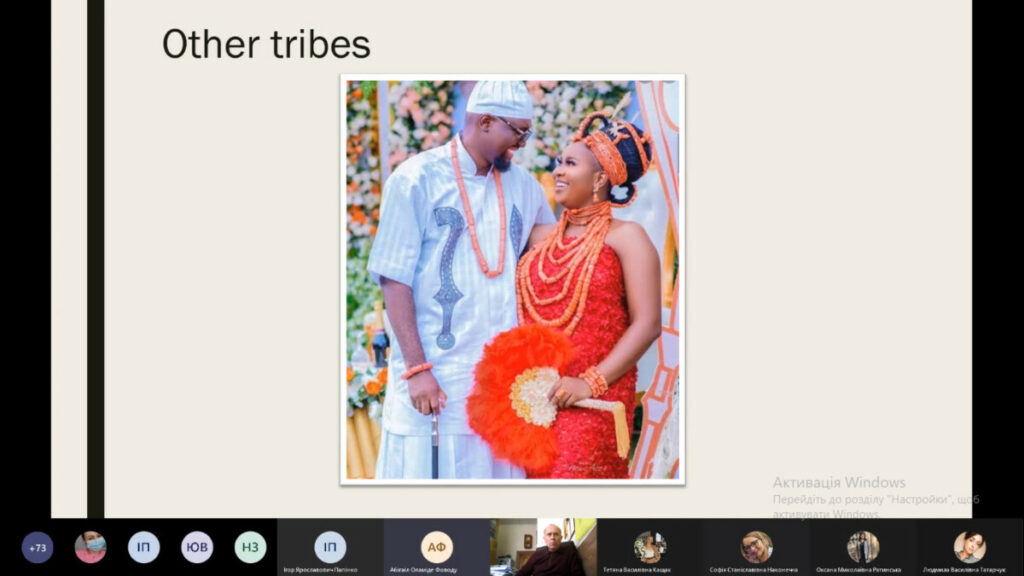
The Yoruba people occupy the western part of Nigeria in states such as Lagos, Ondo and others. The Yoruba people are also known for their luxurious Owambe parties and dresses. Men are known for their agbadas, and women for their bubas and wrappers, usually a material called Aso-oke.
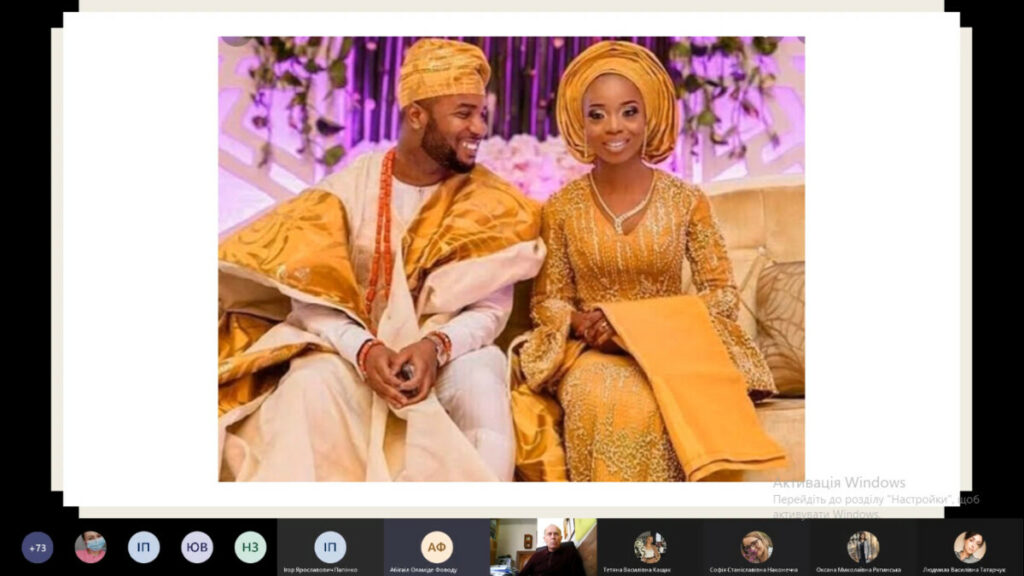
The Hausa people live mainly in northwestern Nigeria. They are the largest ethnic group in the area, which also includes another large group, the Fulani. Housa men are easily recognizable by their elegant flowing dresses, known as “Babban Gida”, which are combined with a cap called “Huluna”. Women wear a tight-fitting robe called “Abaya” with a matching blouse, tie on their heads and scarf; on their arms and legs there are usually drawings of henna. In general, their style of dress is very conservative.
Some universities rank high in Nigeria. For example, University of Ibadan, which is the first university founded in Nigeria in 1932. It was originally an affiliated college of the University of London, and in 1962 it was granted full independent status. It consists of thirteen faculties, including social sciences, agriculture and forestry, education, veterinary medicine, technology, law, health and dentistry, and is known as the best Nigerian university to study medicine. Wole Soyinka and Chinua Achebe are graduates of this university.
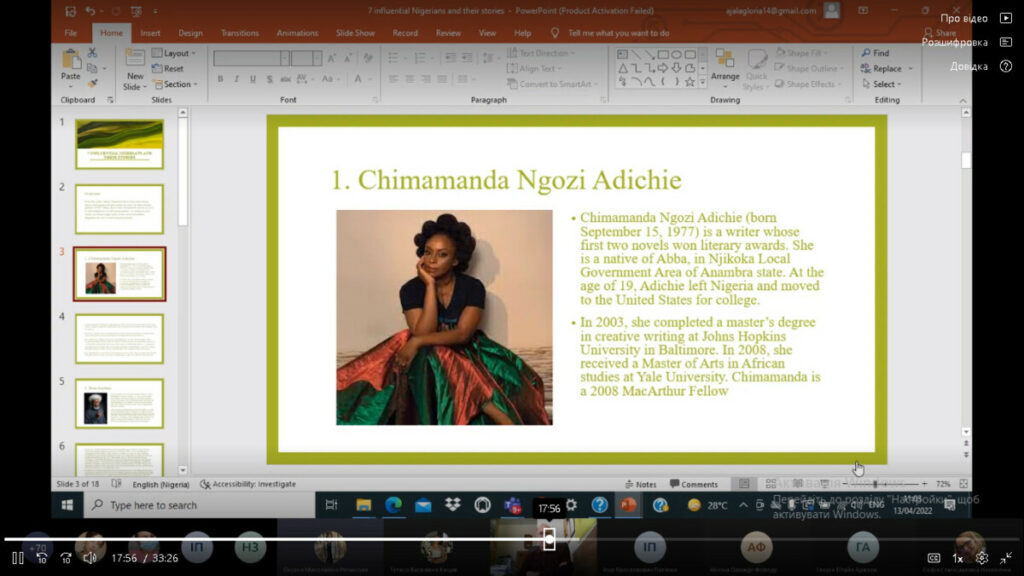

Another university – Covenant University – is one of the leading universities in Nigeria, whose reputation is growing rapidly over the years, and it was recognized as the best private university in Nigeria in its 2018 ranking by the Nigerian University Commission. The college is also one of the top 10 Nigerian universities in 2021.


Alhaji Aliko Dangote is a Nigerian businessman who owns the Dangote group, which specializes in cement, sugar and flour. Recognized as the foundation of the largest man of African descent in the world.
Jay-Jay Okocha is a Nigerian footballer. Okocha acquired Turkish citizenship and chose the name Muhammed Yavuz while playing for the Turkish football team.
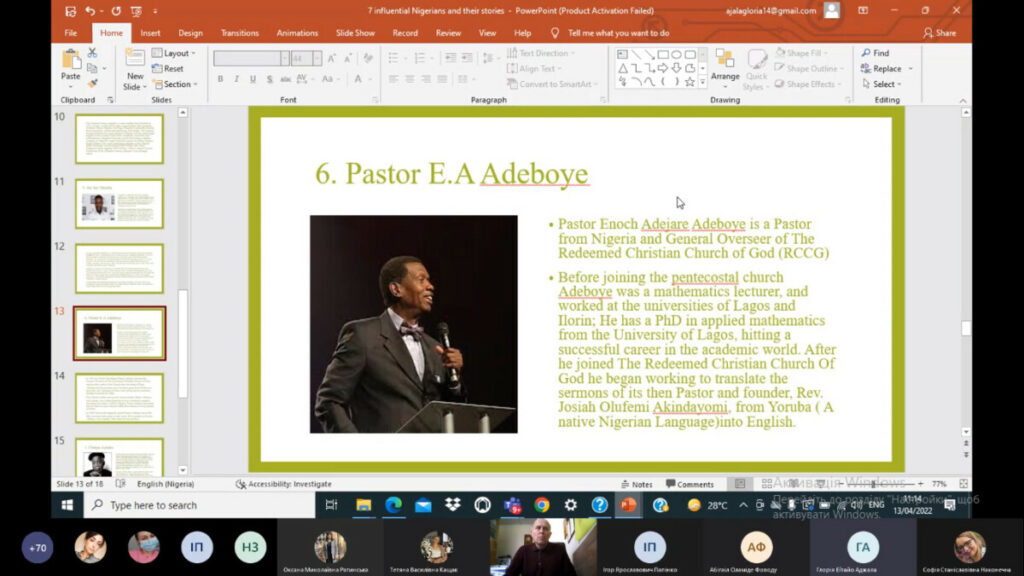

Pastor Enoch Adeboye is one of the most influential pastors in Nigeria and the world. He worked hard to expand the Orthodox Church, which now has branches in 186 countries, from Haiti to Germany, from India to the United Kingdom, and the United States.
Chinua Achebe is a writer, literary critic, one of the founders of modern Nigerian literature, winner of the International Booker Prize (2007).
Prepared by Associate Professor of the Department of Physiology, Bioethics and Biosafety T. V. Kashchak.