


TNMU Professor Participated in International Conference “ISPOR 2022” (USA)
On May 15-19, 2022, the Head of TNMU Department of Pharmacology and Clinical Pharmacology, Professor Oleksandra Oleshchuk participated in the International Conference “ISPOR 2022”, which took place in Washington (USA).
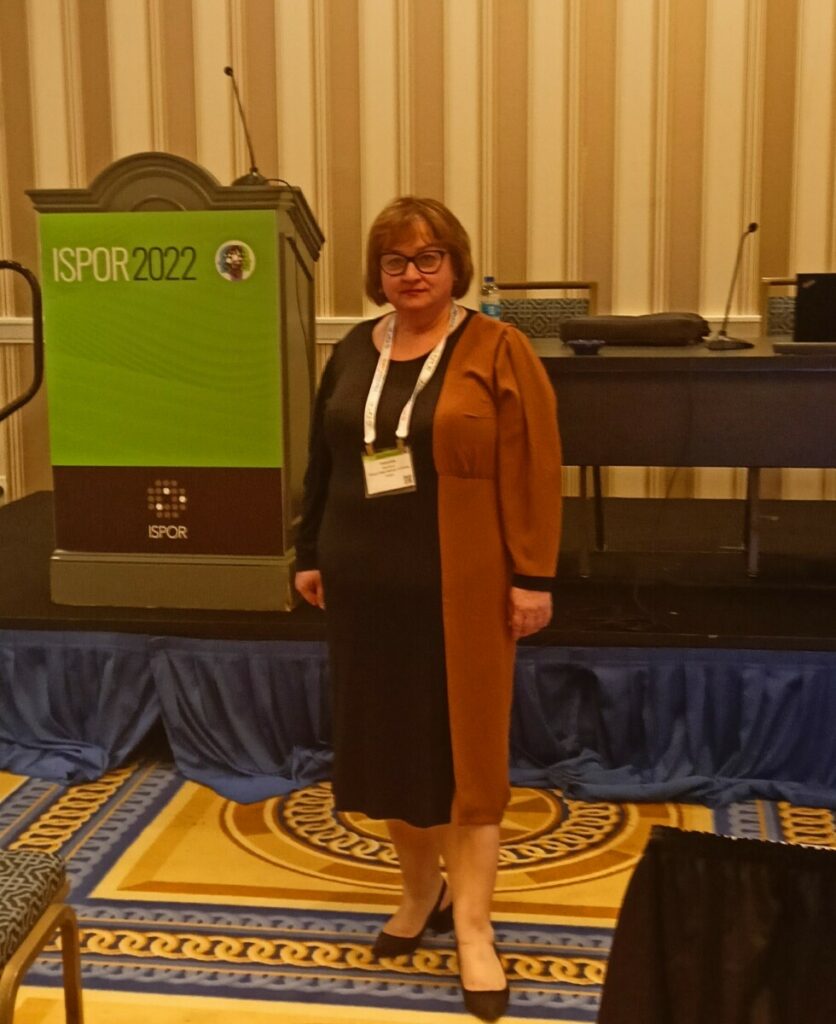
Prof. O. M. Oleshchuk, a ISPOR 2022 participant.
ISPOR (International Society for Pharmacoeconomics and Outcomes Research) is a leading global research and education organization on pharmacoeconomics and the results of health research and its use in decision-making to improve public health. Its goal is to develop and promote pharmacoeconomic methods and research results in order to rationalize health care costs and improve health care decision-making at the national and global levels.
ISPOR brings together leading experts in the field of pharmacy and medicine from around the world. This organization is a springboard for purposeful multilateral activities in the framework of research and best practices of innovation, mobility of scientists in health technology assessment (HTA).
The International Annual World Conference “ISPOR 2022” is organized in the United States as a leading country that successfully uses knowledge of pharmacoeconomics to improve patients’ access to medicines and medical devices. This year the conference was held in a mixed mode (all plenary sessions and some breakout reports were offline and some speakers provided information online). Plenary and breakout sessions addressed strategic issues in pharmacoeconomics, health policy research to assess the clinical efficacy and cost-effectiveness of medicines and medical devices.
During the opening, as well as at the second plenary session of Nancy Berg, ISPOR CEO & Executive Director greeted the delegation from Ukraine and expressed support for Ukraine in its liberation war with Russia, as well as admiration for the courage and bravery of the Ukrainian army and people.
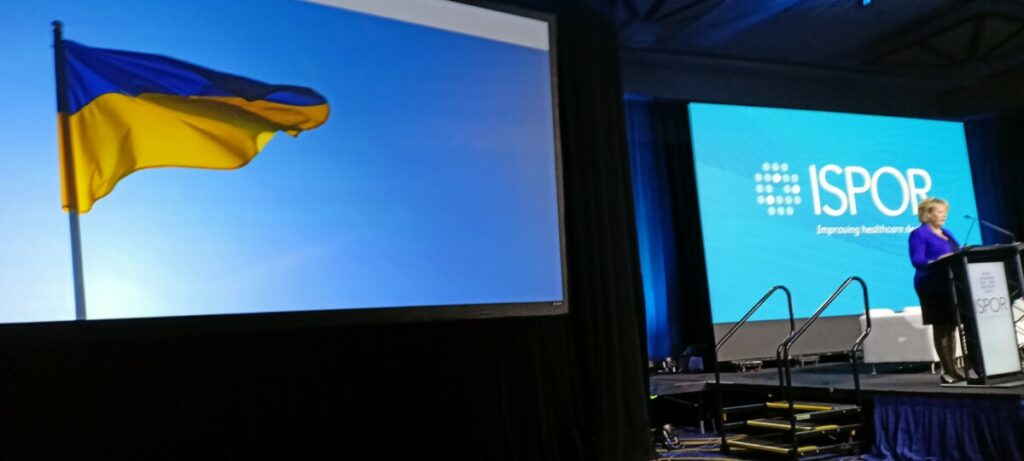
ISPOR Executive Director Nancy Berg expressed support for Ukraine at the opening of the conference.
The whole hall applauded and greeted the delegation from Ukraine consisting of Oresta Pinyazhko, Ph.D. in Pharmaceutical Sciences, Director of the Medical Technology Assessment Department of the State Expert Centre of the Ministry of Health of Ukraine, President of the Ukrainian branch of ISPOR; Olha Zaliska, Doctor of Pharmacy, Professor, Head of the Department of Organization and Economics of Pharmacy, Drug Technology and Pharmacoeconomics at Danylo Halytsky Lviv National Medical University (LNMU); Oleksandra Oleshchuk, Doctor of Medicine, Professor, Head of the Department of Pharmacology and Clinical Pharmacology at I. Horbachevsky Ternopil National Medical University; Sofia-Roksolana Hot, Ph.D. in Medicine and Zoriana Zabolotnia, Lecturer at the Department of Organization and Economics of Pharmacy, Drug Technology and Pharmacoeconomics at LNMU.
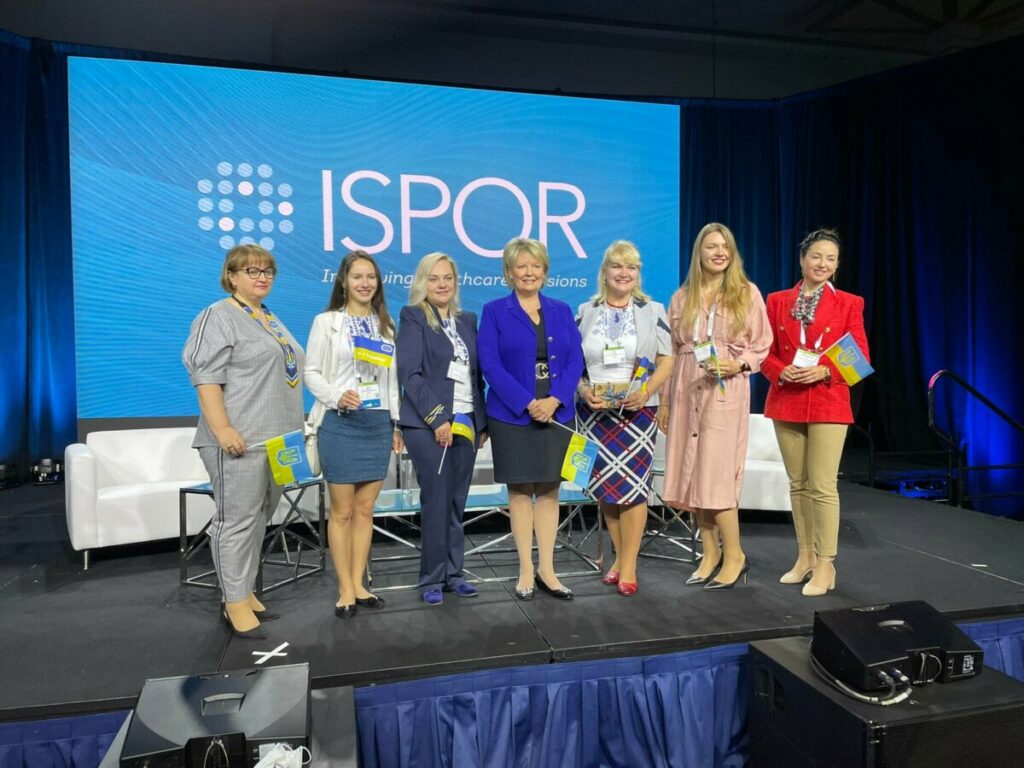
ISPOR Executive Director Nancy Berg and members of the Ukrainian delegation.
On the second day of the conference, delegates from Ukraine had an hour-long personal meeting with ISPOR Executive Director Nancy S. Berg (CEO & Executive Director) and informed her on the situation in Ukraine, health care problems in wartime, how medicine and pharmacy meet challenges, heroic deeds of doctors and pharmacists, the role of the volunteer movement in providing medicines. Ms. Nancy Berg was interested in information about the activities of the TNMU Volunteer Centre. It was discussed how MTA tools can help Ukraine in these conditions.
The program of the ISPOR 2022 conference included three plenary sessions, 8 breakout sessions, 7 short courses, and about 1,000 poster presentations, which were included in the program after peer review, and contained original scientific, methodological results of HTA and HEOR research.
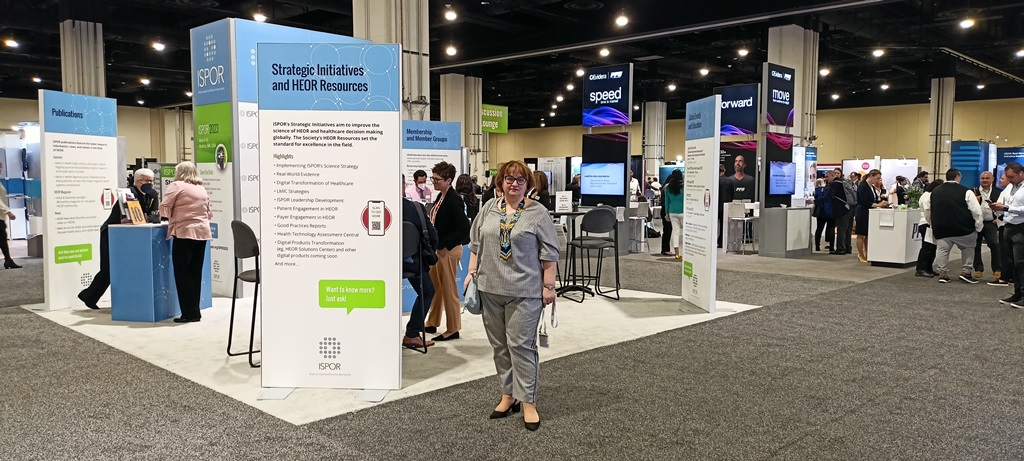
Prof. O. M. Oleshchuk at the ISPOR 2022 exhibition.
In recent years, health authorities in different countries have experimented with cost-management models to reconcile the tension between the accelerating pace of demand for new health technologies and the traditionally slow, prudent procedures that govern their implementation. The pandemic and the war in Ukraine have fuelled this interest by testing healthcare systems around the world, increasing the need for the timely introduction of vaccines, biologics, diagnostics, telemedicine and digital healthcare solutions. These factors have led to the medical technology assessment (MTA) “on the go”. At the first plenary session, three thematic reports were presented, which offered unique solutions to these problems: 1) the experience of the accelerated process of approval / reimbursement of digital health programs (DiGA), implemented through the German Social Code; 2) findings from the Breakthrough Devices Program in the United States, which allows more reliance on post-marketing data for medical devices, and 3) an overview of the FDA Total Product Lifecycle Advisory Program, a menu of tools and services for stakeholders. Evidence requirements for clinical development, which are expected to provide new and improved ways to approve regulations and reimburse costs in the coming years. The technical and political problems encountered during this unique period were highlighted. Such research will provide important knowledge on how to accelerate the introduction of new products and assess their impact on patients’ lives. Given the hostilities, Ukraine also needs accelerated tools to decide on the rational use of funds for medicines and medical devices.

Participation in the second plenary session on “Can Big Data Analytics Deliver on the Promises of Personalized Medicine for All? Unpacking the Health Equity Considerations” has shown that the successful application of big data analytics to personalized medicine often involves risk assessment models for applying individual patient characteristics to treatment decisions. However, these models have been criticized for their lack of “contextual specificity” and their vulnerability to misinterpretations of the results of the forecast model. The real state today is that much of the data available to health systems, researchers, payers, and regulators does not fully reflect all groups or experiences.
The third plenary session “The Patient (Finally) at the Centre: How Can We Leverage Digital Data to Make Patient-Focused Adoption, Reimbursement and Management Decisions?” has shown that the collection of patient-centred health data through clinical databases and surveillance systems is promising in terms of the paradigm of individual diagnosis and treatment. The challenges faced by each patient, whether in the form of comorbidities, stages of the disease or even socio-economic factors, must be taken into account in the assessment. However, to be most effective in health systems, payers and health technology assessment bodies need to be able to use this data to go beyond the “average” patient assessment and develop more individualized approaches. At the same time, more specific patient information is a matter of privacy concern, as many data systems which are used or developed record patient data without the consent or information of patients about their use. Not only do patients and the legal community have their own views on the best use of their data, they can also provide data through personal applications and other real-time data collection methods.Третє пленарне засідання «The Patient (Finally) at the Center: How Can We Leverage Digital Data to Make Patient-Focused Adoption, Reimbursement and Management Decisions?» показало, що збір даних про стан здоров’я, орієнтованих на пацієнта, за допомогою клінічних баз даних і систем нагляду є багатообіцяючим з точки зору парадигми індивідуальних діагностики та лікування. Проблеми, з якими стикається кожен пацієнт, будь то у формі супутніх захворювань, стадії захворювання чи навіть соціально-економічні фактори повинні враховуватися при проведенні оцінки. Однак, щоб бути найбільш ефективними в системах охорони здоров’я, платники та органи з оцінки медичних технологій повинні мати можливість використовувати ці дані, щоб вийти за межі оцінки на рівні «середнього» пацієнта та розробити більш індивідуальні підходи. У той же час, більш конкретна інформація про пацієнтів викликає занепокоєння щодо конфіденційності, оскільки багато систем даних, які використовуються або розробляються, фіксують дані пацієнтів без згоди або інформації від пацієнтів щодо їх використання. Пацієнти та спільнота адвокатів не лише мають власні погляди на найкраще використання своїх даних, вони також можуть надавати дані за допомогою персональних додатків та інших методів збору даних у реальному часі.
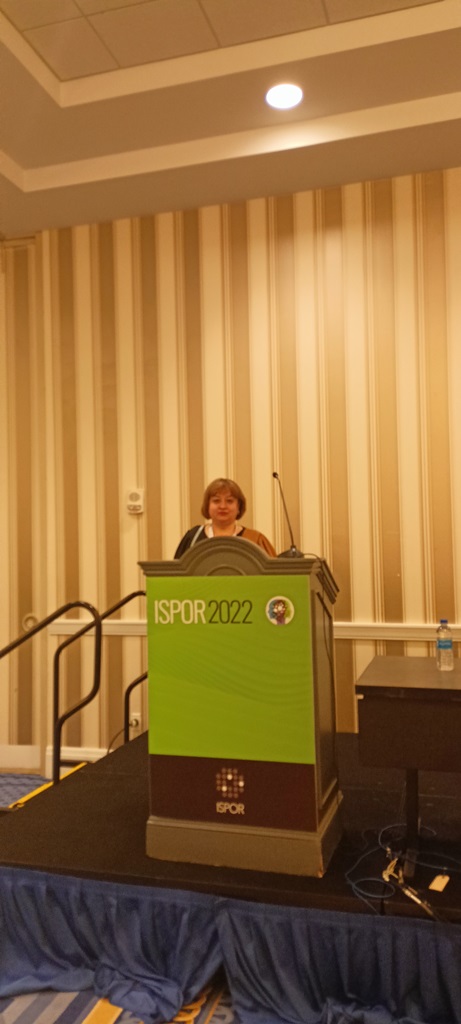
Speech being delivered by Prof. O. M. Oleshchuk at ISPOR 2022.
In addition, Prof. O. Oleshchuk had a chance to listen to the following lectures at the breakout sessions: “Systematic Approaches to Assessing Physician Decision-Making Practices and Treatment Preferences”, “Development and Methods for Quality-of-Life, Health Utilities and Patient-Centred Measures”, “Tackling Reimbursement Challenges” to Fair Access to Medicine ».
Since the introduction of pharmacoeconomics and health technologies assessment for the rational choice of drugs for inclusion in reimbursement and procurement programs is one of the effective tools in making decisions on financing medical technologies and optimizing the use of public resources, for Prof. O. Oleshchuk as a member of the Ukrainian delegation and teacher, it is important to study the world’s best practices in health technology assessment. It is important to introduce new knowledge into practice and further disseminate knowledge of pharmacoeconomics among students of medical and pharmaceutical faculties, by improving the examination of submitted materials in the assessment of certain medical technologies, including research dissertations of scientists.
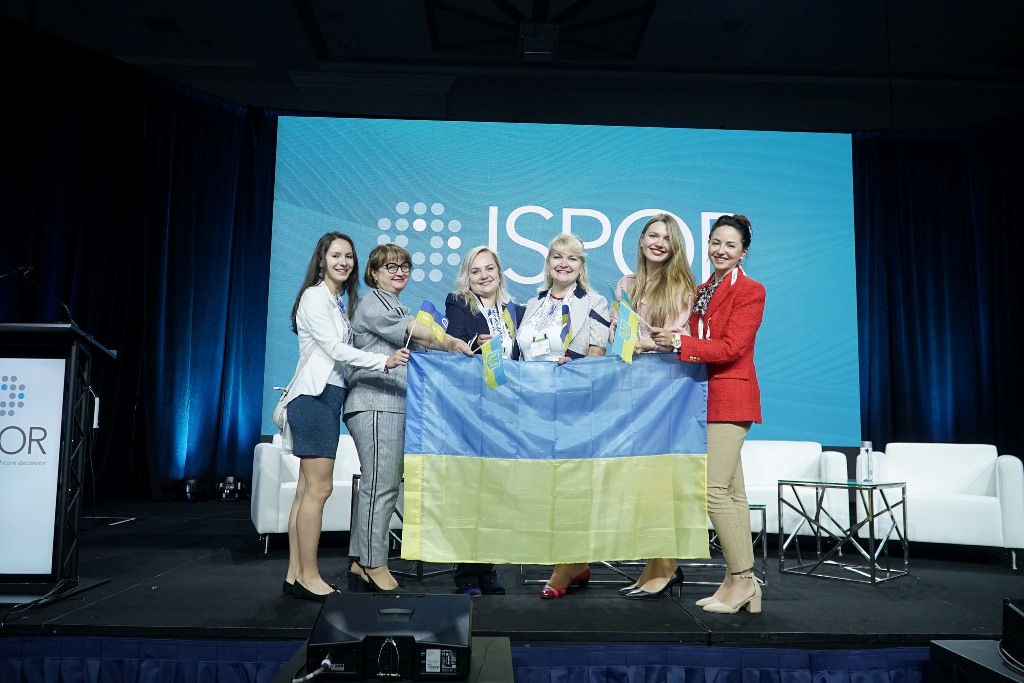
Participation in the Conference was partially funded by ISPOR. Prof. O. Oleshchuk expresses her sincerest appreciation to the University administration for their assistance in participating in the event.
Oleksandra Oleshchuk, Head of the Department of Pharmacology and Clinical Pharmacology of TNMU.