

TNMU Scientists Participated in the Program of Multidisciplinary Online Support for Children with Spina Bifida in Ukraine
Russian aggression against Ukraine has exacerbated the problems of children with severe conditions, who are particularly vulnerable during military conflicts.
To support children with spina bifida and their parents in the difficult time of war and to improve access to medical care, the patient organization “Union of parents of children with spina bifida and hydrocephalus “Siaivo Duhu” (“The shine of spirit”) together with TNMU scientists (Head of the Department of Children’s Diseases and Paediatric Surgery, Prof. Oksana Boyarchuk and Associate Professor of the Department of Paediatrics No. 2 Kateryna Hlushko) initiated the project “Program of multidisciplinary online support for children with spina bifida in Ukraine”. The project was supported by the international organization “Child Help International”, Belgium.
The main goal of the project was to support and help patients with spina bifida and their families, providing consultations by doctors of a multidisciplinary team, examination and treatment, provision of care and medicines according to individual needs, informational and psychological assistance.
Doctors from a multidisciplinary team were involved in the project: a paediatrician-coordinator, a neurosurgeon, a urologist, a gastroenterologist, an orthopaedist and a rehabilitation specialist.
In total, since June 2022, more than 150 parents of children with spina bifida from different parts of Ukraine have given informed consent to participate in the project and filled out a questionnaire about the child’s health.
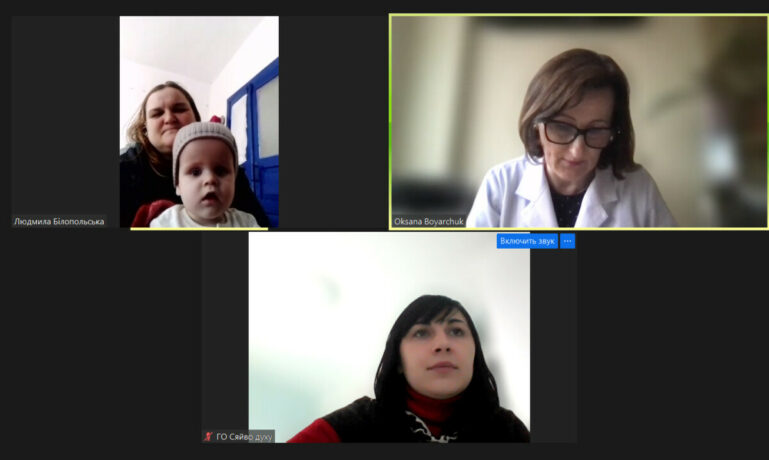
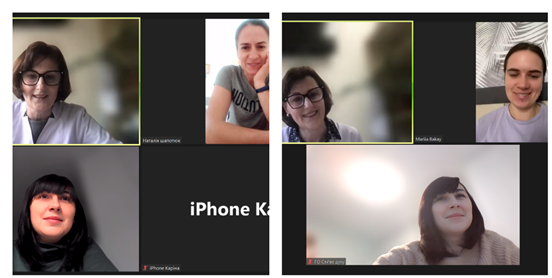
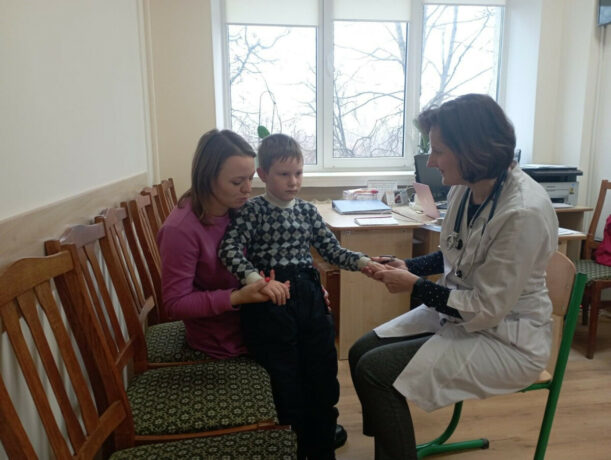
Prof. Oksana Boyarchuk, who is the coordinator of the multidisciplinary team, together with the head of the “Siaivo Duhu” NGO, conducted more than 80 initial online consultations. About 40 children were consulted by a gastroenterologist, Associate Professor Kateryna Hlushko. Prior to the consultation, the doctors thoroughly studied the patient’s questionnaire and the provided medical documentation. If possible and necessary, consultations were also conducted face-to-face.
Among the project participants, 20 families were externally displaced and 11 families were internally displaced to other regions of Ukraine. Among the 31 families who left their homes, 27 families were from regions that were under occupation or from frontline areas.
Parents and children received information on medical and social issues. Advice is provided on the continuum of care for children with spina bifida, including clean intermittent catheterization and bowel cleansing, which is an important aspect of renal preservation in children with neurogenic bladder. If necessary, educational materials and videos were sent, which were created with the participation of TNMU scientists (Prof. Oksana Boyarchuk, Associate Professor Kateryna Hlushko, Associate Professor Pavlo Hoshchynskyi). During consultations, the importance of children’s socialization, self-care, independence, children’s comfort, and state social guarantees were emphasized. Great importance was given to the issue of vaccination and monitoring by specialists of the multidisciplinary team. At the end of the online consultation, parents received a doctor’s opinion and recommendations for follow-up and treatment.
In addition, online group webinars were held with a physical therapist, an occupational therapist, and a psychologist. If necessary, individual consultations were held with these specialists.
If possible and with the consent of the parents, senior medical students of TNMU were present at the consultation, which gave them the opportunity to familiarize themselves with aspects of the care of children with spina bifida, best practices and recommendations based on evidence and on the consensus of the International Spina Bifida Association and its partner doctors. Implementation of simple methods of bladder and bowel management allows to prevent the development of recurrences of urinary tract infections, damage to the kidneys and bladder, and also ensures social integration of the child and can improve the quality of life.
Much attention was paid to the aspects of prevention of birth defects of the neural tube.
We hope that this project and international support will be an impetus for the development of multidisciplinary care for children with spina bifida throughout Ukraine, will unite parents and doctors, will draw the attention of health care providers to the problems of these children, which will ultimately contribute to improving the quality of their lives, despite the difficult circumstances. The project made it possible to identify new prospects for the development of preventive measures and multidisciplinary care of children with spina bifida.

We express our appreciation to the international charitable organization “Child Help International” (Belgium) and all the supporters who help children with spina bifida during the difficult times of war.