

TNMU Students and Staff Met with Chornobyl Disaster Liquidators
On April 26, 1986, the largest man-made disaster in the history of mankind occurred – the accident at the Chornobyl nuclear power plant. It changed the destinies of thousands of people, took many lives, and also made several hundred square kilometres of Ukrainian land unsuitable for life.
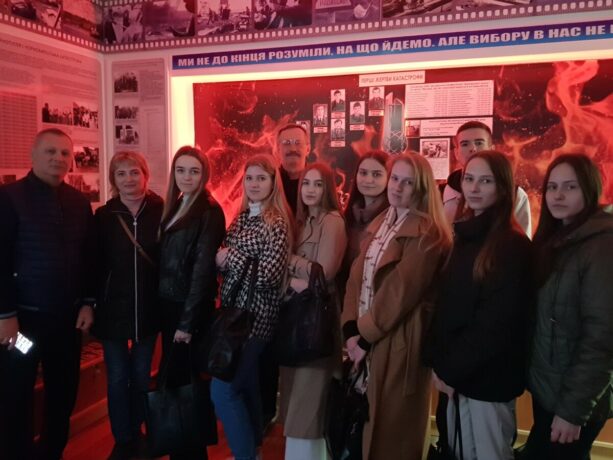
On the eve of the day of remembrance of the tragedy at the Chornobyl NPP, the teachers of the Department of Pharmaceutical Chemistry Maria Mykhalkiv, Iryna Ivanusa and 2-year students of the Faculty of Pharmacy visited the “Chornobyl Museum”, which is located in the office of “Chornobyl” Union in Ternopil, where they met with the liquidators of the terrible accident Oleksandr Derkach (Head of the Union who headed the military fire department) and Volodymyr Chartorynskyi (radiologist doctor, medical service colonel, who graduated from our university in 1983).


Oleksandr Derkach (right) and Volodymyr Chartorynskyi (left).
Military firefighters, according to Oleksandr Derkach, carried out decontamination of roads, houses, and trees from radiation, removed things from premises and equipment to specially designated areas – burial grounds.

Volodymyr Chartorynskyi dealt with issues of personnel health, the number of irradiated and hospitalized people, and also measured the level of radiation in populated areas. According to Volodymyr Chartorynskyi, radiation is a terrible phenomenon that cannot be felt either by taste or sound. And this meant that the radiation dose can be received without fully realising it. When assessing the level of radiation in people, the highest level was measured on hats, hair (radiation dust settled) and shoes (especially the laces). In the beginning, there were not enough means of protection. There were also many violators of safety regulations (drinking water from wells, eating apples, picking mushrooms, which was strictly forbidden).

After a couple of days, most liquidators felt a lump in the throat, a specific taste in the mouth, saliva changed its colour to red-brown, which was a consequence of the radiation.
On their own, the members of the “Chornobyl” Union organized the “Chornobyl” museum, where they collected photos from the liquidation, special devices for measuring radiation, protective suits and masks, and made an album containing newspaper clippings from the time of the tragedy. The exhibition includes an icon of the Chornobyl Saviour, the book of commemoration, which records the names of all the deceased liquidators of the accident who lived in the Ternopil region, a photo of the boy who was the last born in Prypiat (by the way, he obtained a degree in pharmacy and works as a pharmacist).


The museum has an exhibition hall where drawings on the theme “Chornobyl through the eyes of children” made by the children of Ternopil region are collected.


In a small cinema hall, students watched a film about the causes of that terrible tragedy.
Many questions were asked and many thorough answers were received.

We thank Oleksandr Derkach and Volodymyr Chartorynskyi for the interesting meeting and the opportunity to get a lot of interesting information.