

TNMU Professor Won Grant under the NATO Program “Science for Peace and Security”
Professor of Ternopil National Medical University, Head of the Department of Pharmaceutical Chemistry Liliya Logoyda won a grant under the NATO program “Science for Peace and Security” with the scientific work Smart Patches for Multimodal Wound Healing (multi-year Project G6031 “Wearable Smart Patches for Multimodal Wound Healing – DRESWOUTRE”). The project will be implemented in cooperation with a team of scientists consisting of Dr. Maria Grazia Raucci (National Research Council, Institute of Polymers, Composites and Biomaterials, Naples, Italy), Dr. Ivan Ristic (University of Novi Sad, Faculty of Technology, Novi Sad, Serbia), Dr. Nikola Geskovski (University Ss Cyril and Methodius, Faculty of Pharmacy, Skopje, North Macedonia), Dr. Petre Makreski (University Ss Cyril and Methodius, Faculty of Natural Sciences and Mathematics, Skopje, North Macedonia), Dr. Aleksandra Ivanoska-Dacik (Macedonian Academy of Sciences and Arts, Research Center for Environment and Materials, Skopje, North Macedonia).

In 2016-2019, a quarter of a million people died in the world’s armed conflicts, more than half of them in Syria, Iraq and Afghanistan. Almost 70% of the total number of the dead in the Syrian conflict were civilians. Russia’s unjustified war against Ukraine is already having dire consequences for people’s health. Emergency wound care requires significant clinical resources that are not normally available, greatly increasing the likelihood of complications during wound care. The main goal of this project is the development of a multimodal wound dressing, which consists of biodegradable polymers and will provide adequate mechanical protection, antimicrobial, immunomodulatory properties and the ability to promote cell adhesion, thus addressing the early and middle stages of the wound healing process with minimal medical intervention.
The first stage of the project will be the synthesis of new polymers, as well as the development and production of multifunctional composites with defined characteristics. The wound dressing will consist of three different layers. The top layer will create a thin, impermeable barrier to water and external contamination, while the middle part will contain antibiotics and immunomodulatory substances, and the bottom layer will have a macroporous structure to facilitate the migration and adhesion of local fibroblasts. Each layer will be carefully characterized using sophisticated chemical imaging techniques and further tested in cell cultures.
After that, several wound dressing compositions will be made from the selected most optimal bottom, middle and top layers, which will be submitted for animal studies to verify safety and efficacy. The most promising wound dressing formulation will be further promoted as a possible option for commercialization. Unique innovations related to the design and synthesis of polymers and composites, formulation of wound dressings and process manufacturing will be used for patent application. In addition, young researchers will receive hands-on training in polymer characterization, electrospinning, chemical imaging (FTIR and Raman) and cell culture studies during special research visits funded by this project. The purchase of basic equipment (DMTA analyser, FTIR, electrospinning equipment, ATR-FTIR, HPLC) will make it possible to significantly increase the capacity of the formed additional research network.
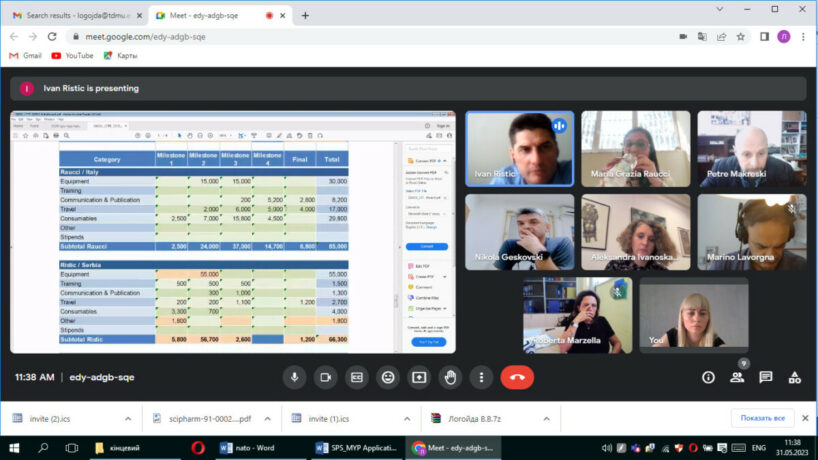
On the basis of TNMU Department of Pharmaceutical Chemistry, a study of API loading and a study of API release from a wound dressing will be conducted. A liquid chromatograph, an ultrasound bath, chromatographic columns, and solvents will be purchased for the implementation of this stage of research using the grant funds.
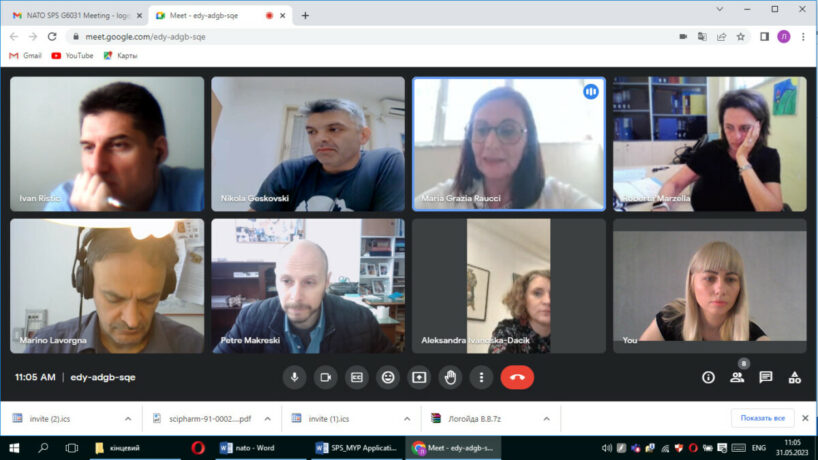
On May 31, 2023, the first video conference of project co-leaders took place, where organizational issues related to project implementation were discussed. The total budget of the grant is EUR 347,300, of which TNMU is EUR 36,000.
The information was provided by Professor Liliya Logoyda.