

TNMU Teachers Participated in a Stady Tour to Maastricht University (the Netherlands)
On June 17-27, 2023, medical educators from pilot institutions of the Ukrainian-Swiss project “Development of medical education” visited Maastricht University (the Netherlands).
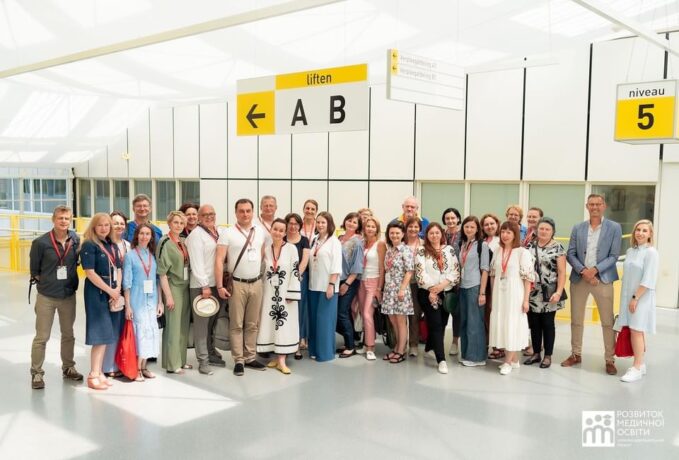
The purpose of the event is to study the experience of the Faculty of Medicine, Health and Life Sciences at this university. The tour program included various areas. This is the training of clinical skills (visits to the simulation centre, the role of clinical skills in the curriculum, training in university clinics); approaches to the development, revision, availability of the medical university curriculum and the impact of the medical education standard on this process; training in family medicine (experience in the work of the department of family medicine, interaction with outpatient clinics of family doctors, organization of practice in primary care); roles of teachers and continuous professional development (teaching activity, pedagogical skills, research skills, medical activity). But the key tasks of the study tour were to immerse yourself in the atmosphere of the institution, gain valuable experience and bring the acquired knowledge to the native university.
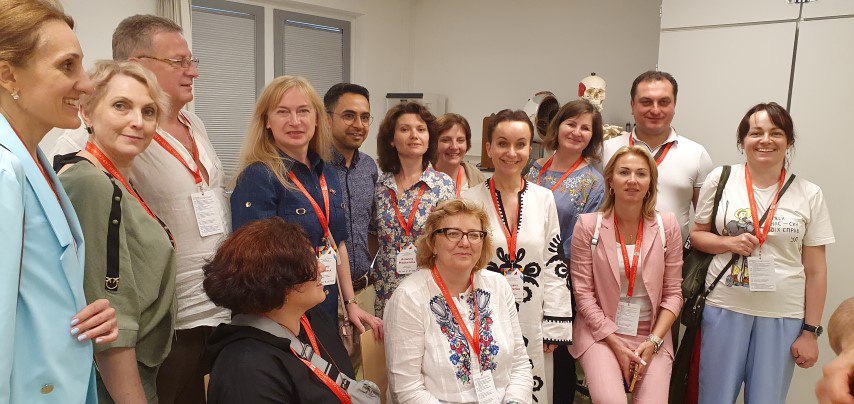
TNMU as a pilot educational institution from the Ukrainian-Swiss project “Development of medical education” was represented by Hryhorii Zahriichuk, Oksana Sydorenko, Sofia Husak and Iryna Borovyk.
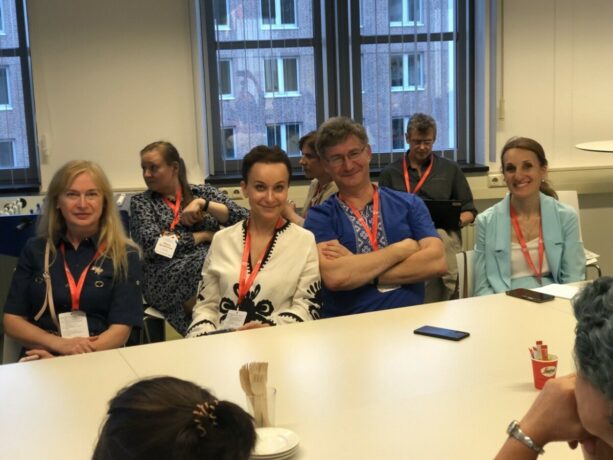
Maastricht University is a relatively young educational institution. It was founded in 1976 and stands out among other educational institutions for its people-centeredness, progressiveness and innovation. The university has created all the conditions for personal-oriented learning and self-development. It is the individualization of education, which is aimed at effective attention to each student, revealing their creative potential, that is the strategy for the development of modern education adopted by this educational institution. The main values of Maastricht University are respect for everyone, diversity and inclusiveness.
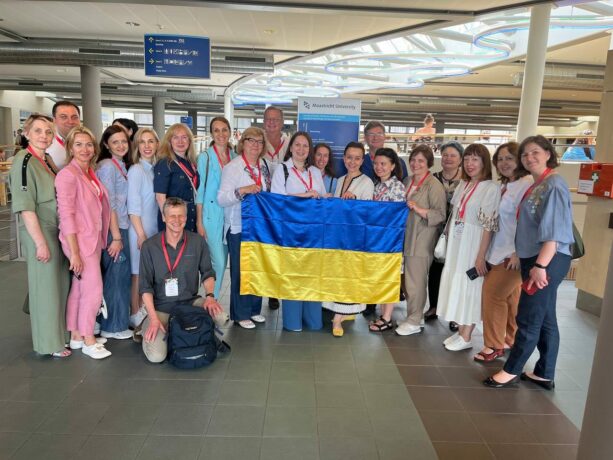
During the first day of the visit, the rector of the university, Professor Pamela Habibovik, presented the general issues of the institution’s work and its structure. The following speakers outlined the peculiarities of the organization of the educational process, research, cooperation with the university medical centre, financial aspects of medical care and education in the country.
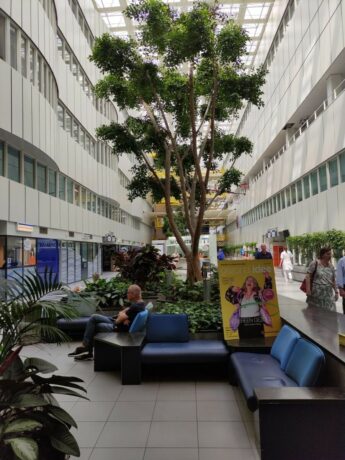
It was impressive to get acquainted with the university clinic, which, on the basis of scientifically based methods, is armed with the state-of-the-art medical and diagnostic technical means along with constructively thought out spaces that are convenient for patients and staff.
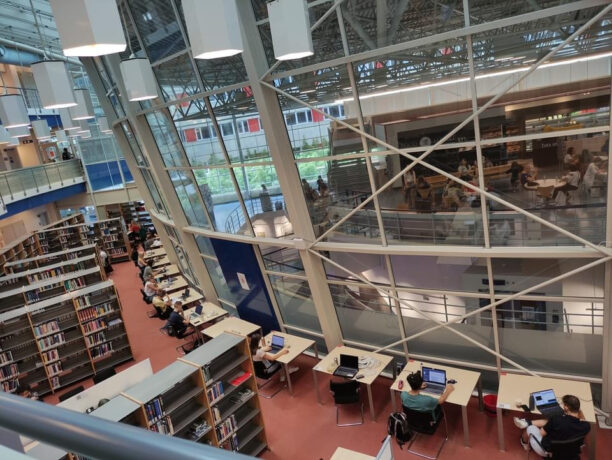
Visiting the library as the main place for self-training of students was the next point of the program. Here, all the conditions for effective training of the students have been created. All library services are computerized, which allows to optimize its work as much as possible. Students can use paper and electronic books. At the same time, there is a choice of staying in different spaces, depending on what learning needs are available – individual or group, in complete silence or with colleagues. For this purpose, special marking of rooms by traffic light colours has been introduced. The created conditions contribute to maximum motivation in self-improvement.
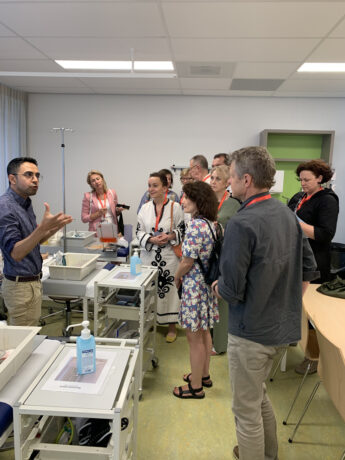
The pride of the university is the laboratory of clinical skills. Future medical students study in simulation centres from the first to the third year. At the same time, the so-called “early” immersion in the clinic takes place, when already in the first year, students work in nursing, palliative, rehabilitation departments. From the first years of training, there is a gradual integration into practical work through the gradual step-by-step use of clinical cases (clinical cases), simulation and then real patients. In training, there is a constant connection between theory and practice, principles are applied from simple to complex, from educational cases to clinical practice. The clinical skills laboratory has a large number of classrooms, medical instruments, and simulation mannequins so that each student can work with them independently.
The university pays special attention to the communication skills of future medical workers. The Skillslab sim centre has everything you need for an effective educational process on medical communication, including a video recording. During the first years of study, students work with no less than three different teachers from this subject, who have their own individual style of communication with the patient and in general form the communicative competence of the students of medical education. Constructive feedback and reflection are essential tools in mastering medical communication skills.
At Maastricht University, education is organized on the basis of the concept of problem-based learning. Problem-based learning is a teaching method in which real complex problems are used as an educational tool. Problem-based learning encourages the application of critical thinking and problem-solving skills in limited time and provides authentic experience that promotes active learning, helps systematize the knowledge and naturally integrates university studies into real clinical practice. The organization of the educational process is built in such a way that the amount of knowledge obtained in the lecture hall or through independent study of the theoretical material is assimilated not through its passive reproduction, but through a real problem or an authentic case proposed by the teacher in a practical session for group work that they facilitates. Such training is multidisciplinary and helps establish close connections between theoretical and clinical disciplines.
Much attention is paid education quality assurance. New educational programs are evaluated by students, teachers, and then approved by special commissions. For lecturers, professors and associate professors, it is necessary to pass the university qualification test, and for this you need to prepare a portfolio, take courses and pass an oral exam.
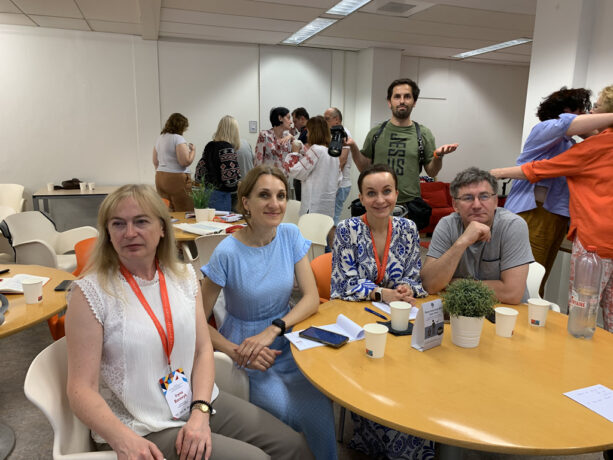
The head of the Department of Family Medicine, Professor Jean Muris, spoke about the key role of general practitioners in providing medical care to the population of the Netherlands. He emphasized that there are strong economic prerequisites for this, because more than 80% of medical care in the country is provided by general practitioners.
The discipline “General practice – family medicine” at the undergraduate level is studied for 12 weeks in the 5th year of study. More than a third of university graduates choose general practice. The duration of an internship in a specialty is 3 years. Interns spend one day a week at the specialized department, all other days they work at clinical facilities. The organization of primary medical care in the Netherlands is at the highest level. 99% of the population made declarations with family doctors, 75% of them have at least one appointment with a family doctor a year. According to the latest surveys in the country, the level of satisfaction of the population with the work of family doctors is 8 on a scale from 0 to 10. Medical care by family doctors is provided on the basis of recommendations developed by the national professional organization of family medicine doctors and revised every 5 years. Peer groups are of great importance in the education of family doctors, at which participants consider current problems in their practical activities, analyse statistical data, and agree on the next tactics. The main goal of meetings of peer groups of family doctors is to improve the quality of medical care with a special focus on the rational prescription of drugs (for example, antibiotics).
The general trend towards an increase in the number of elderly people has led to the isolation of a separate medical profession, whose representatives provide medical assistance to older people. This medical specialty is not popular among university graduates, but the need for such specialists is growing every year.
At the university, much attention is paid to work in clinical facilities. Often, students of different courses and interns study in the same educational environment and senior students help younger colleagues in acquiring knowledge and skills.
A separate report of the study-tour was dedicated to the training of nurses and the prospects that open up depending on the specialization and level of nursing education. Today, the university offers 7 bachelor’s programs and 3 master’s programs. Every year, the need for intermediate medical personnel in the Netherlands is increasing.
The program of the event also included a report on the organization of scientific research, which was presented by Professor Milena Pavlova. The scientist highlighted the main principles and steps for the successful organization of PhD research.
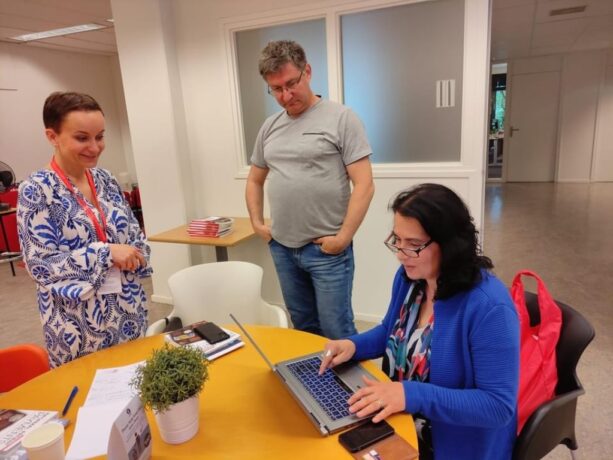
After Milena Pavlova’s report, the participants of the study tour witnessed a real defence of a scientific work for obtaining a PhD degree, which at Maastricht University is held especially solemnly according to modern rules while respecting ancient traditions.
The trip was full of knowledge, impressions, and communications. We met professionals who not only perform their work well, but also constantly improve, sincerely share their experience and support our country.
Based on the results of the visit to Maastricht University as part of the Ukrainian-Swiss project “Development of medical education”, we offer:
- Implementation of problem-based learning (PBL) in individual departments
- Starting training in patient care, nursing practice, etc in the simulation centre from the 1st-2nd years of study
- Transferring the study of the course of communication skills from the selective component to the normative one
- Considering certification of students for BLS (at least) at the level of 2-3 years of study
- Introducing an electronic format for planning and reporting the workload of university teachers
- Discussing the issue of organizing the educational process in the specialty “Nursing” using a dual form of education based on the elements of problem-based learning
- If the admission conditions allow, organizing parallel training in the specialties “Medicine” and “Nursing”
- Considering the possibility of profiling the training in the specialty “Nurse”
- Implementing short video instructions for various types of student activities
- Introducing the institute of tutoring and mentoring
- Promoting the development of 21st century soft-skills (conducting debates, negotiations, critical thinking, organizational skills, project presentation skills)
- Considering reformatting classrooms with open spaces based on lecture halls or large classrooms
- Forming educational communities of various composition (teacher-coach, interns, 4th-6th-year students, 1st-3rd-year students) in order to facilitate the educational process
- Introducing electronic portfolio forms for teachers and students
- Taking into account the experience of Maastricht University in improving the pedagogical competence of university teachers through the implementation of new approaches of continuous professional development, the introduction of training for all examiners, the creation of an educational program committee (50% of teachers and 50% of students).
We express our deepest appreciation to the organizers of the event, namely the Ukrainian-Swiss project “Development of medical education”, the host, Professor Wim Groot and Sus Cohen for an interesting, meaningful, rich, useful study tour, as well as the administration of TNMU for their support.
To victory together!
Information provided by Iryna Borovyk, Oksana Sydorenko, Sofia Husak and Hryhoriy Zagrychuk.уком.