

Features of Prosthetists and Orthotists Training at TNMU
In 2024, Ternopil National Medical University (TNMU) launched a master’s program in prosthetics and orthotics. Specialists in this field acquire a variety of clinical and technical skills aimed at the rehabilitation of patients with neuromuscular and musculoskeletal disorders, as well as patients with partial or complete limb loss. The professional duties of prosthetists and orthotists encompass a broad range of activities — from clinical assessment and device fabrication to patient rehabilitation. These specialists play a crucial role in enhancing the function of the musculoskeletal system, providing a personalized approach, and improving the quality of life. Prosthetists and orthotists must possess comprehensive knowledge and skills, including clinical assessment, design and fabrication of prostheses and orthoses, device adjustment and customization, patient rehabilitation, and advanced communication and administrative abilities.
At the Physical Therapy, Occupational Therapy, and Physical Education Department, students in the “Medical Diagnostic and Treatment Technologies” program study gait kinesiology in the preclinical practice room. They conduct observational assessments and evaluate human movement during walking by analyzing gait. This analysis enables them to detect specific characteristics, deviations, or changes in gait that may be associated with biomechanical factors or musculoskeletal disorders.
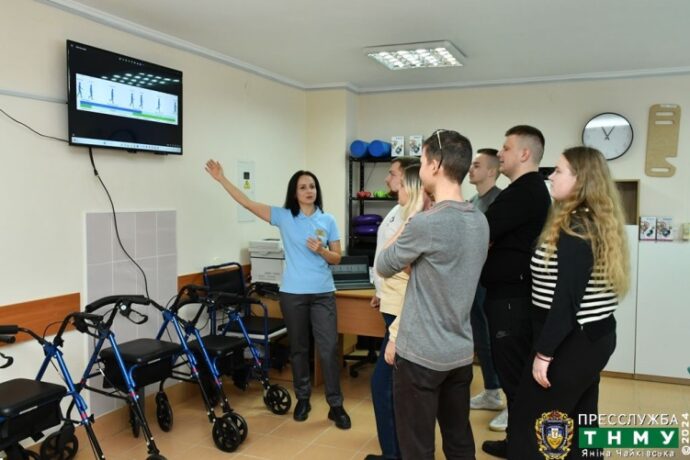
During practical classes, students study the gait cycle, which includes the stance and swing phases, as analyzing each component of these two gait phases is an essential part of diagnostics.
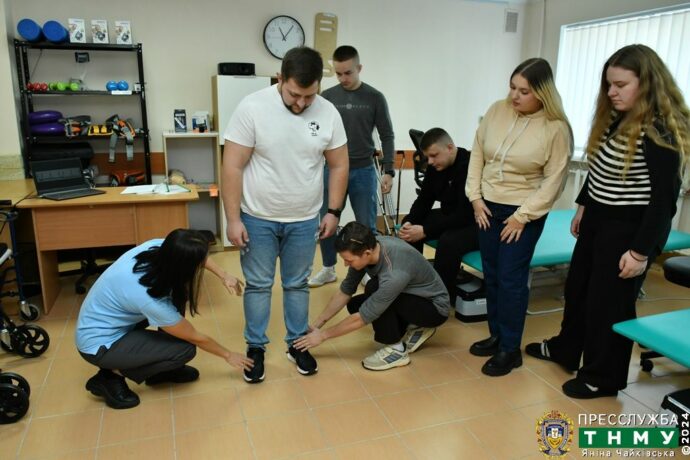
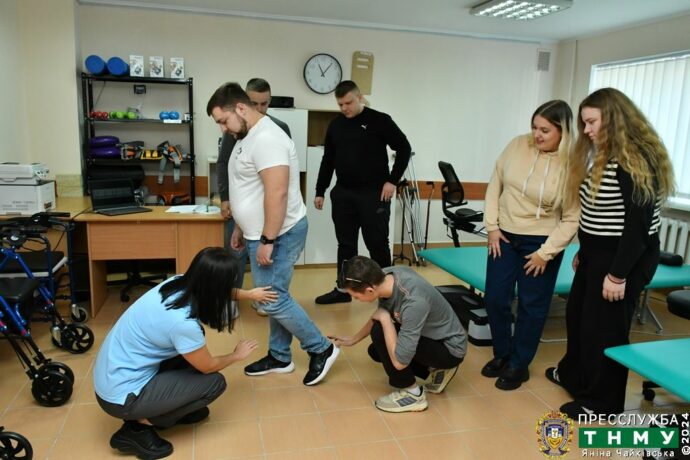
In these sessions, students identify relevant parameters that help detect gait disorders.