

TNMU Associate Professor Participated in the Conference “Medical Communication in Central and Eastern Europe: Practice, Theory, and Education”
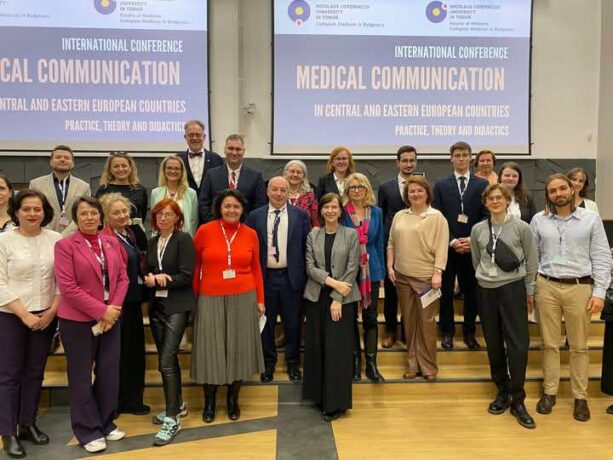
On April 10–13, 2025, the conference “Medical Communication in Central and Eastern Europe: Practice, Theory, and Education” was held in Bydgoszcz, Poland. Nataliia Haliash, Associate Professor of the Department of Pediatrics No. 2 at TNMU, took part in the event. The conference was organized by the Polish Society for Medical Communication and the Ludwik Rydygier Medical College of Nicolaus Copernicus University in Toruń.
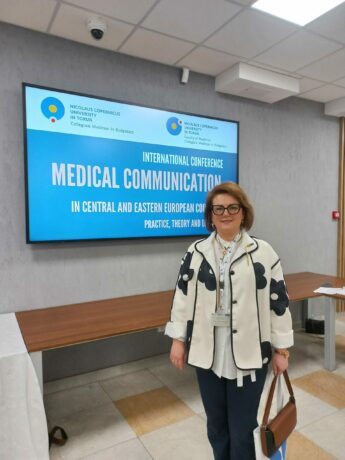
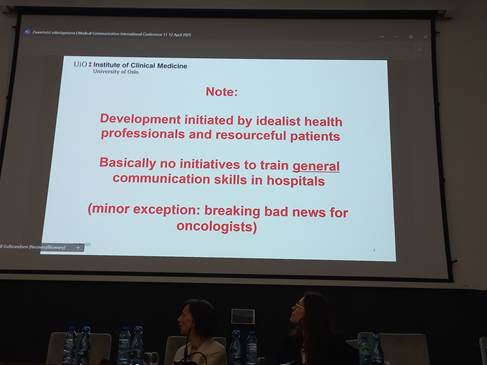
During the conference, medical educators and linguists from Central and Eastern European countries — including Poland, Serbia, the Czech Republic, Hungary, Bulgaria, and Romania — shared their experience in developing professional communication in healthcare practice and higher education. A common issue identified was the lack of both professional and educational standards to regulate medical communication competencies, which often leads to patient dissatisfaction with how healthcare providers communicate. Participants agreed to initiate the creation of a Medical Communication Association to promote best practices, conduct joint research, and prepare collaborative publications in this field.
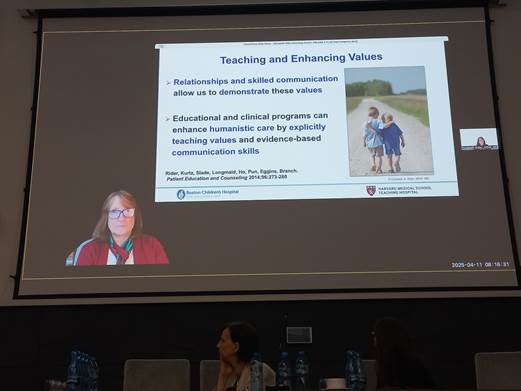
The conference featured compelling lectures by invited speakers, including Professor Paul Gulbrandsen (Norway) and Professor Elizabeth Rider (USA). Notably, Prof. Rider’s questionnaire was adapted by our team for use in Ukraine — a development she strongly endorsed, opening doors for future collaboration. Her lecture emphasized the importance of instilling values throughout every stage of medical education, highlighting that shaping values fosters empathetic relationships between healthcare professionals and patients.
An important component of the event was the presentation of the TALC – Consultation Skills platform by its developers Avril Danczak and Liam Jennion from the UK. This is a digital tool designed to teach consultation skills online using the Calgary-Cambridge model.
Linguists also provided insightful contributions. For example, Professor Ágnes Kuna from Eötvös Loránd University (Budapest, Hungary) shared research on how reframing questions and describing illnesses in different ways can change patients’ perspectives — shifting from “fighting a disease” to “living with it.”
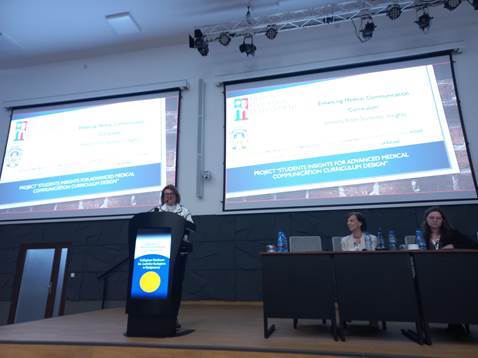
As a co-author of a medical communication manual, I was invited to the conference as a speaker to present my work in this field. On behalf of our research group, I delivered a presentation “Enhancing Medical Communication Curriculum: Lessons from Students’ Insights,” in which I shared our experience of building students’ communication competencies at TNMU, along with findings from the study “Students’ Insights for Advanced Medical Communication Curriculum Design,” conducted with support from the Ukrainian-Swiss project “Medical Education Development.”
The knowledge and methods acquired from this conference will be applied to:
preparing academic publications to strengthen the department’s scientific standing and reputation.
developing new teaching materials and improving instructional quality by integrating them into the curriculum to enhance students’ communication skills;
conducting faculty training sessions on this topic at TNMU;
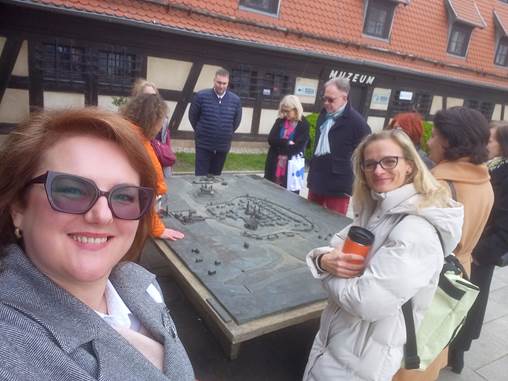
Participation in the seminar also contributed to expanding professional networks and establishing connections with colleagues and experts in the field, paving the way for future collaborations and joint research initiatives.
I would like to express my sincere gratitude to Associate Professor Aldona Katarzyna Jankowska, Prof. UMK, and the organizing committee for the invitation and financial support to attend the conference.