


Objective Structured Practical (Clinical) Examination at TNMU
From May 21 to 30, 2025, 355 sixth-year students of I. Horbachevsky Ternopil National Medical University took the second stage of the Unified State Qualification Examination (USQE), which is conducted in the format of an Objective Structured Practical (Clinical) Examination — OSP(C)E.
TNMU has extensive experience in organizing and conducting OSP(C)E. The exam format was developed based on the best international practices adopted by TNMU instructors during internships abroad and within the framework of the SAFEMED+ project. This experience was incorporated in the development of the Ministry of Health of Ukraine’s Order No. 900 of May 24, 2024, which updated the procedure for the USQE and the evaluation criteria.
As the second stage of the USQE, the OSP(C)E has several distinct features: extended time for task completion at stations, “paired” stations for deeper assessment of clinical reasoning, and specially designed logistics for station routing.
The chair of the state examination board, the dean of the medical faculty, and the guarantor of the “General Medicine” educational program are directly involved in monitoring the exam’s quality and ensuring compliance with established standards.
In 2025, taking into account current educational standards, the needs of Ukraine’s healthcare system, and international experience, a TNMU working group developed a competency matrix for the second stage of the USQE—a modern tool for objectively assessing graduates’ practical skills.
This matrix combines two main components: a list of clinical competencies and the OSP(C)E stations where students demonstrate practical skills through clinical scenarios. The scenarios are based on the most common diseases relevant to Ukraine and aligned with the specifics of key medical specialties. Faculty from relevant departments, together with the OSP(C)E organization group, updated the scenarios and checklists to align the competency matrix with the new regulations.
The exam takes place at the Simulation Training Center and begins with student registration and instructions. To ensure objectivity, each student receives a badge with an ID and station number (indicating where the exam starts for them).
Students sequentially go through 12 stations according to a personalized route sheet indicating the order of station visits. Each room is clearly labeled with the station number and name. The time allocated for each station is 10 minutes, with a bell signaling the start and end. One of the key strengths of OSP(C)E at TNMU is the integration of stations into unified clinical cases. Three stations are dedicated to the management of an internal medicine patient, and two to a pediatric case.
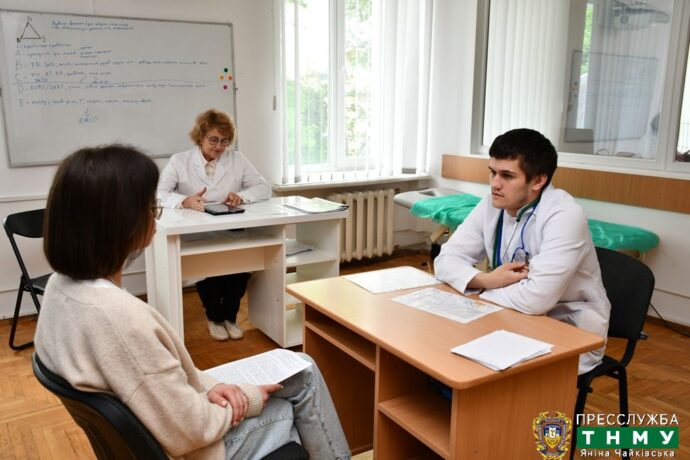
The use of “united” stations allows students to sequentially demonstrate clinical competencies—from collecting complaints and history to making a diagnosis and determining treatment tactics.
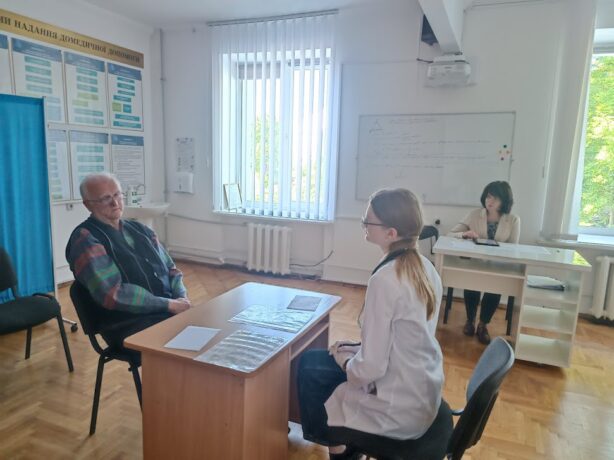
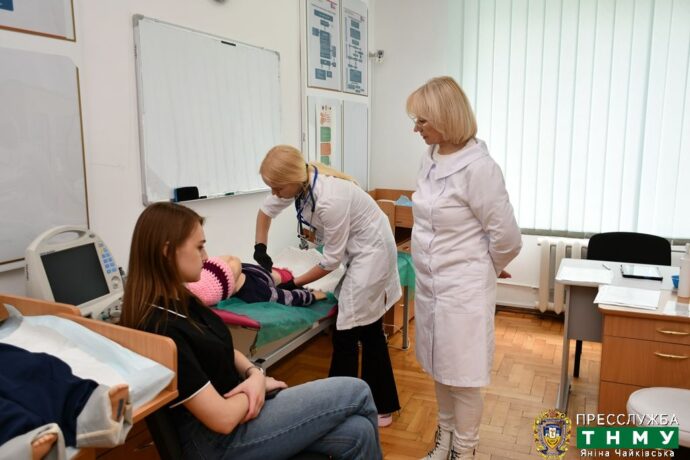
The exam particularly emphasizes the evaluation of core clinical skills. First and foremost, this includes effective communication with the patient, such as establishing rapport and gathering complaints and history. Standardized patients are involved to assess this competency.
This year, as an experiment, real individuals were involved as standardized patients. For students, encountering a “live” patient at a station was an unexpected and valuable experience, making the exam more similar to real clinical practice.
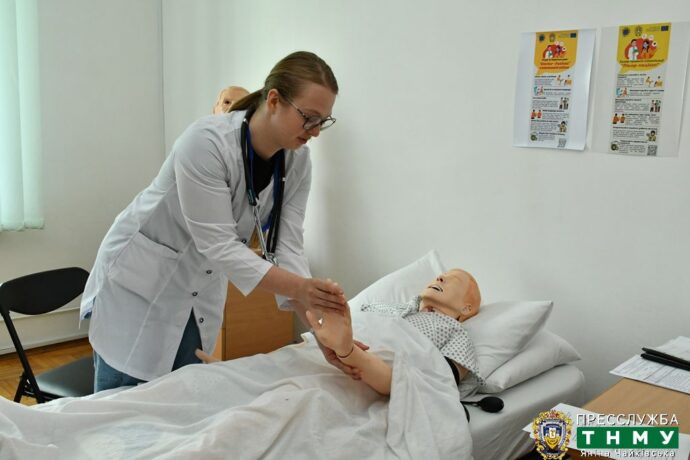
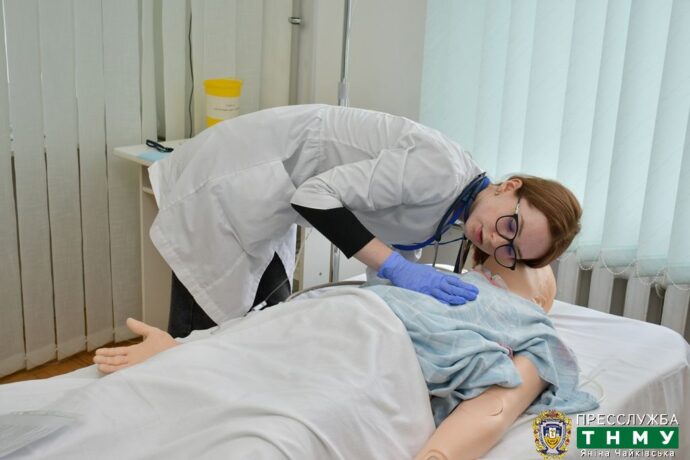
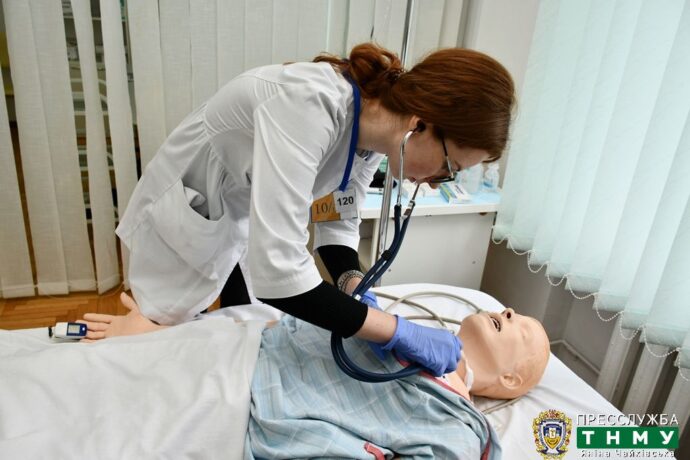
The next step is an objective physical examination. Skills are assessed using specialized mannequins, ensuring a standardized approach for all candidates.
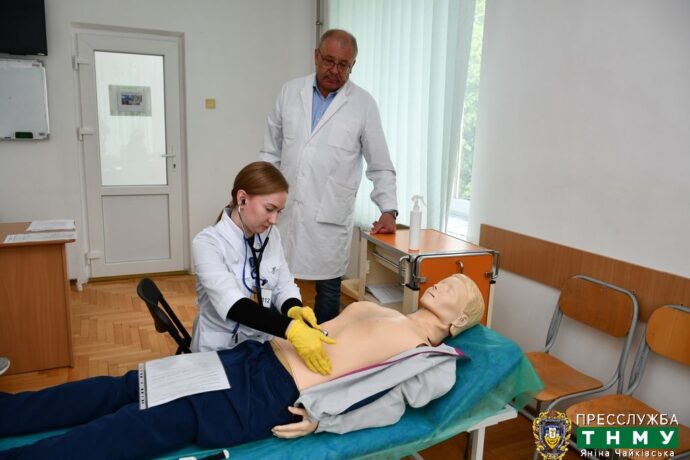
Separate evaluation is conducted for the ability to perform medical procedures, establish preliminary clinical diagnoses, determine diagnostic and treatment strategies, and knowledge of preventive medicine and healthy lifestyle promotion.
Each station evaluates several components of clinical competence simultaneously. In addition to internal medicine and pediatric stations, students also go through two stations involving surgical patient management. Here, they demonstrate the ability to diagnose surgical conditions, determine treatment strategies, and perform procedures such as pleural puncture or bladder catheterization.
Two more stations are dedicated to obstetrics and gynecology. These assess how well students have mastered practical skills necessary for managing pregnancy, labor, and postpartum care. Additionally, students are evaluated on their ability to conduct gynecological exams and breast palpation—critical skills for timely diagnosis and women’s health preservation.
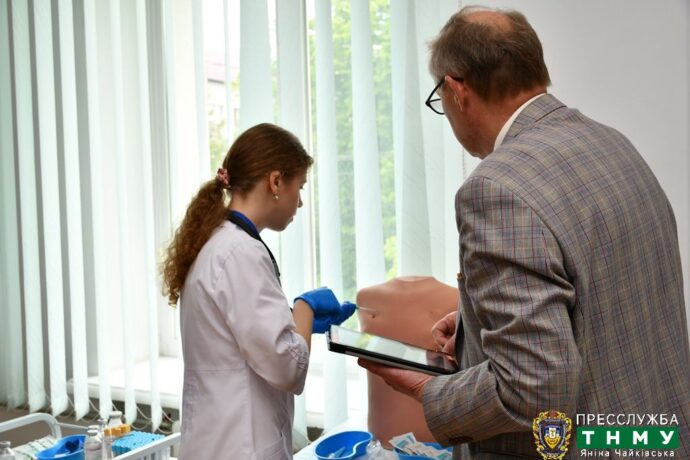
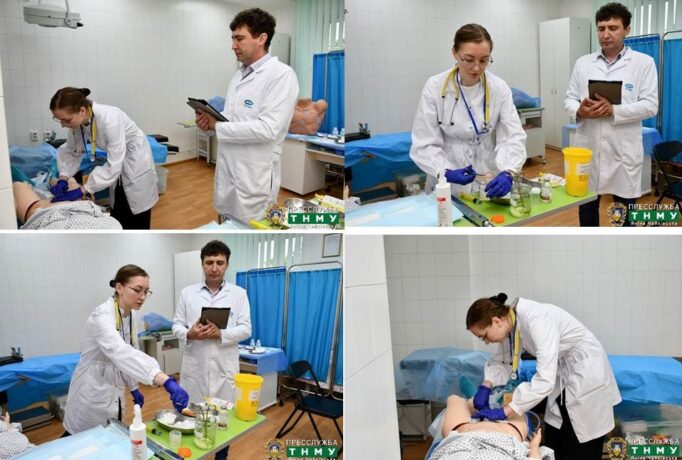
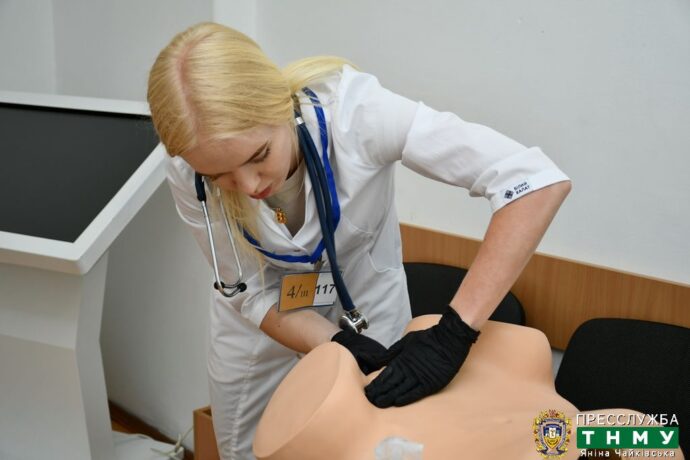
Importantly, in response to modern challenges, an emergency care station is included in the OSP(C)E. This simulates situations where care must be delivered before an ambulance arrives—quickly, confidently, and effectively.
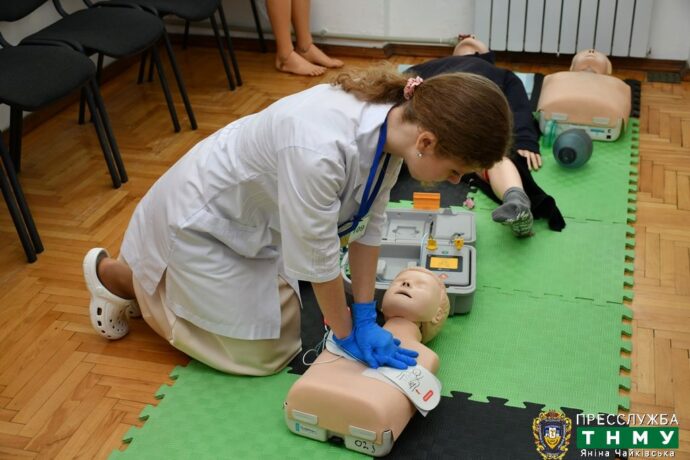
Students also demonstrate skills in managing emergency conditions at different stages of hospitalization, such as in the emergency department and intensive care unit. These stations bring the exam as close as possible to real clinical conditions.
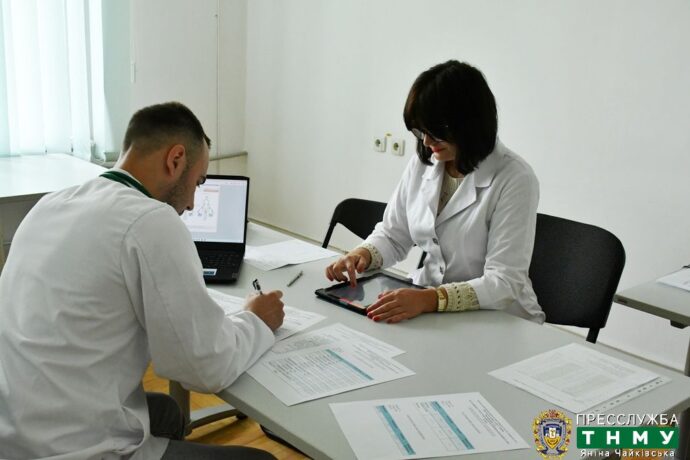
One of TNMU’s significant achievements in organizing OSP(C)E is the use of electronic checklists and specially designed software. This solution allows for automatic result calculation, enhances objectivity, speeds up result processing, and conserves human and material resources.
The implementation of the second stage of the USQE in the OSP(C)E format enables a comprehensive assessment of future doctors’ clinical competence. It evaluates practical skills, clinical thinking, and professional behavior under conditions closely resembling real clinical practice.