

Antonina Kumka: “The development of the prosthetics and orthotics field in Ukraine is a ‘living’ process of ongoing partnership building and opportunity seeking”
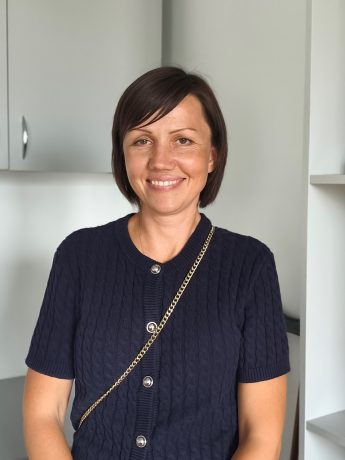
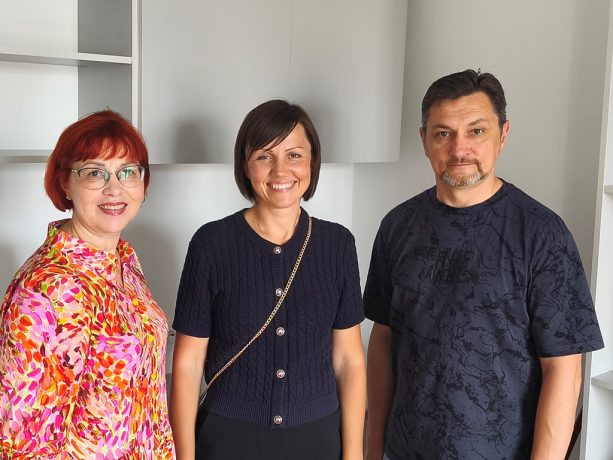
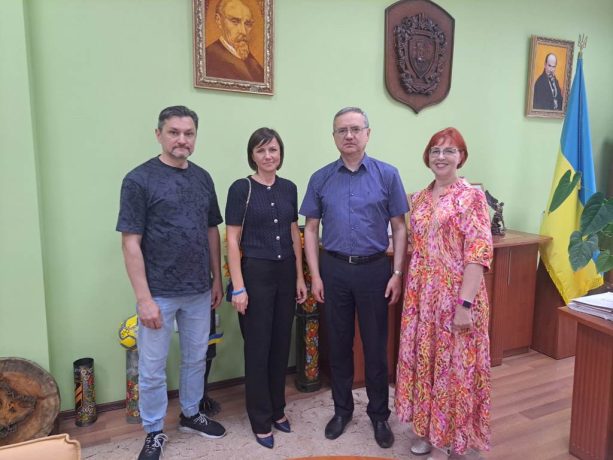
On July 16, 2025, Antonina Kumka, Director General of the charitable foundation Protez Hub, visited Ternopil National Medical University to become more closely acquainted with the team of the Prosthetics and Orthotics educational program, the university’s leadership, and its material and technical base. She noted the high level of motivation among the students enrolled in the Master’s Program in Prosthetics and Orthotics. She emphasized that her team continues to seek new opportunities to improve the educational process and curricula by involving more international experts.
— Is this your first time visiting TNMU?
— Yes, this is my first time at TNMU. I was curious to see everything with my own eyes, get to know the people involved more closely, and adjust our plans for developing the prosthetics and orthotics field. Together, we initiated legislative changes and have been working to develop the profession of prosthetists and orthotists. Now, I’m very interested in seeing how all of this functions, how we can be of further assistance, and what support universities need to improve these processes.
— Could you elaborate on the changes you mentioned earlier?
— Until 2023, there was no official profession of “prosthetist-orthotist” in Ukraine, although it exists in developed countries and is recognized in international classifications as the highest category of specialist who directly fits prostheses and orthoses and works clinically with patients. Knowing that Ukraine would soon have many such patients, we realized the need to establish this profession and define state-level requirements for such specialists. To build something or achieve results, you need to set a certain standard to strive for. With international partners who had already gone through this process in their countries, we formed a working group to develop a vision, standards, and qualifications for the prosthetist-orthotist profession.
In 2024, the professional standard for this field was approved. It stipulates that such a specialist must complete a two-year Master’s program after a Bachelor’s degree in relevant fields like biomedical engineering, rehabilitation, etc. Upon graduation, the individual becomes a qualified rehabilitation specialist — a regulated profession within a multidisciplinary team, or as an independent practitioner.
Once the professional standard was approved, we began developing the educational standard with help from experts from the Ministry of Education and Science and our international partners. In September 2024, the educational standard was approved, and since then, educational programs have been launched in four Ukrainian universities, including TNMU. What I saw today is impressive — I’ve witnessed substantial progress over the past year.
— Which international experts are involved in the teaching process?
— We invited an American expert to teach a challenging course in biomechanics and pathological gait. It was Austin G. Davids, a certified professional under the ABC program in orthotics and prosthetics, with experience at a rehabilitation hospital in Washington, D.C. (link). The students completed the course at a very high level and gained valuable knowledge. The instructor was impressed with the students’ understanding and motivation. They all passed the final exam successfully.
Our students also actively participate in all the workshops we organize and even inquire about additional courses to deepen their expertise. TNMU instructors collaborate with faculty from Jonkoping University in Sweden, which initiated and is implementing the SU-CARE international project (link).
The cooperation began as training for trainers but evolved into collaboration in developing clinical cases, improving teaching methods, and analyzing related disciplines. The Swedish colleagues are very proactive. Everyone greatly appreciated the initial trip to Warsaw, which allowed participants to connect, understand each other’s needs, and strengthen the profession in Ukraine.
— How relevant is this profession for Ukraine today?
— Even before the full-scale invasion, there were many people in Ukraine who had lost limbs due to various conditions, injuries, or accidents — around half a million by 2022. The war has added tens of thousands more. There are also many conditions that require orthotic treatment, including traumatic brain injuries. This profession will remain in demand. While we don’t need thousands of such specialists, we do need a few hundred trained professionals in Ukraine — and they must be properly educated. We’re just at the beginning of building this field.
— Does the students’ motivation inspire you to put even more effort into this field?
— Absolutely. It’s one of the reasons I’m here today. I wanted to see firsthand how the program is developing at TNMU and to understand the university’s vision. We are committed to further developing prosthetics and orthotics education, supporting instructors, and helping them grow professionally. We realize that the teaching staff is under immense pressure, having to develop these curricula from scratch. Our role is to support them with teaching materials in relevant subjects so they can implement them at their institutions. At TNMU, I saw how international partners are involved to make the program as practical as possible. Today, we visited the simulation training center, which is perfectly equipped for such learning — it’s truly impressive.
— When did Protez Hub start working in this field?
— Protez Hub was launched in 2014. Our main goal is to transform the prosthetics and orthotics field in a positive direction. We’re not a prosthetic or rehabilitation center — our mission is to build cooperation with different institutions and educational centers to ensure that patients across Ukraine have access to quality prosthetic and orthotic services.
We also carry out educational initiatives to enhance professional skills, conduct analytics, study patient complaints, professional feedback, and identify what works and what needs to change. One initiative we’re finalizing is informing patients through administrative service centers. We received many complaints that such centers don’t provide proper information. With support from the Belgian Development Agency, we are improving their operations so people can access complete information on prosthetic services.
— Such initiatives are often driven by personal stories. What inspired you to start working in this field?
— I first became involved in prosthetics and orthotics in 2014, when I met a military patient who had lost both legs above the thigh. I asked him, “So what happens next?” He said there was nowhere in Ukraine to get prosthetics, so he’d have to go abroad.
That raised many questions: How much does that cost? What will all the other wounded soldiers do? How do we ensure follow-up care in Ukraine? Prosthetics require maintenance and replacement. Ukrainian specialists need to know the latest technologies to help those treated abroad.
I reached out to an American prosthetist who was then president of the U.S. orthotics and prosthetics association. He agreed to assemble a multidisciplinary team, which came to Ukraine in 2015 to share knowledge and kickstart progress. That mission marked the beginning of an ongoing process.
— How many people work at the foundation?
— We have a team of seven people and many volunteers. We collaborate with international professionals who appreciate our model — we are not a business or a rehab center, but a neutral organization that helps where needed. We serve as a mediator among various institutions and are often consulted for advice. Our partners know we’re committed to developing the sector, not chasing personal gain. We help them — and they help us. This mutual support works: they quickly respond when we need expert groups, training sessions, or other assistance.
— What are the future plans for cooperation between the foundation and TNMU?
— During our meeting with the rector, we discussed continuing a two-year project with Jönköping University. We’ll also build new partnerships with other institutions, such as the American Prosthetics and Orthotics Institute, particularly for developing educational materials. This is a dynamic, ongoing process that evolves with the needs of the universities.