

VII Scientific Symposium with International Participation “Public Health in the Social and Educational Space – Challenges in Overcoming the Consequences of War and Development Prospects” at TNMU
On September 25–26, 2025, I. Horbachevsky Ternopil National Medical University, in cooperation with Akkon University of Human Sciences in Berlin and the Public Health Center of the Ministry of Health of Ukraine, held the Seventh Scientific Symposium with International Participation “Public Health in the Social and Educational Space – Challenges in Overcoming the Consequences of War and Development Prospects.”
The scientific areas of the symposium included:
- Public health in Ukraine in emergency situations – current challenges and development prospects
- Scientific basis for strategic decision-making in public health
- Educational activities in the field of public health and training of public health specialists
- Management in healthcare and public health
- The concept of a healthy lifestyle and health promotion
- Public health at the global, national, and regional levels
- Health economics and the principles of sustainable development: why investing in human and national health matters
- Patient safety and diagnostic errors at different levels of medical care
- Infectious and non-communicable diseases and their impact on population health
- Interdisciplinary and intersectoral cooperation in public health
- Human resources challenges in public health
- Legal and ethical principles of public health
For the seventh consecutive year, the Department of Public Health and Healthcare Management of TNMU organized the International Ukrainian-German Scientific Symposium on Public Health, which has become a well-established tradition. The event provided a platform for researchers and practitioners from various regions of Ukraine, Germany, and other countries to present research and discuss pressing global challenges, particularly those affecting the health of the Ukrainian population under conditions of war, pandemics, and emergencies.
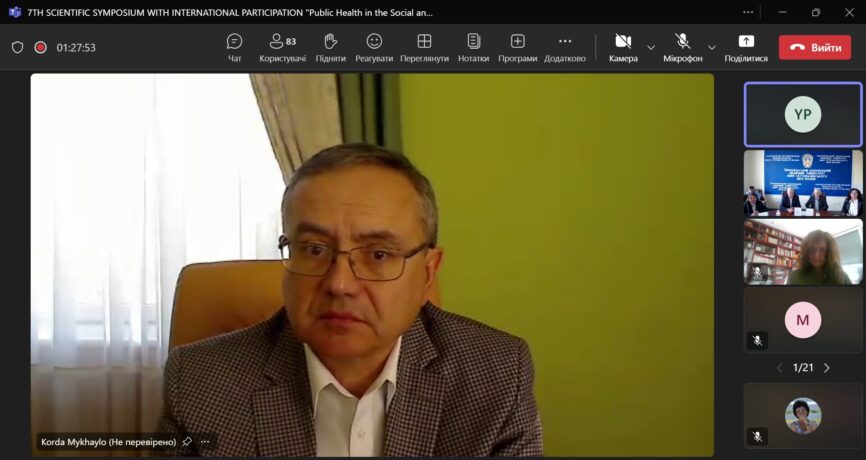
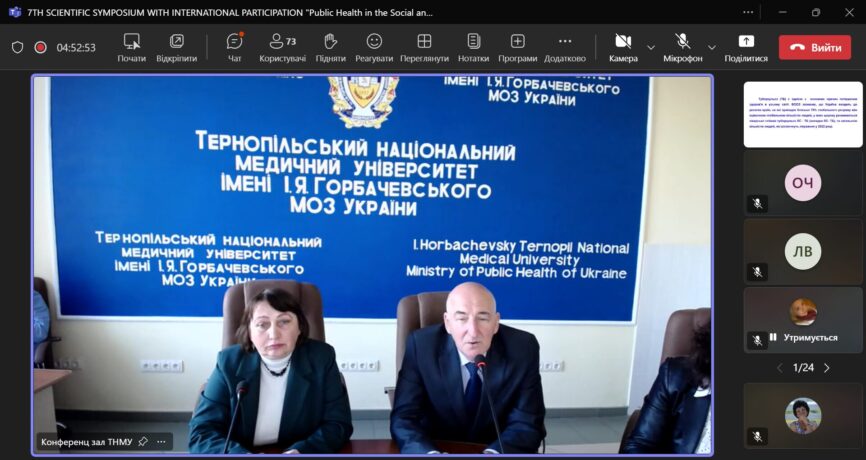
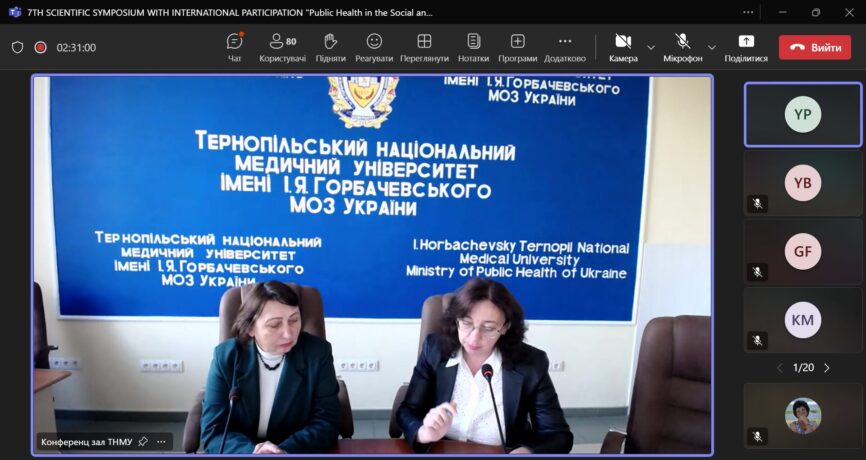
Given the ongoing war in Ukraine, the symposium was held remotely in an online format with a videoconference hall at TNMU. The opening was attended by TNMU Rector, Corresponding Member of the National Academy of Medical Sciences of Ukraine, Honored Scientist and Technician of Ukraine, Doctor of Medical Sciences, Professor Mykhailo Korda; Vice-Rector for Academic and Pedagogical Work, Doctor of Medical Sciences, Professor Arkadii Shulhai; and Vice-Rector for Research, Doctor of Medical Sciences, Professor Ivan Klishch.
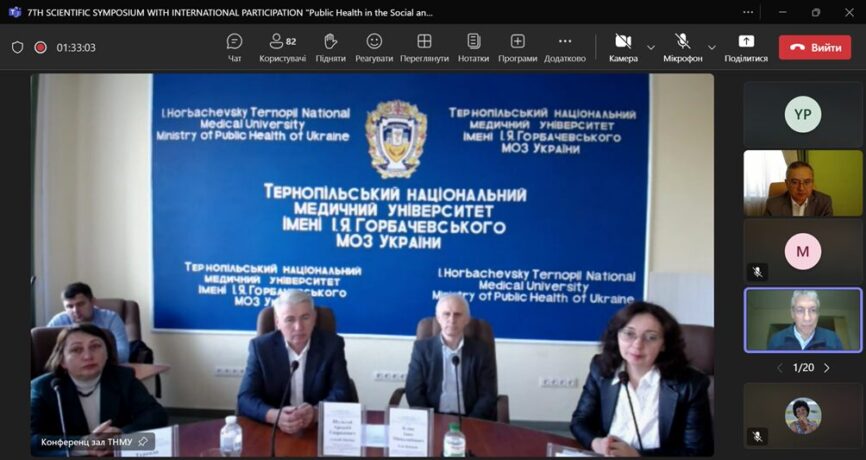
In his opening address, Rector Korda emphasized the particular importance of discussing and developing proposals for overcoming the current challenges within the framework of the Seventh International Symposium, as these efforts are crucial for preserving and supporting the health of the Ukrainian population under today’s conditions.
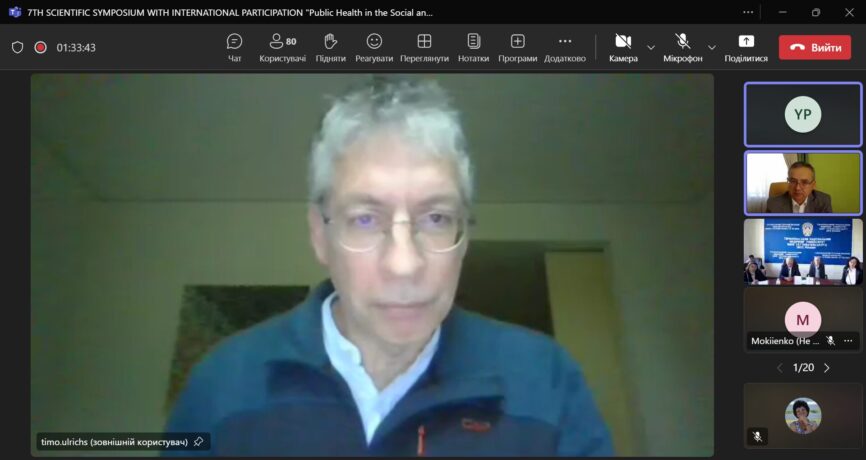
Prof. Timo Ulrichs (Akkon University of Human Sciences, Berlin) also underlined that the full-scale war continues to pose serious challenges to Ukraine’s public health system. He noted the importance of involving young people in multilevel cooperation, bringing together different groups around health protection, and defining long-term health perspectives.
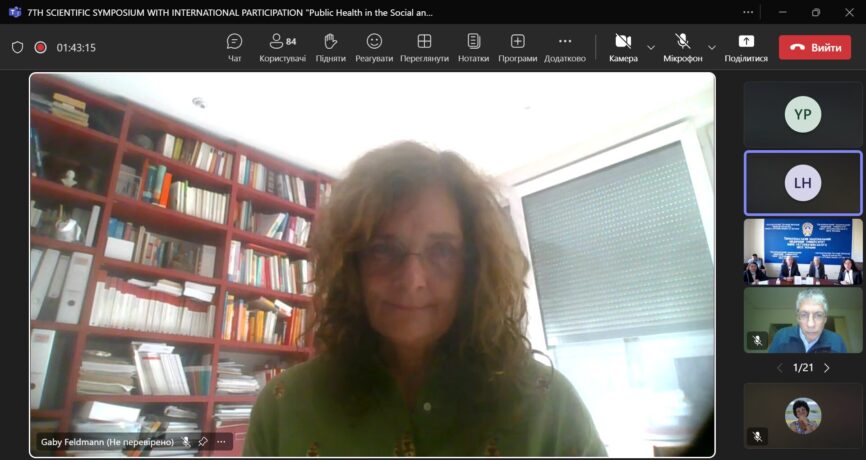
The symposium also highlighted the importance of medical education and professional exchange through new tools such as podcasts, as emphasized by Gaby Feldmann, Project Coordinator at the Institute for Research and International Cooperation, Akkon University of Human Sciences.
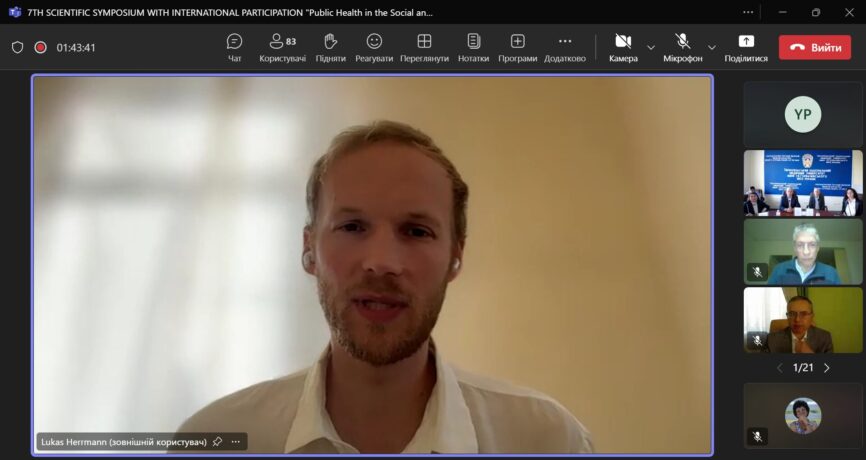
The plenary session began with a presentation by Dr. Lukas Hermann, who pointed out that tuberculosis among migrants is a significant issue in Berlin, requiring adaptive prevention programs.
Prof. Yevhen Bohodistov (MCI GmbH, Innsbruck, Austria) highlighted the risks faced by Ukrainians when choosing prostheses based on social media reviews and the need for structured marketing approaches.
Prof. Ivan Myroniuk (Uzhhorod National University) addressed the dynamics of the public health ecosystem, stressing the interaction between institutions, resources, communities, and technologies.
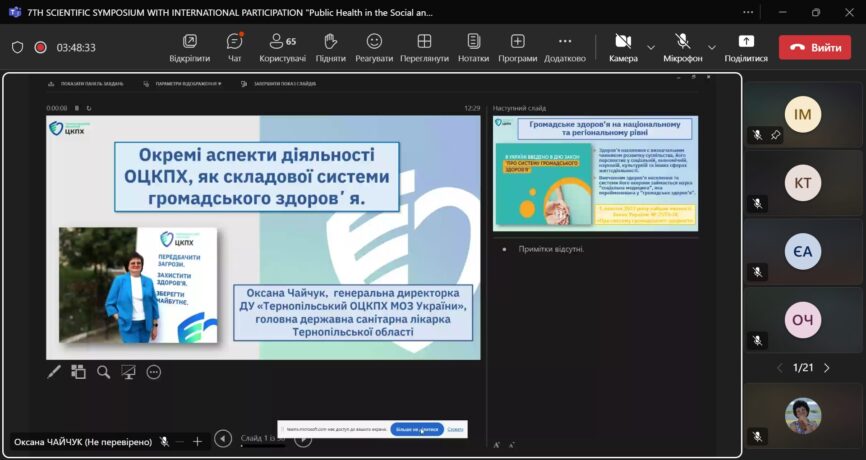
Oksana Chaichuk, General Director of the Ternopil Regional Center for Disease Control and Prevention of the Ministry of Health of Ukraine, emphasized the importance of preventing non-communicable diseases as a priority during wartime.
Prof. Valeria Lekhan (Dnipro State Medical University) presented a model for antimicrobial management at the primary care level, stressing the urgent need for coordinated actions to prevent antimicrobial resistance, which by 2050 could cause over 10 million deaths annually and global economic losses exceeding $100 trillion.
Prof. Leonid Hryshchuk (TNMU) analyzed TB epidemiology in Ternopil region and Ukraine (2018–2024), highlighting that reduced detection rates, rather than lower incidence, explain the apparent decline in statistics.
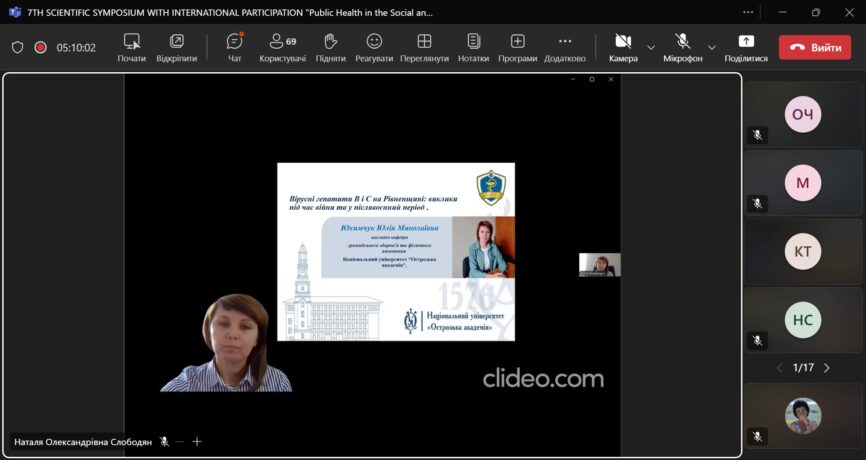
Yuliia Yukhymchuk (Ostroh Academy National University) discussed rising hepatitis B and C rates in Rivne region.
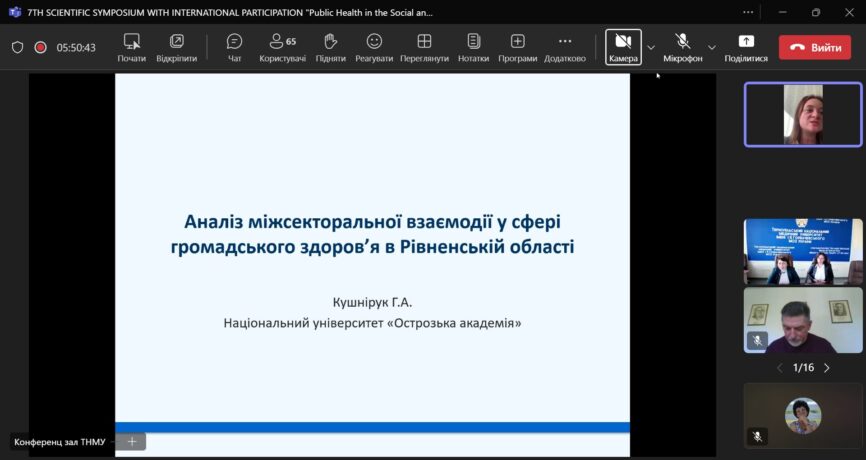
Prof. Ihor Hushchuk and Dr. Andrii Mokiienko (Ostroh Academy National University) provoked active discussion with their presentation “Does the Public Health System Have a Future?” stressing the need to improve Ukrainian public health legislation. Other presentations addressed intersectoral cooperation, blood-borne infections, patient safety, and historical perspectives of preventive medicine.
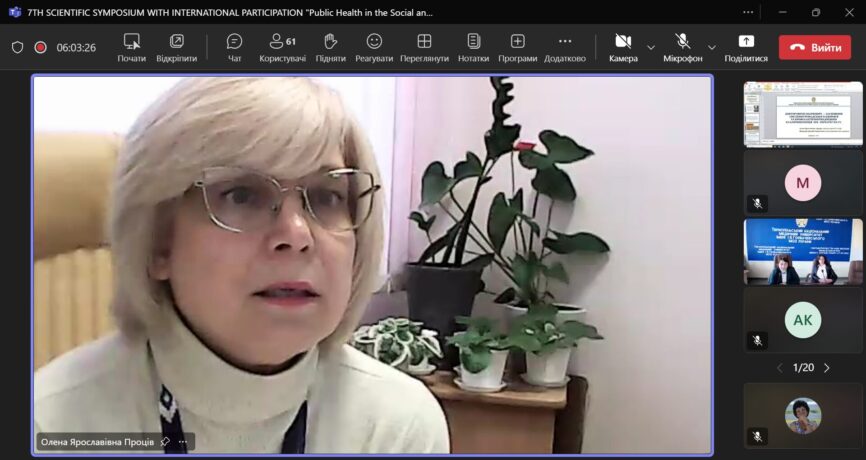
Olena Protsiv, Head of the TNMU Library and a degree seeker in specialty 229 Public Health, focused on highlighting the role of Dr. Yevhen Ozarkevych, the founder of the public health and preventive medicine system in Galicia at the end of the 19th – beginning of the 20th century.
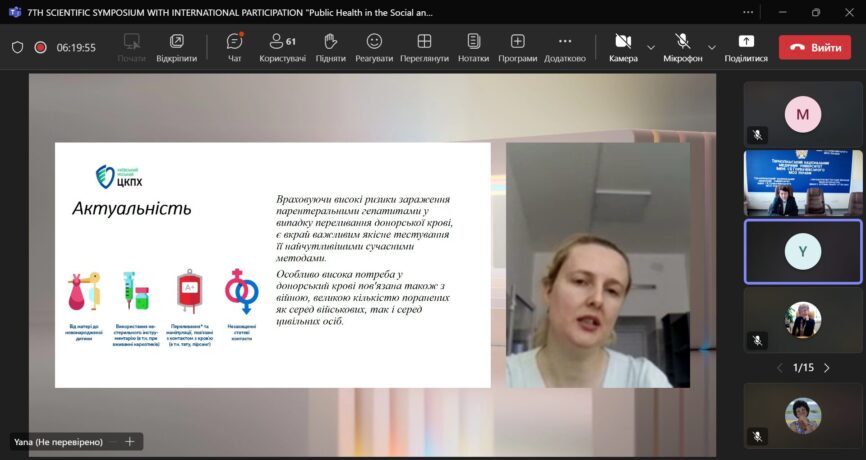
Yana Kuiarova, representing the Kyiv City Center for Disease Control and Prevention of the Ministry of Health of Ukraine, raised the highly important issue of the spread of parenteral hepatitis through blood transfusions, the demand for which is especially high during the war due to the large number of wounded. In her presentation “On Improving the System of Epidemiological Surveillance of Parenteral Hepatitis in Ukraine among Blood Donors”, she emphasized the need to develop a clear strategy for selecting methods of testing for hepatitis B and C.
The symposium gathered over 200 participants, including international partners from Germany, Poland, and Austria, and representatives from more than 40 Ukrainian institutions of higher education, research centers, and healthcare facilities. Discussions and knowledge exchange are expected to contribute to a scientific basis for strategic decision-making in public health amid wartime challenges and beyond.
Workshops, including “Qualitative Research Methods in Public Health,” complemented the program. Translation was provided by Assoc. Prof. Yurii Petrashyk (Department of Public Health and Healthcare Management, TNMU), with technical support from Assoc. Prof. Nataliia Slobodian and Engineer Mykhailo Lavruk. The event was moderated by Prof. Hanna Saturska and Prof. Nataliia Terenda.