

TNMU Reported on the Results of Implementing the mhGAP Program in the Educational Process
On October 2–3, 2025, the Acting Rector of I. Horbachevsky Ternopil National Medical University, Mykhailo Korda, and Vice-Rector for Science and Education Arkadii Shulhai took part in the seminar meeting “First Results of Implementing the mhGAP Program in the Educational Process.”
The meeting brought together representatives of the World Health Organization (WHO), the Ministry of Health of Ukraine, the Ministry of Education and Science of Ukraine, and 18 universities that signed a Memorandum of Understanding on the integration of the mhGAP program into higher medical education in Ukraine.
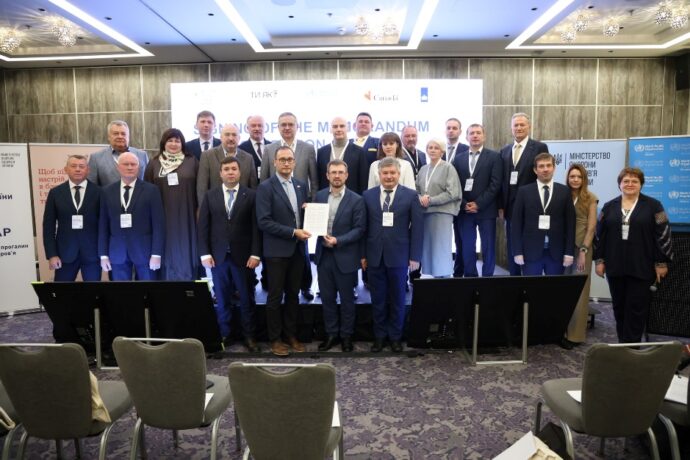
The Memorandum was signed by Dr. Jarno Habicht, WHO Representative in Ukraine; Ihor Kuzin, Deputy Minister of Health and Chief State Sanitary Doctor; Andrii Vitrenko, Deputy Minister of Education and Science; and representatives of medical universities.
The signing took place during a two-day event organized by the WHO and the Ministry of Health of Ukraine.
The goal of the WHO mhGAP (Mental Health Gap Action Programme) is to integrate mental health services into primary health care to make them more accessible and ensure comprehensive coverage. Implementing such services in family medicine practice not only increases opportunities for people to take care of their mental health but also changes the overall approach to healthcare, as both the mental and physical conditions of patients are assessed holistically.

The WHO, in cooperation with the Ministry of Health, the Ministry of Education and Science, and partner organizations, is integrating the mhGAP program into higher medical education. More than 360 educators have completed training, and standardized curricula have been developed to launch the educational process at Ukrainian universities.
The signing of the Memorandum is aimed at ensuring sustainability and systematic training of specialists under the mhGAP program at both undergraduate and postgraduate levels of higher medical education, as well as supporting the implementation of national healthcare policy priorities and Ukraine’s path toward European integration.
The Memorandum provides for:
• implementation of a unified approach to organizing the training and supervision of professionals based on a competence-based model, in accordance with international mental health standards;
• gradual integration of the mhGAP toolkit into medical education through the revision of higher education standards, updating of educational and professional programs, and inclusion of mental health competencies as a mandatory component of professional development;
• teaching of disciplines, thematic improvement courses, and supervision sessions on mhGAP exclusively by certified academic staff using unified standard curricula;
• assessment of mental health competencies defined by the mhGAP program, which will be included in the content of the “KROK 2” licensing examination and the Objective Structured Clinical Examination (OSCE).
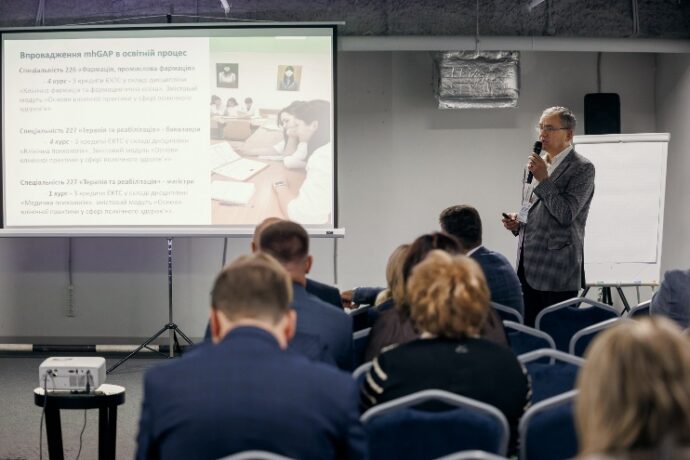
Institutions of higher education shared their experiences in implementing the course “Fundamentals of Clinical Practice in Mental Health (mhGAP)” in the educational process.
The Acting Rector Mykhailo Korda presented the results of implementing the mhGAP program at I. Horbachevsky Ternopil National Medical University.