

TNMU Paramedic Students Win First Place at the International First Aid Competition in Lithuania
On October 24, 2025, the annual International First Aid Competition for students took place in Kaunas, Lithuania. This year saw a record number of participants — 38 teams representing 23 educational institutions from Lithuania, Latvia, and Ukraine. The event was traditionally organized by the Lithuanian Paramedics Association, the Public Training Center for First Aid “IRTA,” and the King Mindaugas Vocational Training Center.
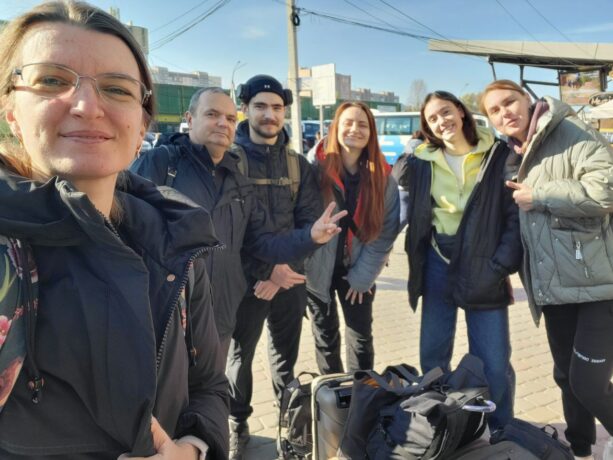
Ukraine was represented by the team from I. Horbachevsky Ternopil National Medical University (TNMU) — paramedic students Anna Yehorova (Pbv-232), Mariia Ventsyk (Pbv-332), and Bohdan Pachevskyi (Pbv-333). They were accompanied by Assoc. Prof. Olha Prokhorenko from the Department of Emergency and Simulation Medicine and Assist. Prof. Antonina Chervatiuk, head of the Simulation Training Center.
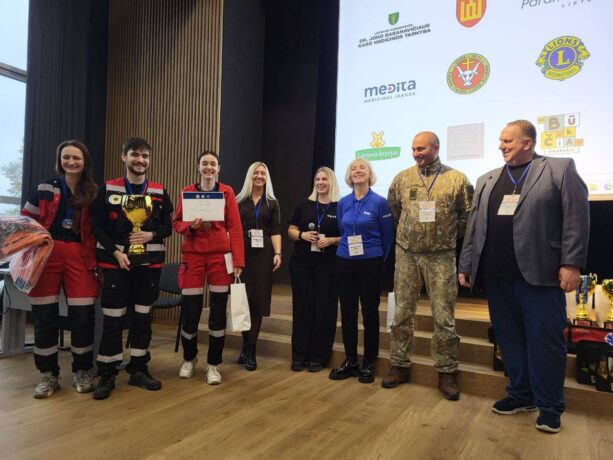
The team from Ternopil won gold in the international team category — TNMU’s first trophy at this competition, which the university attended for the second time. Among Lithuanian teams, the best performers were the Lithuanian University of Health Sciences, the Coastal Division of the King Mindaugas Vocational Training Center, and Kaunas College.
The TNMU team selection consisted of three stages: stress testing, performing key life-saving procedures, and managing a simulated emergency scenario. Students prepared for the competition with the help of faculty from the relevant departments. Olha Prokhorenko shared insights from last year’s competition, Antonina Chervatiuk trained students in basic life support algorithms for adults, children, and infants, and in first aid for non-traumatic emergencies. Assist. Prof. Yurii Denysiuk prepared them for trauma management, road traffic incidents, and mass casualty situations. Assoc. Prof. Viktoriia Martyniuk from the Department of Obstetrics and Gynecology No. 1 even taught the students how to manage emergency childbirth — a scenario featured in last year’s competition.
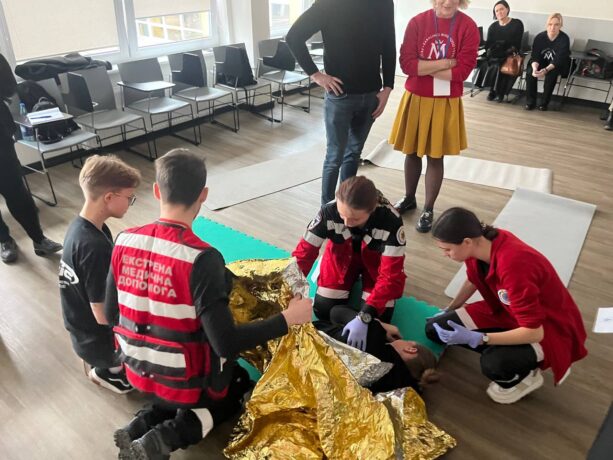
This year’s stages were no less engaging. Each lasted up to ten minutes, and participants could only use the supplies provided in the room. The tasks varied, but all had one key idea — if the team acted late, incorrectly, or without coordination, the “casualty” could die.
First, the students provided care to an infant who was choking and to its “mother” who had a chemical eye burn. Communication with the casualty and the rescue dispatcher, proper task distribution, teamwork, and well-practiced skills were crucial in this scenario.
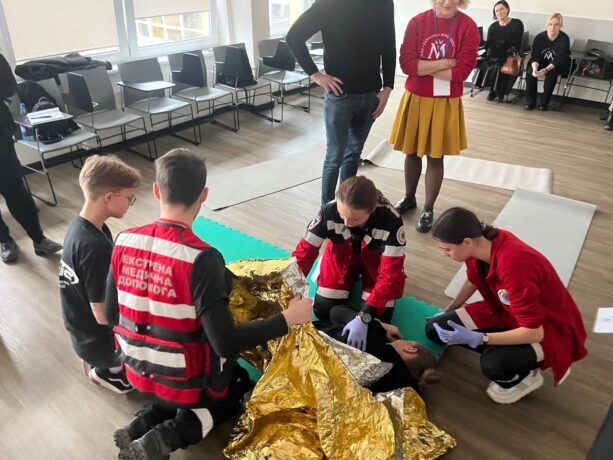
The second scenario began after a few minutes of “yoga meditation.” Suddenly, the “instructor” felt unwell, and the students quickly assessed and managed the situation. An additional challenge was a bystander who tried to help but unintentionally interfered.
The third task was the most stressful. Students entered a basement transformed into a “forest” — darkness, nature sounds, dust, and cries for help. Inside a tent, they found a victim with an open femur fracture and eviscerated intestines, while a panicked “friend” added chaos. The team had only seven minutes — not enough to complete full care, but by the end, the “casualty” was conscious and breathing.
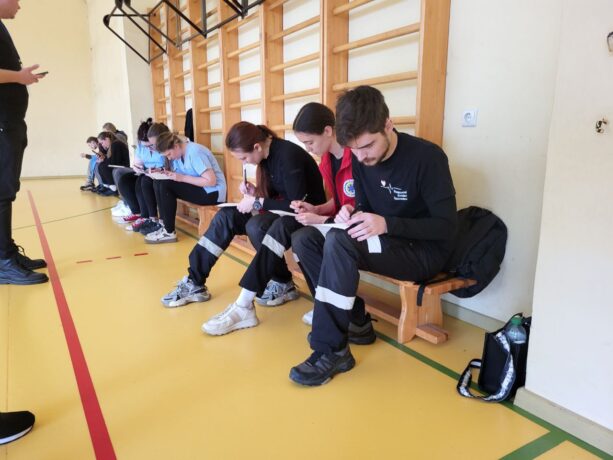
At the fourth station, students faced three timed tasks:
Assemble a proper first aid kit from mixed supplies of basic and advanced aid.
Complete a theoretical test.
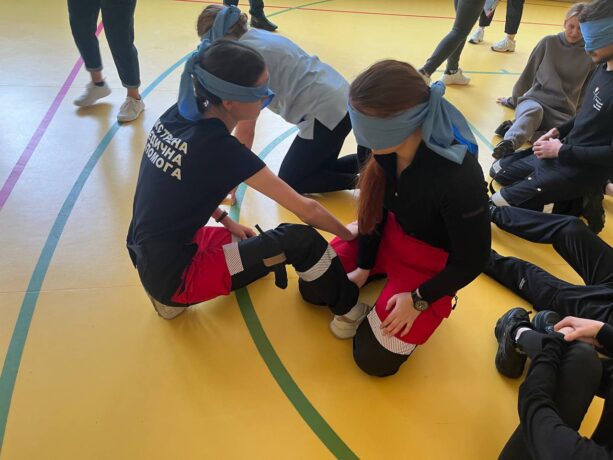
With eyes closed and no verbal communication, locate a teammate in the room and apply a tourniquet to their leg. The TNMU students handled all tasks successfully.
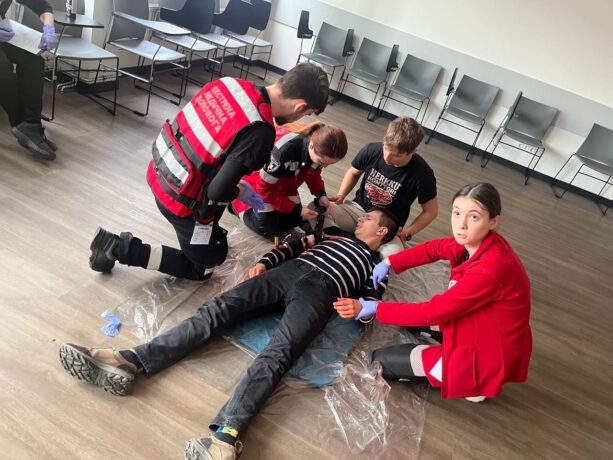
The final scenario involved a victim of an assault. The man had been stabbed in the hands with a screwdriver. When the team arrived, he already had tourniquets applied — incorrectly. Upon examination, they discovered one tourniquet was placed below the wound, where bleeding was still critical. The students promptly applied it correctly, reassessed the patient, prevented hypothermia, and safely removed the unnecessary tourniquet from the uninjured limb.
Key focus points of this year’s scenarios included:
Maintaining clear and continuous communication with the emergency dispatcher.
Correct techniques for managing infant choking and the use of an AED during pediatric basic life support.
Proper eye irrigation following chemical burns.
Gathering patient history to better understand the situation.
Avoiding the use of medications that do not belong to the casualty.
Following protocols even in complex trauma cases.
Applying a loose tourniquet above an open fracture before splinting to control potential bleeding.
Navigating and applying a tourniquet in low-visibility or noisy environments.
Reassessing the effectiveness of previously applied tourniquets.
Ensuring personal safety and calling the police when appropriate.
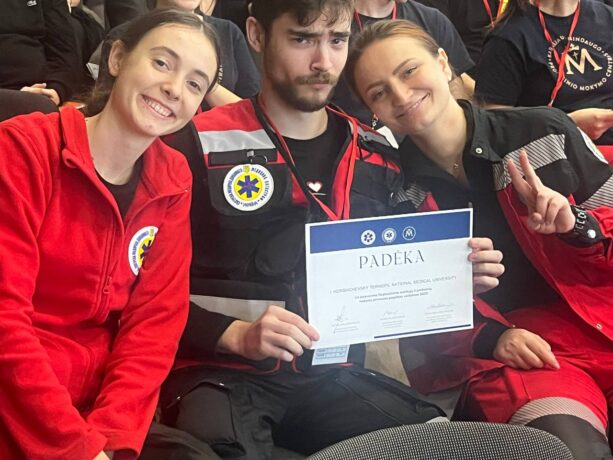
ОThe most important lesson, of course, was overcoming fear, stress, and emotional strain — mastering self-control and doing everything possible to save a life. That is what being a paramedic is truly about.
Beyond the invaluable experience, medals, golden cup, and gifts, the students gained even more — the warm hospitality of the Lithuanian hosts (especially the Malasauskas family), new friendships, a city tour, the endurance of a long journey, and the support, guidance, and humor of their instructors and teammates. They also visited a college where paramedic students could potentially study in parallel with TNMU.
Discussions are ongoing with the administration of St. Ignatius Loyola College regarding the possibility of dual paramedic training in Ukraine and Lithuania. Both sides exchanged information about their educational systems, discussed potential student exchanges, and outlined the first steps toward realizing this partnership.
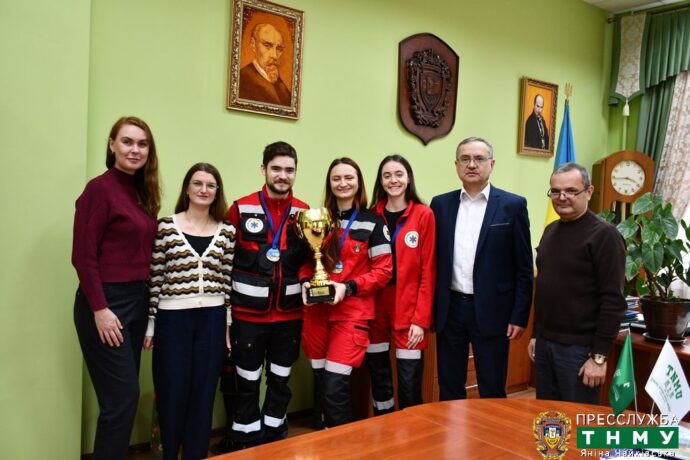
The TNMU delegation has since returned to classes and departments, reviewed their successes and mistakes, and met with Rector Mykhailo Korda to share their achievements and express gratitude for his support.