

TNMU Students Delivered a Lecture “Sugar: Friend or Foe? How Sweets Influence the Risk of Developing Diabetes”
On November 14, 2025, fourth-year students Zakhar Servetnyk and Yuliia Boliukh, under the supervision of Associate Professor of the Department of Pharmacology and Clinical Pharmacology Khrystyna Mocherniuk, delivered an interactive educational lecture for students of V. Vykhrushch Ternopil Specialized School No. 17. The lecture was dedicated to World Diabetes Day and addressed the topic “Sugar: Friend or Foe? How Sweets Influence the Risk of Developing Diabetes.”
The aim of the event was to raise schoolchildren’s awareness about the impact of sugar on the human body and to help them understand how excessive consumption of foods high in added sugars can contribute to the development of metabolic disorders, including type 2 diabetes mellitus. The students explained the biological role of glucose, the mechanisms of its absorption, and the potential negative consequences of its excess in a clear yet scientifically grounded manner.
A separate segment focused on sugar substitutes and their safety, food labeling specifics, and common sources of hidden sugars. The participants learned that many sweet beverages and “healthy” snacks may contain a full daily norm of sugar disguised under various ingredients.
During the lecture, the students highlighted typical symptoms that can arise from excessive intake of simple carbohydrates: fluctuations in energy levels, difficulty concentrating, increased appetite, and a tendency to gain weight. This helped demonstrate the direct link between dietary habits and both physical and mental well-being.
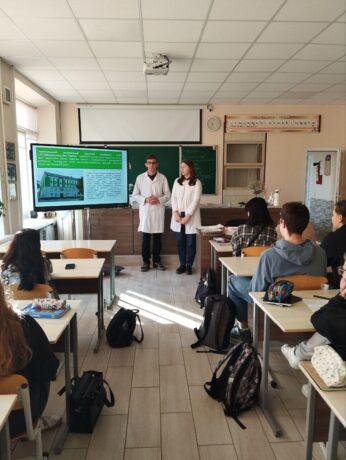
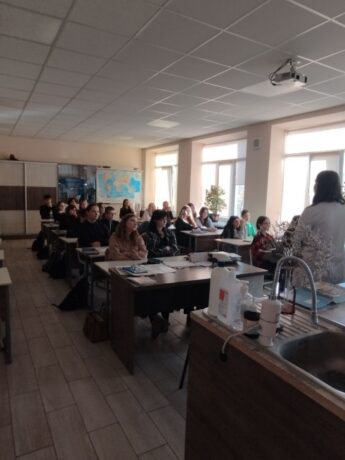

At the end of the session, schoolchildren actively asked questions about ways to reduce sugar in the diet, the possibility of completely avoiding sugar, and foods that help maintain stable energy levels throughout the day. The student presenters provided comprehensive, evidence-based answers.
The event concluded with words of gratitude from the teaching staff and pupils for the meaningful, relevant, and motivating information they had received. Such initiatives help foster a culture of responsible health behavior and encourage young people to understand the importance of dietary habits in preventing chronic diseases.