

TNMU Master’s Students Organized a Workshop on Effective Communication
Successful rehabilitation depends not only on proper exercises but also on the ability to find common ground with the patient. This important topic became the focus of a workshop held at the TNMU Library.
The event was organized by first-year Master’s students of the “Therapy and Rehabilitation” program, Nelia Humeniuk (TR-101-M) and Solomiia Hyz (TR-102-M). A total of 30 Bachelor’s students from the “Therapy and Rehabilitation” program, spanning years 1 to 4, participated, all eager to enhance their professional communication skills.
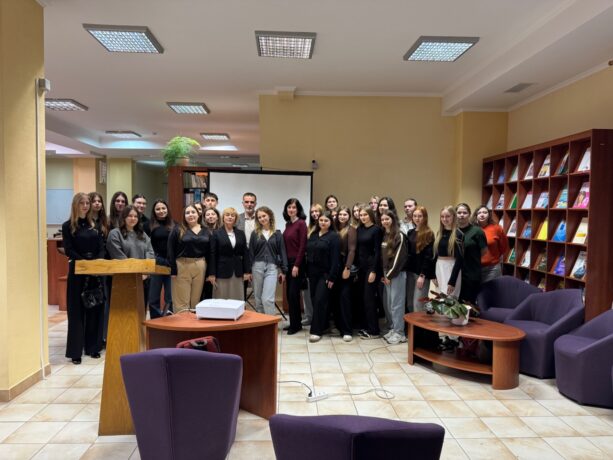
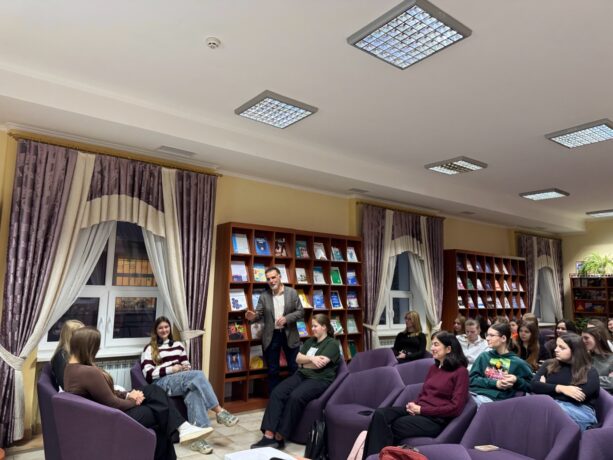
Students explored various types of communication: verbal, written, visual, and nonverbal. Special attention was given to factors that influence communication, particularly the patient’s perception, emotional state, and physical health.
The most engaging part of the workshop was the practical session. Participants worked in groups to practice active listening techniques. They also discussed the concept of assertiveness—the ability to confidently express professional opinions while respecting the patient’s rights and emotions. Students role-played real-life scenarios from practice, such as how to communicate with a demanding client to avoid conflict and maintain trust.
The event was supported by experienced mentors who acted as experts:
Dariia Popovych — Doctor of Medical Sciences, Professor, Head of the Department of Physical Therapy, Occupational Therapy, and Physical Education at TNMU;
Tetiana Husieva — Clinical Psychologist, Associate Professor of the Department of Psychiatry, Narcology, and Medical Psychology, specialist of the university’s psychological service;
Andrii Holiachenko — Doctor of Medical Sciences, Professor of the Department of Medical Rehabilitation at TNMU.
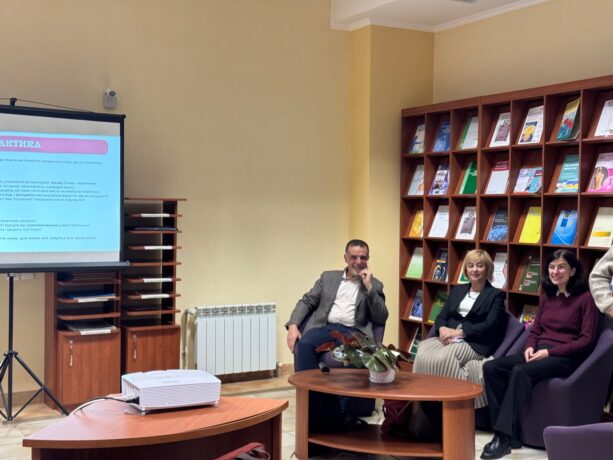
The lecturers shared their personal experiences and offered valuable advice to future colleagues.
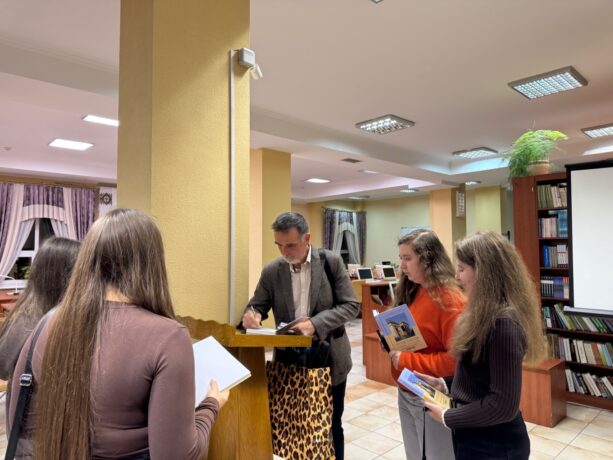
At the end of the meeting, participants received a pleasant surprise. Professor Andrii Holiachenko gifted attendees his monograph “Balneology: Historical, Organizational, and Clinical Aspects.” This thoughtful gift complemented the newly acquired knowledge and served as a memorable keepsake from the event.
The workshop was held in a friendly atmosphere, and the participants expressed their gratitude for the new insights they gained.