

Representatives of TNMU Presented the Results of Implementing the Basic Emergency Care (BEC) Program into the “Nursing” Educational and Professional Program at the National Conference on Basic Emergency Care
On December 18, 2025, the National Conference on Basic Emergency Care was held at the O. Bohomolets National Medical University. The event brought together representatives of the Ministry of Health of Ukraine, the World Health Organization (WHO), the International Committee of the Red Cross (ICRC), the International Federation for Emergency Medicine (IFEM), the Center for Testing the Professional Competence of Higher-Education Specialists in the fields of “Medicine” and “Pharmacy” under the Ministry of Health of Ukraine, as well as representatives of higher medical education institutions and healthcare facilities across Ukraine.
Among the distinguished participants were Deputy Minister of Health of Ukraine Yevhenii Honchar, Head of the Emergency Medical Care Service at WHO Headquarters Lee Wallis, WHO Representative in Ukraine Jarno Habicht, and Head of the Department of Medical Personnel, Education and Science of the Ministry of Health of Ukraine Serhii Ubohov.
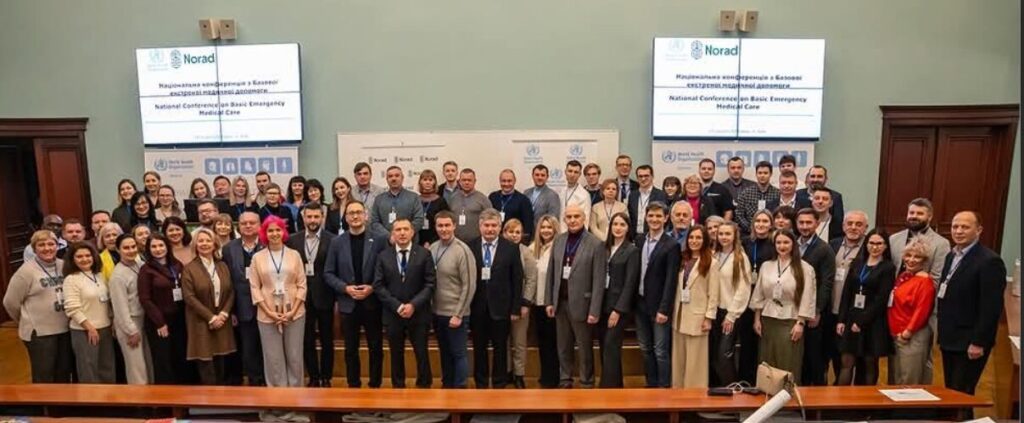
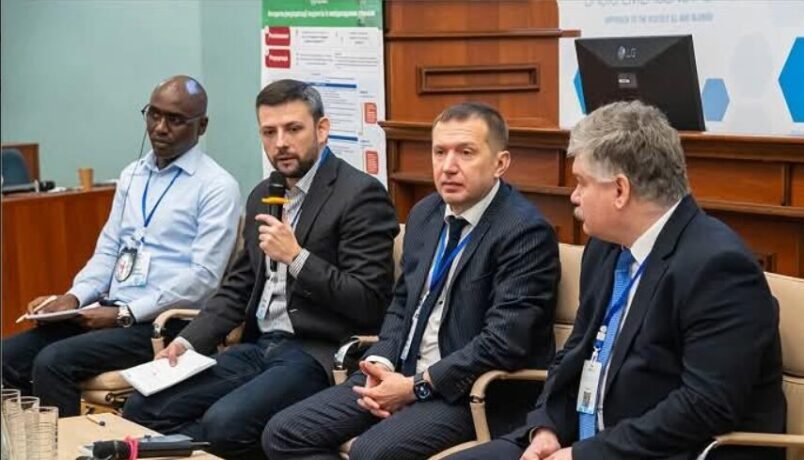
The conference featured panel discussions focused on the development of basic emergency care and its role in improving medical education in Ukraine. During the first panel discussion, with participation from representatives of the Ministry of Health of Ukraine, WHO, the International Committee of the Red Cross, and leaders of leading medical universities, participants discussed the importance of basic emergency care for improving the quality of emergency services, advancing medical education, and strengthening the human resources capacity of Ukraine’s healthcare system. Panelists also addressed topical questions from the audience.
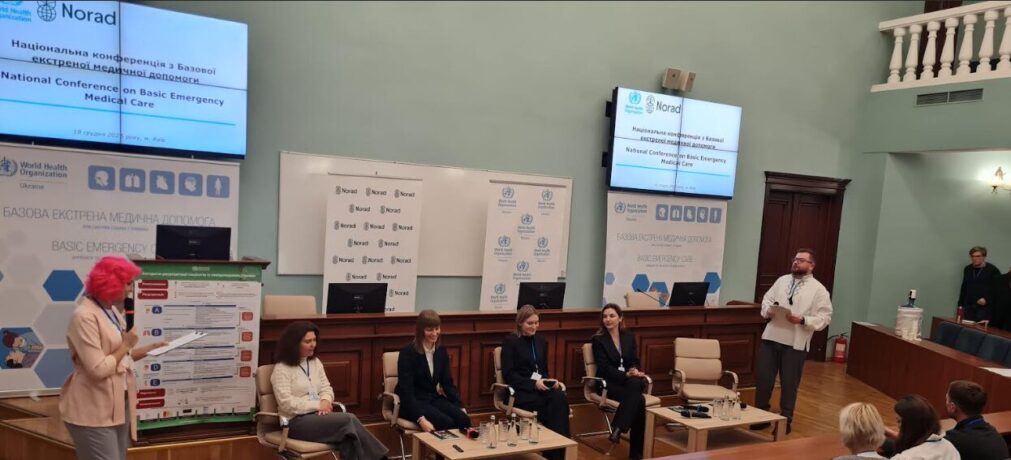
A separate panel discussion was dedicated to the topic “Basic Emergency Care as a Tool for Enhancing the Professional Competence of Nurses in Ukraine.” During the discussion, representatives of WHO, the Center for Testing Professional Competence under the Ministry of Health of Ukraine, and medical education institutions emphasized the importance of the WHO Basic Emergency Care (BEC) course for developing nurses’ practical skills, modernizing nursing education, and improving the quality of emergency medical care in Ukraine.
An important component of the conference was the exchange of experience regarding the results of implementing the Basic Emergency Care (BEC) program into the educational process of higher education institutions from various regions of Ukraine, including Zhytomyr, Odesa, Chernivtsi, Kyiv, and Ternopil. Participants discussed approaches to integrating the BEC program into curricula, adapting international standards to the national educational context, and the initial outcomes of training students.
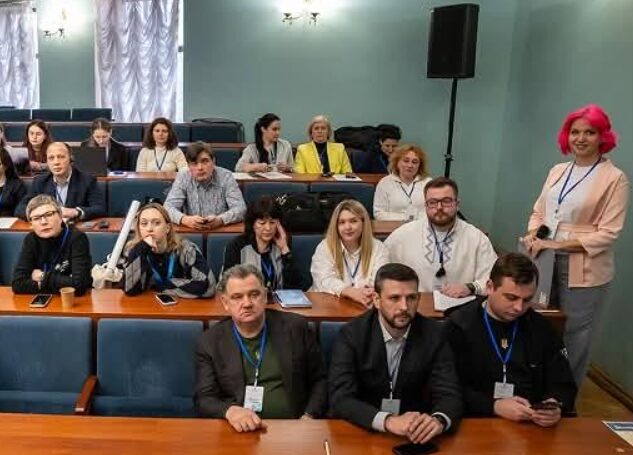
Ternopil National Medical University was represented at the event by Yuliia Danylevych, the guarantor of the Bachelor ‘s-level Educational and Professional Program “Nursing” and a BEC Master Trainer.
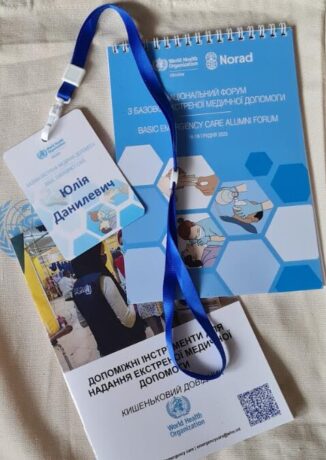
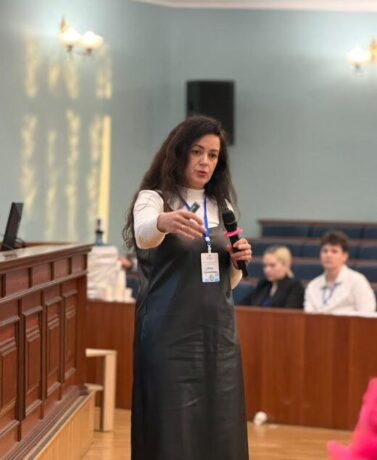
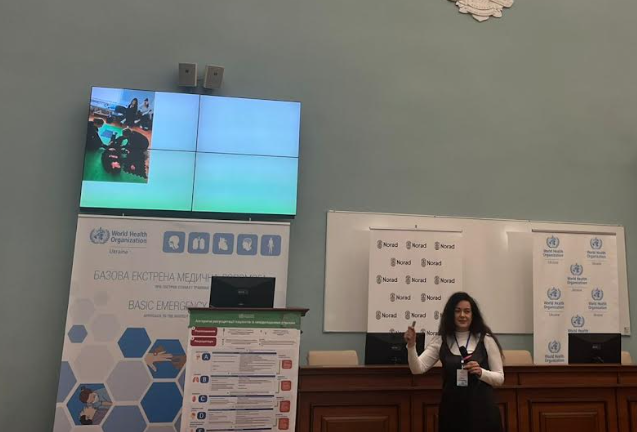
During the conference, the results of implementing the Basic Emergency Care (BEC) program into the educational process of Ternopil National Medical University—specifically within the Bachelor’s-level “Nursing” program—were presented. These results demonstrated the effectiveness of integrating international emergency care standards into the training of future nurses and confirmed their readiness to act in critical clinical situations.
To date, six medical education institutions have already incorporated Basic Emergency Care into their educational processes as a standalone academic discipline.
The exchange of experience among higher medical education institutions, along with active discussions involving representatives of government bodies, international organizations, and the academic community, highlighted the relevance and practical value of implementing the Basic Emergency Care (BEC) program in the training of medical professionals. The integration of international emergency care standards, particularly in nursing education, will contribute to enhancing nurses’ professional competence, strengthening the healthcare workforce, and improving the quality of medical care provided to Ukraine’s population.