

TNMU Digi-CHange Project Working Group Participates in Kick-off Meeting at Riga Technical University (Latvia)
On January 8–9, 2026, Riga Technical University (Latvia) hosted the coordinators and participants of the Erasmus+ KA2 project 101233888, “Digi-CHange” (Digital Transformation and Curriculum Development for Healthcare Teams), under the “Partnerships for Transformation in Higher Education” programme.
The Erasmus+ Capacity Building in Higher Education project Digi-CHange – Digital Transformation and Curriculum Development for Healthcare Teams has officially entered its implementation phase. This marks a significant step toward modernizing medical and nursing education through digital health, artificial intelligence, and interdisciplinary collaboration. Launched in October 2025, the project brings together higher education institutions and partners from Europe and partner countries, with a particular focus on Georgia and Ukraine.
A key milestone in the project’s implementation was the first international Digi-CHange consortium meeting. The meeting brought together academic leaders, educators, healthcare professionals, and digital innovation experts from Georgia, Ukraine, Ireland, Italy, and Latvia, signaling the transition from preparation to coordinated action and confirming a shared commitment to long-term educational reform.
Ternopil National Medical University was represented at the Kick-off Meeting by a working group comprising Professor Andrii Sverstiuk, Department of Medical Informatics; Dmytro Vakulenko, Head of the Department of Medical Informatics; and Associate Professor Oksana Bahrii-Zaiats, Department of Medical Physics of Diagnostic and Therapeutic Equipment.
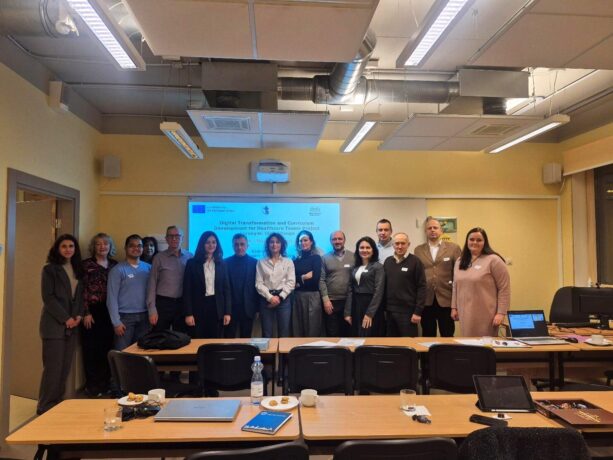
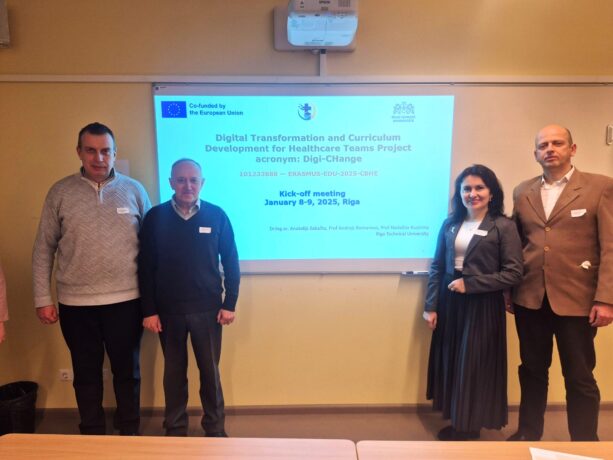
The international consortium of partner universities was initiated by Petre Shotadze Tbilisi Medical Academy (Georgia) (Project Coordinator – Katerina Kldiashvili), which also secured European Union grant funding for the project’s implementation. Ukraine is represented in the project by I. Horbachevsky Ternopil National Medical University (TNMU, Project Coordinator: Andrii Sverstiuk) and National Pirogov Memorial Medical University, Vinnytsia (VNMU, Project Coordinator: Viktoriia Rodinkova).
The consortium also includes:
Ilia State University, Georgia (Coordinator – Salome Shedania);
K. Eristavi National Center of Experimental and Clinical Surgery, Georgia (Coordinator and Medical Director – Dr. Nikoloz Chaduneli);
Riga Technical University, Latvia (Coordinator – Andrij Romanov, PhD, MBA);
Dublin City University, Ireland (Coordinator – Dr. Daniela Levaldt);
INFOR ELEA Academy, Italy (Coordinator, Founder, and President – Carlo Colomba, MBA).
The main goal of the Digi-CHange project is the digitalization of medical curricula and the development of a modern concept of medical education through the achievement of the following objectives:
- Curriculum reform focused on advancing the concept of digitalization in medical education.
- Development of Digi-CHange laboratories in higher education institutions of partner countries.
- Establishment of a Digi-CHange network to support collaboration between digital skills laboratories.
- Development of AI-based simulations specifically designed for medical curricula.
- Development of methodologies and tools for assessing digital health competencies.
- Raising awareness of digital health.
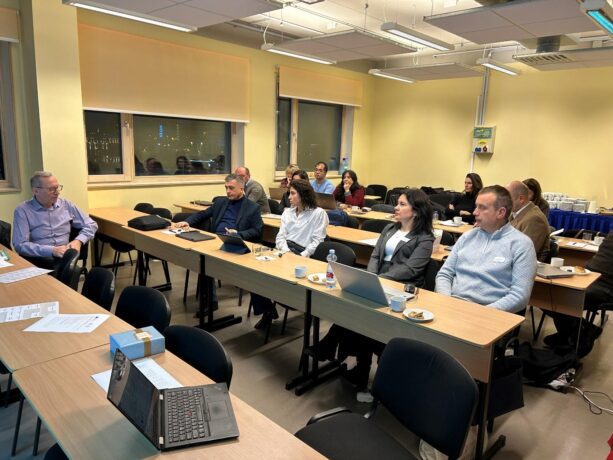
A key emphasis was placed on the fact that digital transformation in healthcare is not only about technology. Future doctors and nurses must be equipped with skills for collaborative work in digitally transformed clinical environments. Digi-CHange directly addresses this need by integrating digital health competencies into education and training. The project aims to create a more resilient and technologically advanced healthcare system by addressing critical gaps through the digital transformation of education.
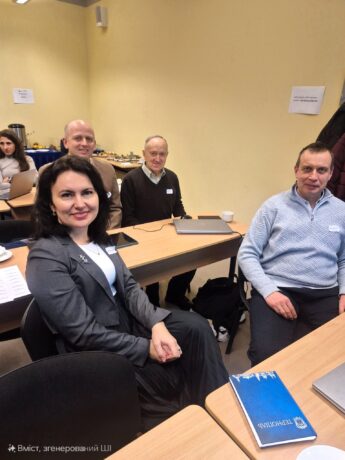
The project focuses on reforming medical and nursing curricula to better reflect real-world healthcare practice, where digital tools, data, and artificial intelligence increasingly support clinical decision-making. Through a team-based approach, Digi-CHange trains doctors and nurses to collaborate effectively while maintaining an ethical, patient-centered focus.
Key project activities include the development of digital curricula, the integration of AI-based simulations into education and professional training, the establishment of Digi-CHange laboratories as practical learning environments, and the development of tools for assessing digital health competencies. The project’s outcomes will help increase digital literacy among students, educators, doctors, nurses, healthcare professionals, and the broader society.
By supporting higher education institutions in Georgia and Ukraine, the Digi-CHange project contributes to strengthening healthcare systems, enhancing professional readiness for digital transformation challenges, and aligning educational programs with European and global priorities in digital health.
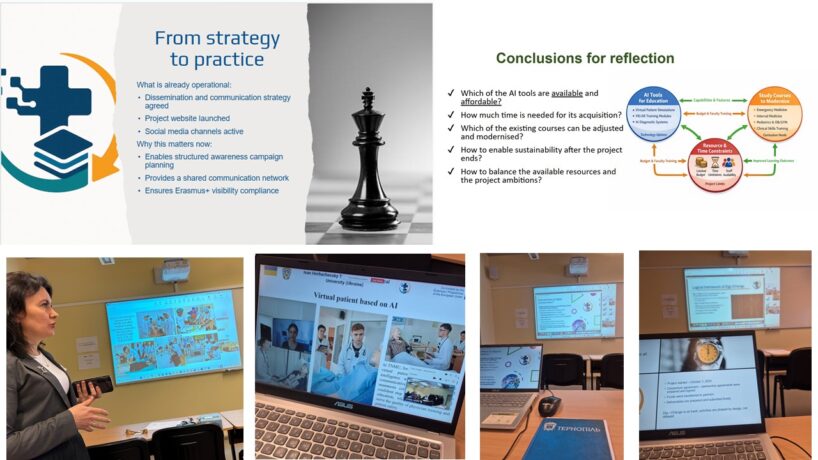
As part of the Kick-off Meeting, an administrative and financial briefing was held, during which contractual obligations between partners were reviewed, reporting rules clarified, and internal deadlines for document submission specified. Particular attention was paid to partners’ responsibilities for financial management and compliance with Erasmus+ rules regarding personnel costs, travel, and equipment procurement.
An overview of preparatory work completed during the first four months of project implementation was also presented. Participants provided updates on completed steps, the current status of equipment procurement at each institution, and any potential challenges or delays. Based on the discussion, a list of necessary corrective actions was formulated to ensure the timely completion of project tasks.
Meeting participants agreed on internal communication procedures and defined a shared structure for the platform used to store project documentation and results. The frequency of online meetings and internal quality assurance activities was also approved.
Within the framework of work package implementation, partners plan to conduct structured discussions on the content of the planned training programs, including clarification of learning outcomes, thematic focus, and core content modules. Preferred modes of delivery—face-to-face, online, or hybrid—were agreed upon, along with the distribution of responsibilities for developing educational content. A schedule for the creation, review, and implementation of learning materials was also approved.
Tasks related to the information campaign to raise awareness about digital health were also discussed. Partners defined the objectives and key target groups, formulated core messages, and outlined the types of content to be produced. Responsibilities were allocated among institutions, and communication channels were selected, including social media, institutional platforms, and public engagement activities.
At the conclusion of the meeting, participants summarized key decisions and defined next steps for project implementation, including the allocation of responsibilities and the schedule for upcoming consortium online meetings.
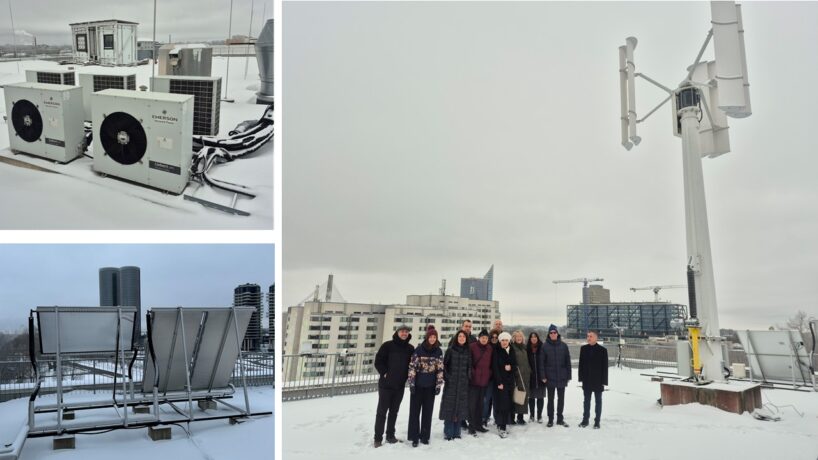
During the working visit to Riga Technical University, representatives of partner institutions had the opportunity to familiarize themselves with the material, technical, and research facilities of the Faculty of Computer Science, Information Technology, and Energy, including energy-saving systems and alternative energy sources.
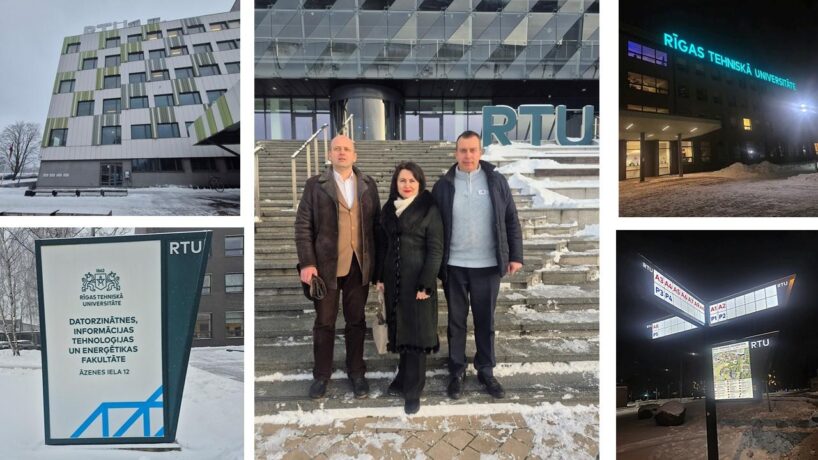
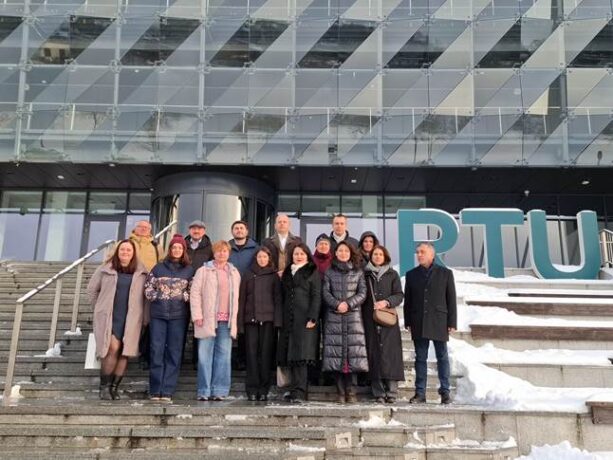
We express our sincere gratitude to Anatolii Zabasta, Katerina Kldiashvili, and colleagues from Riga Technical University for the excellent organization of the meeting, hospitality, and warm welcome, as well as to all consortium members for their insightful ideas, discussions, and productive work.