


Meeting of the Consortium Working Group of the Erasmus+ Project “Digi-CHange”
On February 6, 2026, the partners of the “Digi-CHange” project (https://digichangeproject.com/news) met online for a working group meeting dedicated to the practical phase of project implementation. The meeting, chaired by the project coordinator Professor Kateryna Kldiashvili (Petre Shotadze Tbilisi Medical Academy, Georgia), focused on practical implementation steps and aimed to align partners regarding the “Training of Trainers” programme, the approach to curriculum development, equipment procurement procedures, and dissemination planning. The discussion sought to clarify the directions of work and the expected outcomes.
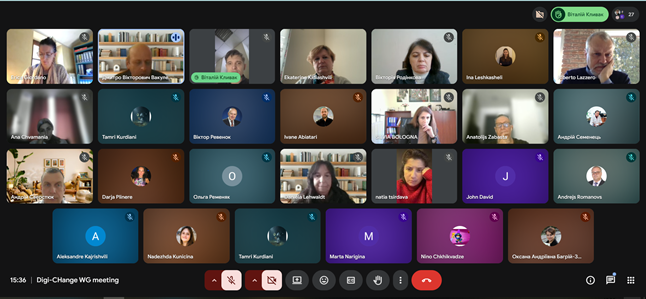
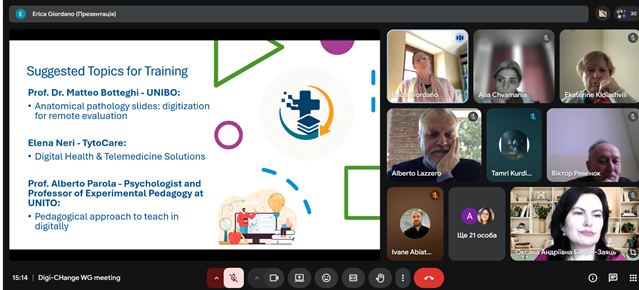
The Training of Trainers concept was presented by the INFOR ELEA Academy (Italy). The goal is to prepare a group of educators capable of transferring knowledge and teaching approaches within each institution after the project’s completion. The proposed training format includes a four-day programme combining pedagogical courses with applied clinical case examples and observation of digital health practices. The target participants are academic staff, clinical instructors, and experts involved in curriculum development. The programme content should remain adaptive and reflect institutional needs. At this stage of project implementation, partners are reviewing the proposal, suggesting topics, speakers, and possible additions. The possibility of organizing a second Training of Trainers event with a stronger focus on AI-supported tools was also discussed.
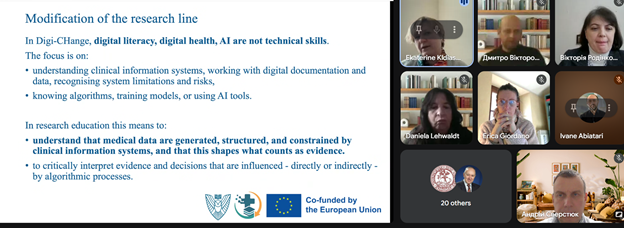
Partners discussed mechanisms for integrating digital health competencies into both new and existing courses. It was proposed to analyze the use of existing digital elements in current curricula. The presence of digital components across various teaching areas was examined, including clinical documentation, diagnostic imaging, simulation exercises, and decision-support use. For this reason, partners agreed that simply adding a single “Digital Health” course would not fully meet educational needs. The priority should be revising existing courses so that digital processes become effective learning outcomes. Examples discussed included:
- working with clinical information systems;
- digital imaging and documentation;
- interpretation of computer-generated results;
- professional responsibility when using automated decision support.
Petre Shotadze Tbilisi Medical Academy (Georgia) presented an additional approach whereby certain competencies could also be structured into dedicated modules. Proposed topics include the fundamentals of digital health, the responsibilities of handling health data, and decision-making in technology-supported environments. These were presented as potential additions in cases where integration into existing subjects alone would be insufficient. Partners agreed to apply two approaches to enhance digital literacy: updating current courses and introducing targeted modules to improve conceptual understanding of digital skills. Each institution will determine the balance between these approaches in accordance with its curriculum structure and regulatory requirements.
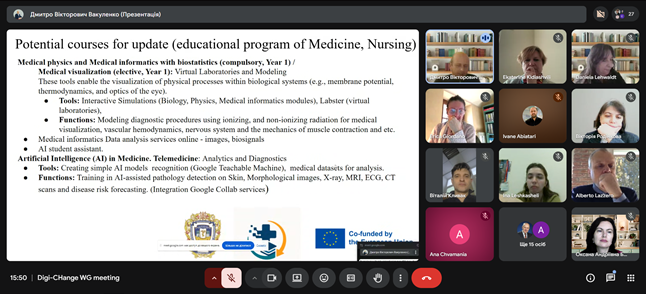
During the meeting, expectations regarding the use of artificial intelligence technologies were clarified. “Digi-CHange” is a project focused on pedagogical practice and the use of equipment. The development of algorithms or a shared digital platform is not part of the project. Institutions may integrate available tools at the local level, provided they comply with legal, ethical, and data protection requirements. The emphasis remains on understanding how technologies influence clinical reasoning and professional responsibility.
Partners reported on the ongoing market analysis of equipment (digital scanner and dermatoscope) and noted that administrative procedures for project registration must be completed before procurement can begin. The main constraints are administrative rather than technical. Completion of procurement is expected by June 2026.
Next steps:
- The teams of the INFOR ELEA Academy (Italy) and Dublin City University (Ireland) will collaborate to ensure a logical and effective exchange of topics for trainers.
- Partners will review the plan proposed by INFOR ELEA (Italy) and provide suggestions regarding topics and speakers.
- Higher education institutions in Georgia and Ukraine will complete the digitalization of curricula by June 2026 before implementing changes.
- Procurement procedures will continue with the aim of completion by June 2026.
The meeting confirmed a shared implementation pathway: institutions will first analyze and update existing courses, introduce new targeted modules where necessary, and prepare qualified trainers to support digital medical education after the project’s completion.ць.