


Students of the Educational and Scientific Institute of Pharmacy got acquainted with the work of the State Service of Medicines and Drug Control in the Ternopil region
The modern pharmaceutical industry requires not only thorough theoretical training but also a clear understanding of the principles of state regulation, particularly in the field of medicine quality control. Quality control is not a formality, but a key stage at all levels: from development and production to storage and distribution of medicinal products.
For this reason, on February 17, 2026, fifth-year pharmacy students, together with associate professors of the Department of Pharmaceutical Chemistry, Tetiana Kucher and Liubomyr Kryskiv, as part of the course “Industrial Practice in Pharmaceutical Chemistry,” took a practical excursion to the State Service of Medicines and Drug Control in the Ternopil region.
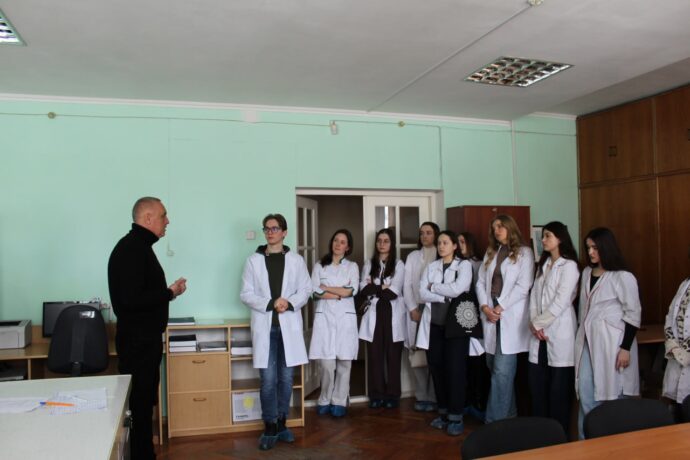
The head of the service, Taras Proniv, explained the specifics of the work of the territorial body, which supervises the activities of more than 560 pharmacy establishments in the region.
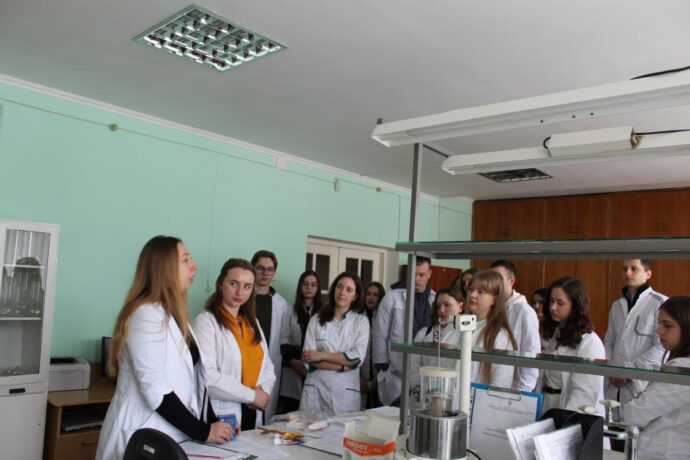
Particular attention in the service’s work is paid to the control of the circulation of narcotic drugs and precursors — a critically important area subject to strict licensing.
During the visit, higher education students toured the quality control laboratory headed by Maria Stetsiuk.
The laboratory is equipped with modern analytical instruments that allow for physicochemical studies of varying complexity. In particular, potentiometric pH determination, conductivity measurement, and titration in non-aqueous media.
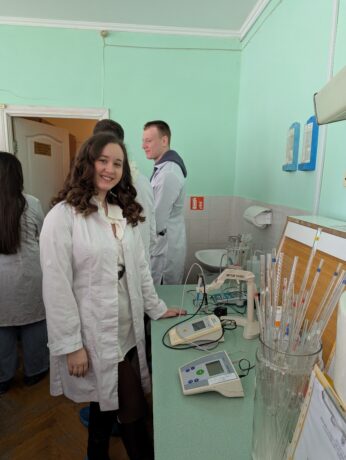
Specialists test medicines according to parameters such as description, identification, uniformity of mass, disintegration, and the presence of mechanical impurities.
Conducting such tests guarantees that only effective and safe medicines reach patients.
Students also became familiar with the workflow of the inspection sector. Specialists noted that the process of sampling is accompanied by mandatory sealing.
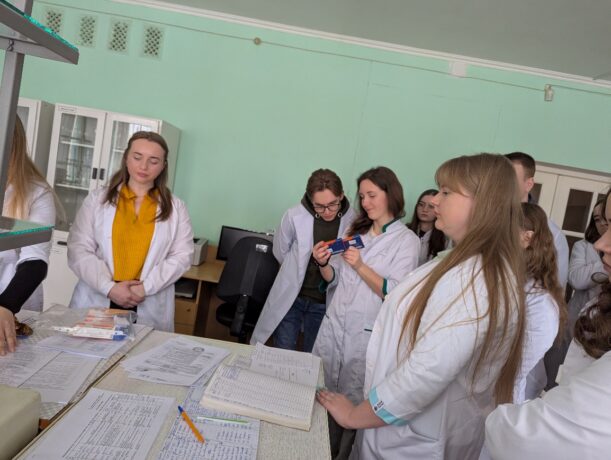
The system of import control was discussed in detail. The specialists emphasized that no package of medicines reaches consumers without a positive state conclusion.
The importance of checking labeling (batch number, Ukrainian language) and strict adherence to temperature conditions in storage areas was highlighted.
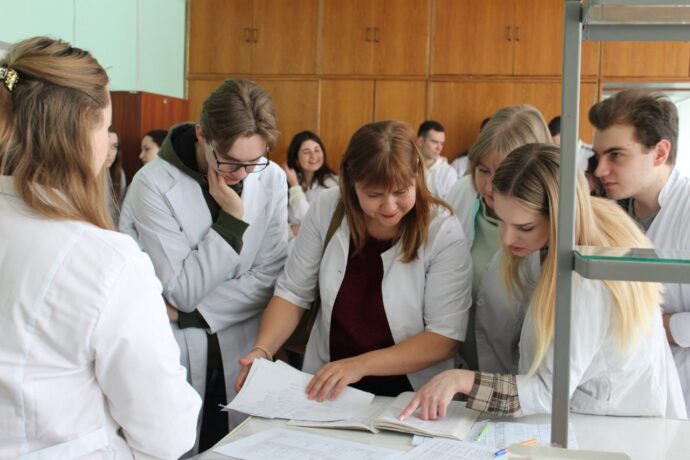
Special attention is paid to storage conditions in material rooms.
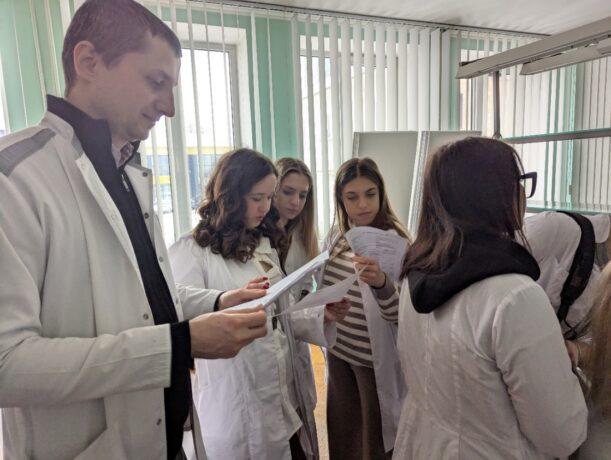
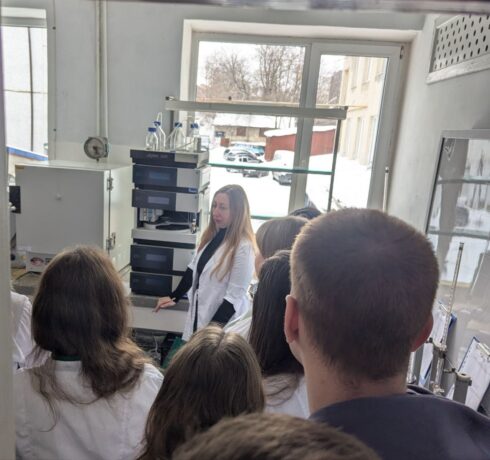
The specialists also spoke about the features of high-performance liquid chromatography and the prospects for its use in medicine quality control.
For young professionals, the State Service remains an open platform: motivated students are always welcome for internships, residencies, and future employment. After all, state quality control is a field where knowledge turns into real protection of public health.
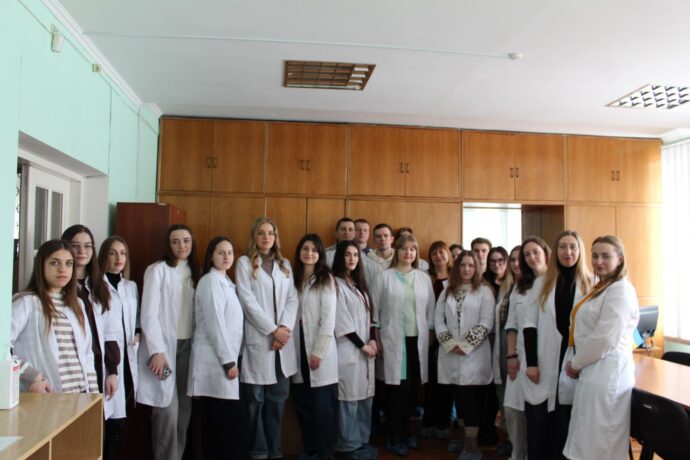
We thank the team for the informative excursion and the opportunity to see the medicine quality assurance system from the inside.