

The Minister of Health of Ukraine Introduced the Newly Elected Rector of TNMU
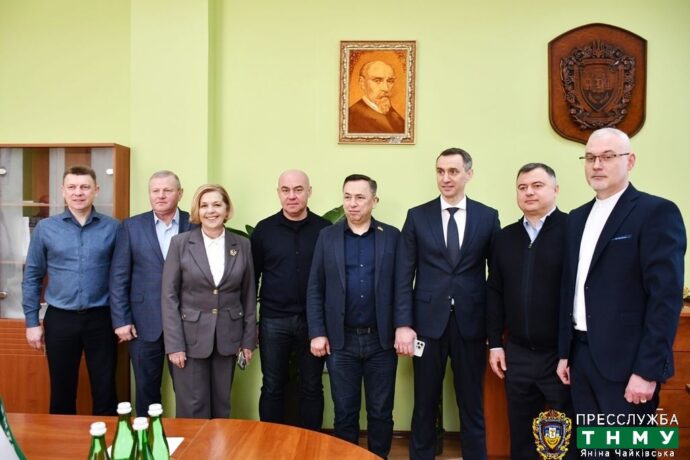
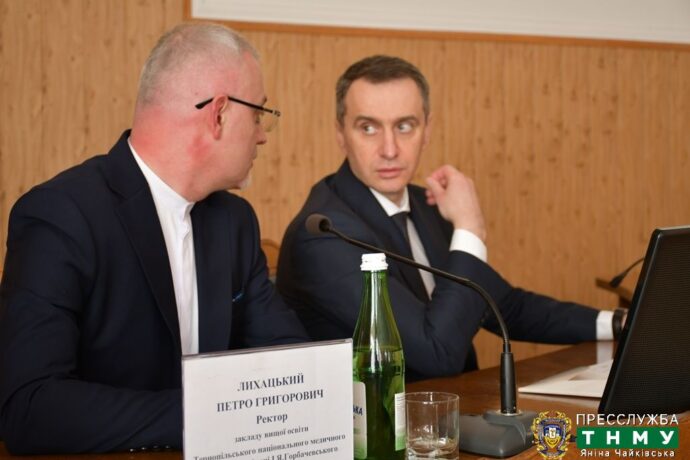
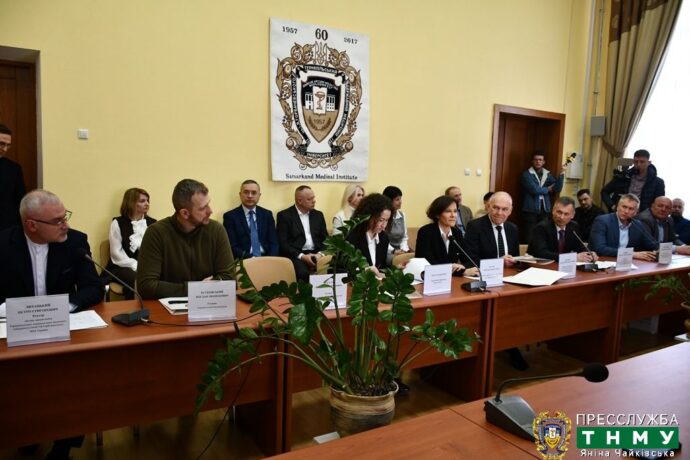
The Minister of Health of Ukraine, Viktor Liashko, paid a working visit to Ternopil on March 17, 2026. During the visit, he introduced the newly appointed Rector, Professor Petro Lykhatskyi, to the staff of Ternopil National Medical University and the public of Ternopil region. He also spoke with the university staff, answered questions from teachers and students, and discussed current challenges and prospects for the development of medical education.
The future of the university is the responsibility of the entire team
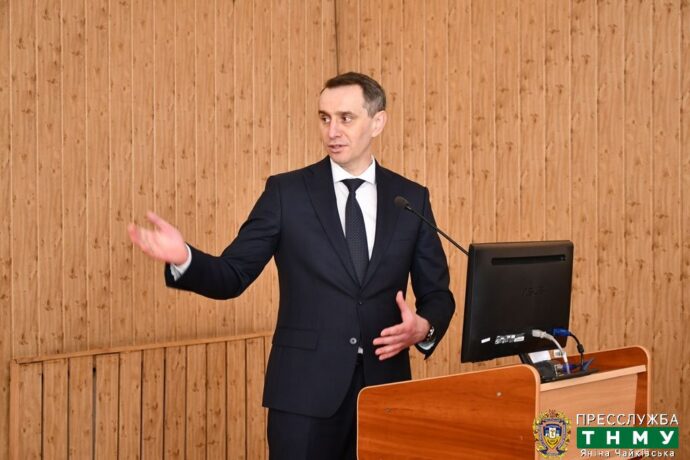
“I am not in Ternopil Medical University for the first time, but today I am personally pleased to be here. I have the opportunity to officially introduce the newly elected Rector. A new Rector means a vision for the future. Today, I would like to discuss that vision and define the key priorities for the medical university’s work and development.
First of all, I would like to express my gratitude to the university team and the previous Rector, Mykhailo Korda, who led the institution to the forefront of medical education in Ukraine. When we talk about the future, you organized democratic elections and voted for Petro Lykhatskyi, who passed all the necessary checks and signed a contract in February this year. For the next five years, he will serve as Rector of Ternopil National Medical University.
Now I would like to address the team. By electing a Rector, you have not transferred all responsibility for the university’s development to him. Within the first three months, he must develop a strategy for the university’s development and present it to the Ministry of Health of Ukraine. We understand that the Rector should not do this alone—you must work as a team to decide what the university’s future will look like over the next five years.
I have repeatedly stated that the university’s future depends on having an appropriate number of students—no fewer than 5,000 over the next five years. Another key indicator is that students must receive clinical practice from the early years of study, which makes the issue of a university hospital essential for any medical university,” emphasized Viktor Liashko.

He expressed hope that regional and city authorities would support TNMU in establishing a university hospital. The Minister added that Ukraine is moving toward EU membership and cited an experimental project in Lviv that is already showing positive results. Clinical bases should be consolidated and clearly structured, serving as hubs for integrating education, practice, and research.
Universities should serve as bases for clinical trials, testing, and the implementation of innovative methods. He also proposed establishing a mental health center for healthcare workers in Ternopil, potentially based on the “Chervona Kalyna” educational and wellness complex. This facility could become a center of excellence for Ukraine and other countries.
He noted the need to address several challenges, including a decline in student numbers and a shortage of healthcare personnel. The development of nursing bachelor’s programs and simulation centers was highlighted as a key priority.
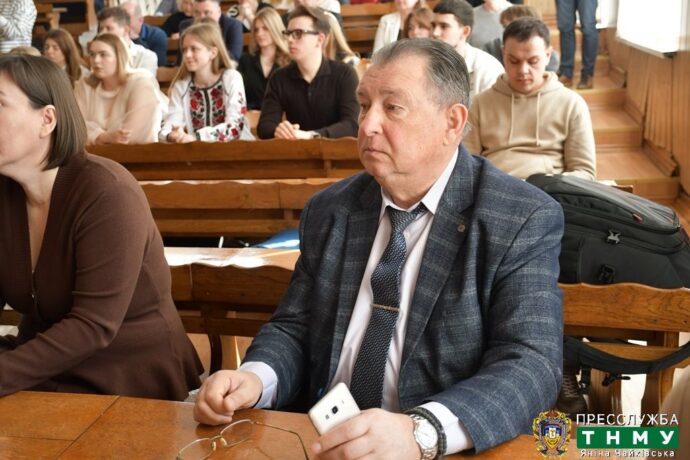
TNMU as an innovative center of European-level medical education and science
Rector Petro Lykhatskyi emphasized that the university’s strategic goal is to transform TNMU into an innovative center of medical education and science at a European level. The primary task is to train highly qualified specialists ready to integrate into the healthcare system.
He highlighted the importance of expanding simulation-based training, strengthening clinical preparation, and enhancing cooperation with healthcare institutions both within and beyond the region. The university continues to develop its clinical bases, including dental, mental health, and primary care centers.
Science remains an integral part of the university’s activities, with participation in international programs such as Horizon, Erasmus+, and DAAD. New academic programs, including Prosthetics and Orthotics and Clinical Psychology, are being introduced.
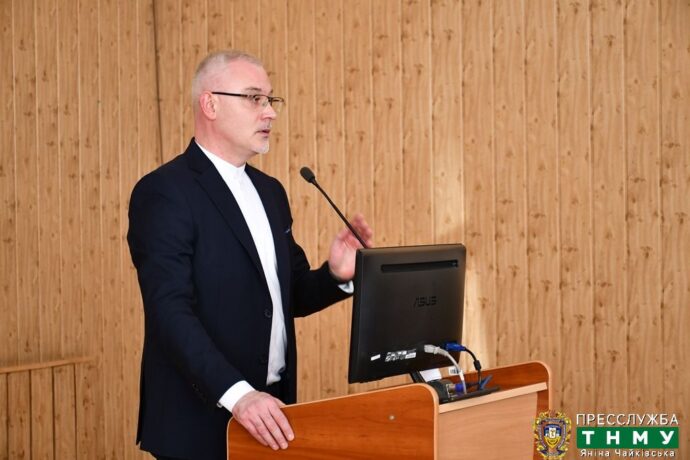
Ukraine as a platform for innovation
Ternopil Regional Military Administration Head Taras Pastukh noted that Ukraine is undergoing a healthcare transformation during a full-scale war. Ukrainian doctors are gaining unique experience in treating complex injuries and conditions, making the country a potential hub for international medical education.
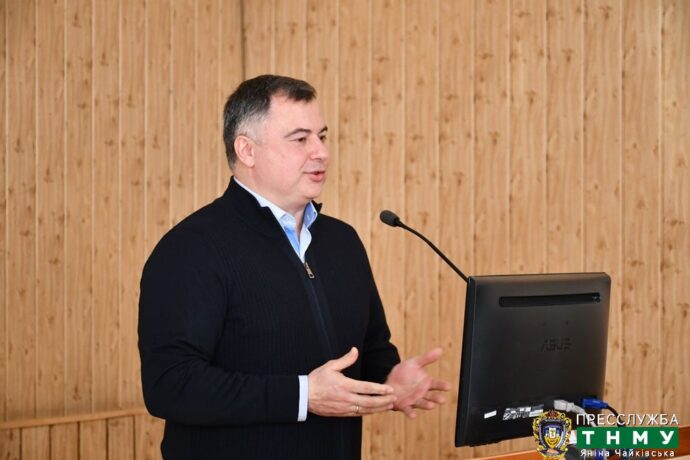
Questions from students and faculty
Viktor Liashko also answered questions regarding internship placement, clinical departments, pharmaceutical education, and the development of medical technology assessment.
He noted that electronic internship distribution has improved transparency and that incentives are being introduced to encourage young specialists to work in rural areas, including financial support and housing programs.

Viktor Liashko noted that since last year, an electronic internship placement system has been introduced for graduates of medical universities. It was a long process aimed at making all procedures transparent.
“We conducted a survey among graduates. The results showed that a large percentage of respondents are satisfied with the new internship placement system. Today, a key issue is developing a ranking system, which we will continue to refine. However, the entire university community should work on this and provide its proposals.
The main innovation in the placement process will be an emphasis on vacancies that offer additional state incentives. If you choose to pursue your medical career in a rural area, the state will provide you with 200,000 hryvnias to help you settle. You will need to sign a contract requiring at least three years of work in that position.
Priority will also be given to vacancies submitted by healthcare institutions that are allowed to purchase housing using state budget funds for specialists needed in specific regions or communities. This year, at least 100 million hryvnias have been allocated for housing for young professionals and specialists in shortage areas.
Together with the Ministry of Health’s Youth Council, we studied the key factors motivating young professionals to work in the healthcare sector. Fifteen main points have been identified, and we are working on them. We were pleasantly surprised to find that salary is not always the top priority—young people are often motivated by many other factors,” Viktor Liashko shared.
A representative of the TNMU clinical department, Andrii Prodan, asked about the future of clinical departments located across different healthcare facilities, noting that it is impossible to integrate all specialties within a single institution.
“We understand that creating a multidisciplinary university hospital that fully covers all areas for clinical departments in one place is not a five-year process, but a much longer one. As for clinical bases, they should not be fragmented to serve individual professors separately.
We already have the groundwork for drafting a regulation on clinical bases. Discussions are ongoing, and the draft will soon be presented for public consultation,” the Minister responded.
The Head of the Department of Pharmacology with Clinical Pharmacology, Professor Oleksandra Oleshchuk, inquired about the development of preclinical research and the prospects of establishing an independent agency for health technology assessment.

“If we speak about the development of pharmacy and pharmaceutical education, we observed a significant decline in the number of applicants in 2025. The pharmaceutical community attributed this solely to the introduction of a 150-point requirement on the National Multisubject Test (NMT) for admission to pharmaceutical specialties.
I believe that pharmaceutical education should be corporatized. I have proposed creating at least one corporate pharmaceutical university, possibly based on our Kharkiv Pharmaceutical University. I also initiated discussions on developing legislative changes to ensure the state held a controlling stake in such an institution. This would align with the principles followed in developed countries.
The primary stakeholders for graduates of pharmaceutical specialties are drug manufacturers, pharmaceutical companies, and others. As a state, we would ensure our need for clinical pharmacists and pharmacists in healthcare institutions, while pharmaceutical companies would have the necessary number of specialists they require.
Unfortunately, this process in the country is progressing slowly and with difficulty. Once the issue of which universities will retain pharmaceutical faculties is resolved, we will then move on to equipping them with laboratories for preclinical research,” noted Viktor Liashko.
The Minister of Health also commented on the situation regarding health technology assessment, stating that starting from January 1, 2027, a separate state body for controlling the quality and safety of medicines—the “Ukrainian Pharmaceutical Agency”—will begin operating.
According to him, health technology assessment will become a separate institution that will play a key role in the future of medicines in public procurement and will serve as a partner helping healthcare institutions determine which medicines and medical devices to purchase.
Prosthetics as an important field
Following the meeting, discussions continued on rehabilitation development. The university has been implementing a master’s program in Prosthetics and Orthotics, addressing the growing need for specialists due to war-related injuries and amputations.
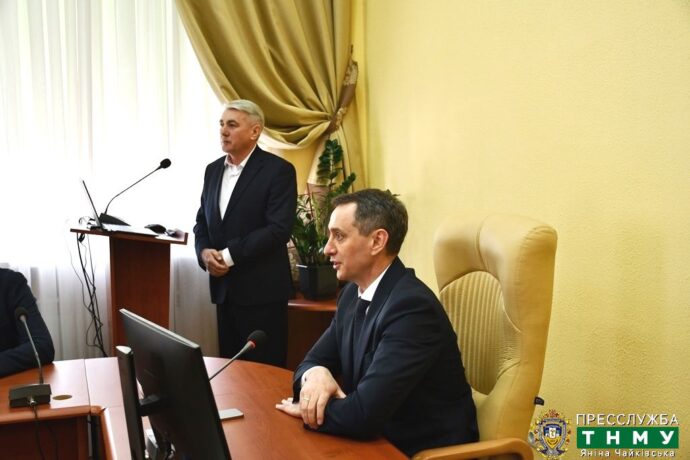
Viktor Liashko noted that he was impressed by TNMU’s achievements and thanked the university’s staff for responding to the Ministry of Health’s initiative and becoming one of the four universities to launch a training program for prosthetists and orthotists.
“We all understand that the full-scale invasion has led to a large number of amputations among both military personnel and civilians. In addition, even before that, we already had a significant number of people with amputations due to various injuries, pathological and endocrine diseases.
When it came to recognizing that a prosthetist-orthotist should be part of a multidisciplinary team, we realized that there is a shortage of qualified specialists, and all of them are outside the state system.
It is important for us that healthcare institutions working with amputations, with strong rehabilitation departments and serving as centers of excellence, have their own prosthetic workshops and a sufficient number of specialists,” Viktor Liashko concluded.
At the end of the visit, a memorandum of cooperation with international medical institutions was signed, opening new opportunities for the development of medical education and science, including plans to establish a prosthetics and orthopedics center.