

Participation of the TNMU Delegation in the 21st RECOOP Bridges in Life Sciences Conference
On March 24–26, 2026, a delegation from I. Horbachevsky Ternopil National Medical University took part in the international conference “21st Bridges in Life Sciences Conference,” organized by the Association for Regional Cooperation in the Fields of Health, Science and Technology (RECOOP HST Association), held in Zagreb, Croatia.
Participation in the conference is an important component of TNMU’s international scientific activity. Since 2019, the university has been a member of the RECOOP HST Association and has been actively developing partnerships within this scientific network. The university’s cooperation with the association covers a range of interdisciplinary studies related to COVID-19, genetic factors of disease severity, chronic stress, endothelial dysfunction, as well as combat injuries and post-traumatic stress disorders.
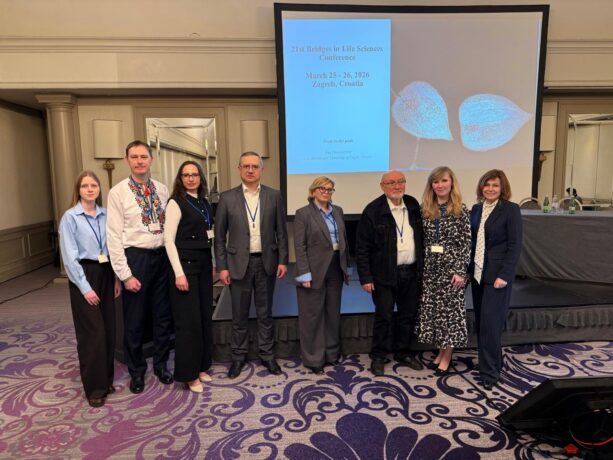
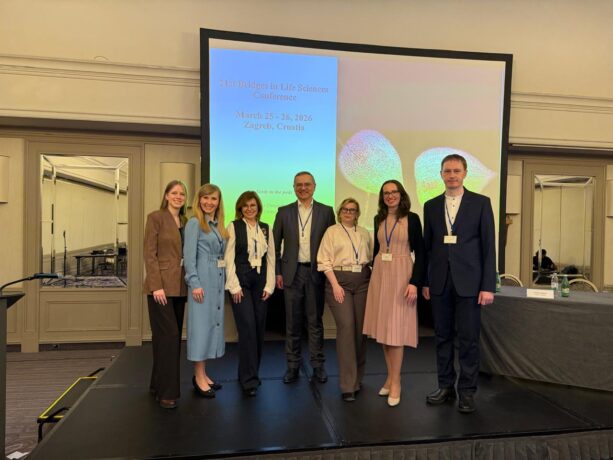
Representatives from TNMU included Acting Vice-Rector for International Relations, Professor Mykhailo Korda; Professor of the Department of Pharmacology and Clinical Pharmacology and Head of the Scientific Project Management Department, Oksana Shevchuk; Head of the Department of Psychiatry, Narcology, and Medical Psychology, Professor Olena Venher; Head of the Department of Microbiology, Virology, and Immunology, Associate Professor Taras Piatkovskyi; Associate Professor of the Department of Pediatrics No. 2, Kateryna Kozak; Associate Professor of the Department of Psychiatry, Narcology, and Medical Psychology, Olha Liuta; as well as sixth-year student and Head of the TNMU Student Scientific Society, Viktoriia Miroshnyk.
During the conference, TNMU representatives presented the results of their scientific research in oral presentations, including:
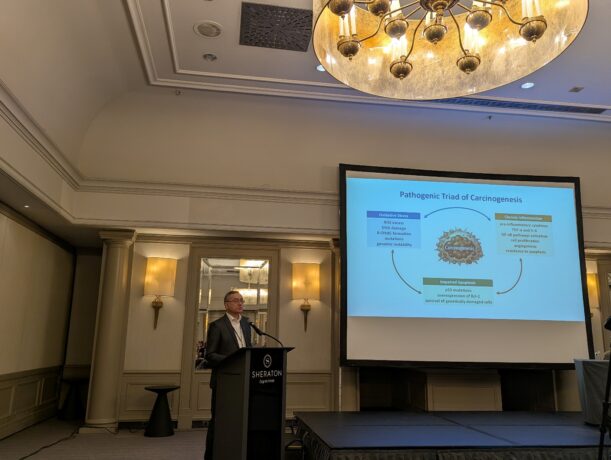
Mykhailo Korda – “Molecular hydrogen modulates inflammatory and immune markers in the tumor microenvironment of experimental colorectal cancer”;
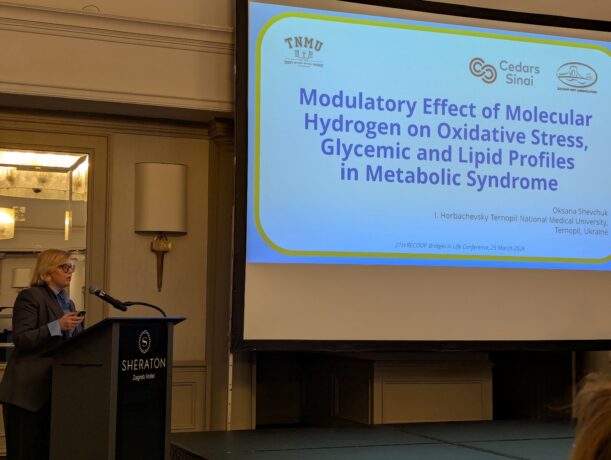
Oksana Shevchuk – “Modulatory effect of molecular hydrogen on oxidative stress, glycemic and lipid profiles in metabolic syndrome”; Olena Venher – “Comparative characteristics of psychological mechanisms of resilience and stress tolerance in combatants and veterans”;
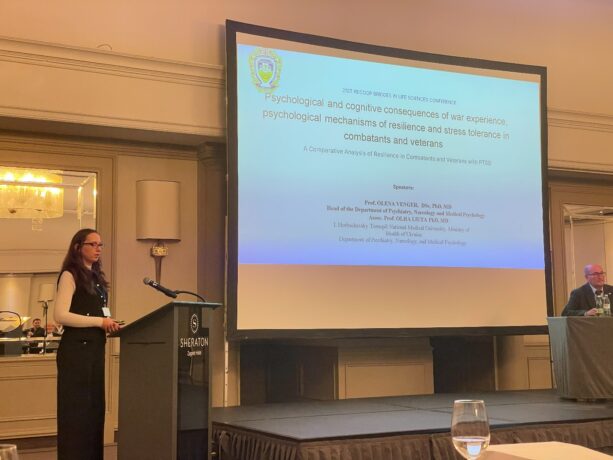
Olha Liuta – “Psychological and cognitive consequences of war experience in combat soldiers and veterans”;
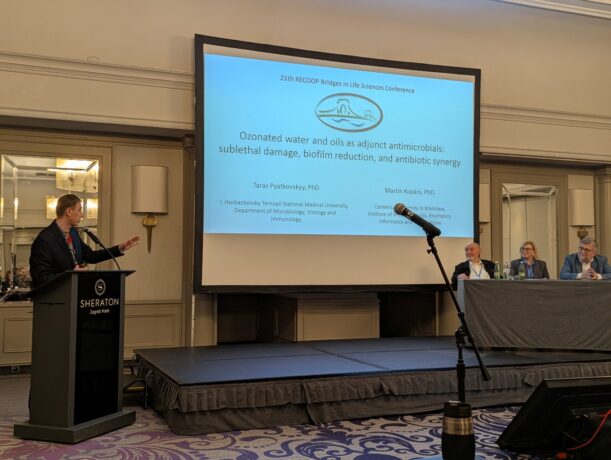
Taras Piatkovskyi – “Ozonated water and oils as adjunct antimicrobials: sublethal damage, biofilm reduction, and antibiotic synergy”;
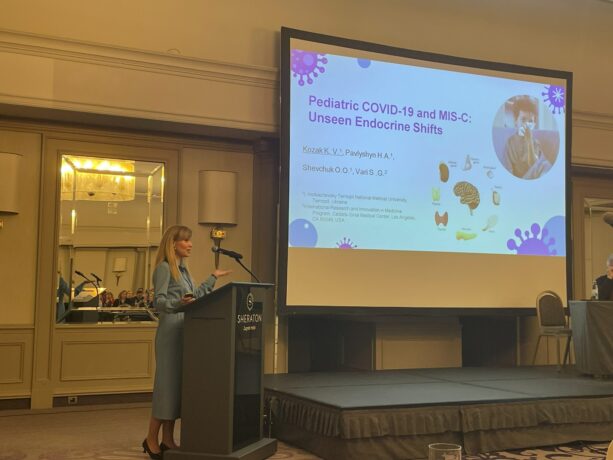
Kateryna Kozak – “Pediatric COVID-19 and MIS-C: unseen endocrine shifts”;
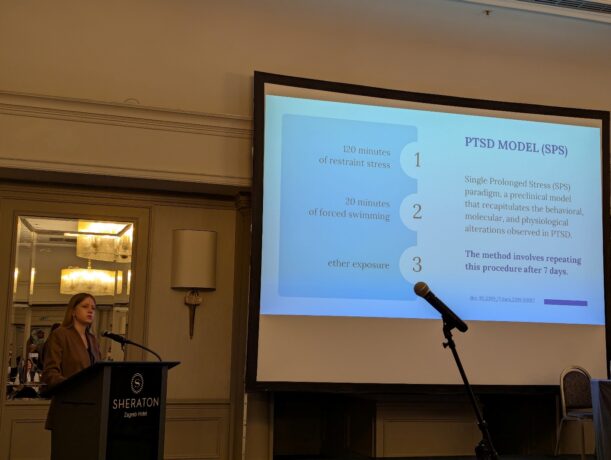
Viktoriia Miroshnyk – “Sex differences in oxidative stress and myocardial morphology in a rat model of posttraumatic stress disorder.”
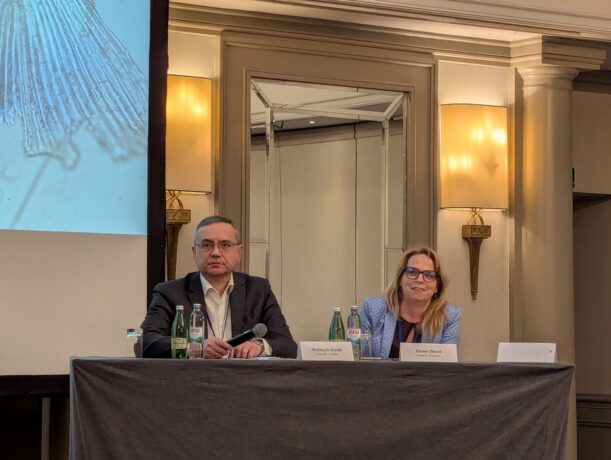
In addition to presenting their research findings, TNMU representatives participated in discussions on current scientific issues within specialized conference sessions dedicated to drug development, neurodegenerative and metabolic diseases, cardiovascular pathology, RECOOP research centers, medical imaging, nanomedicine, translational medicine, reproductive health, infectious diseases and immunology, as well as clinical and epidemiological studies.
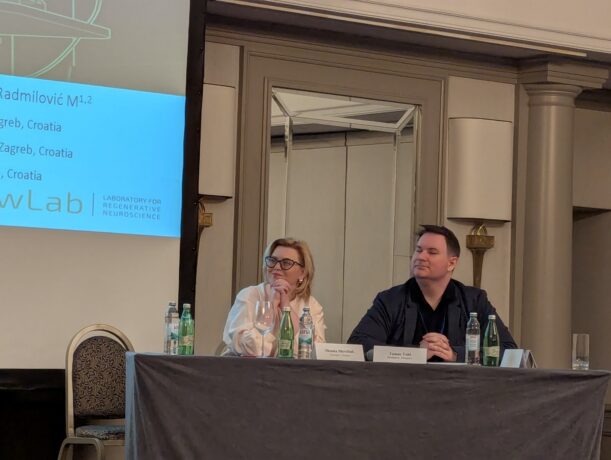
An important part of the conference program was the 21st General Assembly Meeting of the RECOOP HST Association. Authorized representatives of member institutions attended the meeting. Following the General Assembly, conference participants were informed about key decisions, the results of activities, and the future directions of cooperation within the RECOOP HST Association. TNMU was represented at the meeting by Professor Mykhailo Korda and Professor Oksana Shevchuk.
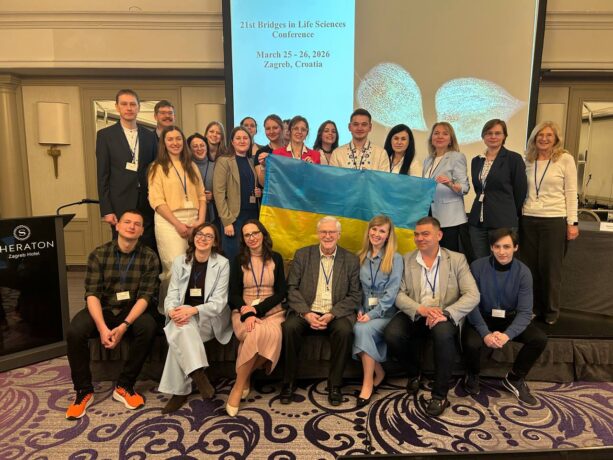
The conference also served as a platform for professional communication with representatives of research institutions and higher education establishments from Ukraine and other countries participating in joint scientific initiatives within RECOOP cooperation. Ukrainian participants included representatives of the Palladin Institute of Biochemistry of the National Academy of Sciences of Ukraine, Danylo Halytsky Lviv National Medical University, the Institute of Cell Biology of the National Academy of Sciences of Ukraine, and the Institute for Problems of Cryobiology and Cryomedicine of the National Academy of Sciences of Ukraine.
Partners from Croatia (University of Zagreb School of Medicine, Josip Juraj Strossmayer University of Osijek), the Czech Republic (Institute of Macromolecular Chemistry CAS), Hungary (Hungarian University of Agriculture and Life Sciences, Semmelweis University, University of Debrecen, University of Pécs, University of Szeged), Poland (Wrocław University of Science and Technology), Romania (Carol Davila University of Medicine and Pharmacy), Slovakia (Comenius University in Bratislava, Slovak Medical University), and the USA (Cedars-Sinai Medical Center) also took part in the event.
An important practical outcome of TNMU’s participation in the “21st Bridges in Life Sciences Conference” was the acquisition of a new grant titled “Ozonated water and oils as adjunct antimicrobials: sublethal damage, biofilm reduction, and antibiotic synergy,” which will be implemented in cooperation with Comenius University in Bratislava. The responsible executor from TNMU is Associate Professor Taras Piatkovskyi. This grant expands opportunities for international scientific cooperation and creates a foundation for new joint research projects.
Participation in the conference contributed to expanding professional contacts, discussing prospects for further scientific cooperation, and strengthening partnerships with research institutions within the RECOOP HST Association.
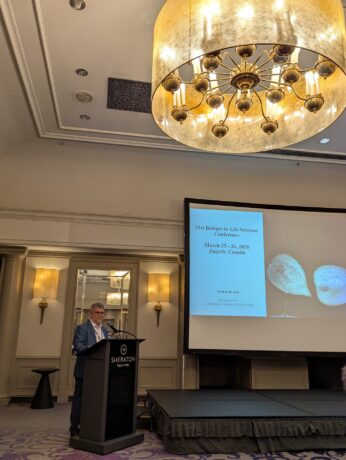
TNMU expresses sincere gratitude to the leadership of the RECOOP HST Association—President Dr. Robert Gáspár, Vice Presidents Professor Oksana Shevchuk and Dr. Tamás Tábi—for the high level of conference organization, consistent support of international scientific cooperation, and creation of opportunities for developing joint research initiatives.
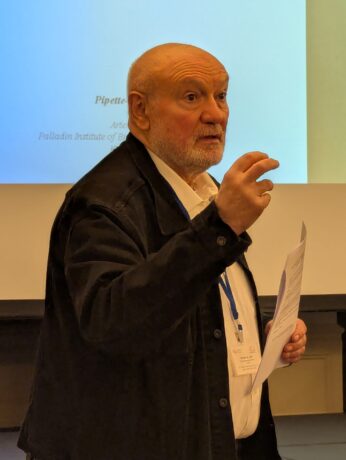
Special thanks are extended to Dr. Sandor G. Vari, under whose leadership and visionary guidance the RECOOP HST Association has developed into a powerful international platform for scientific partnership, academic dialogue, and collaborative growth.