

A TNMU Representative Participated in the EULAR 2026 European Congress of Rheumatology
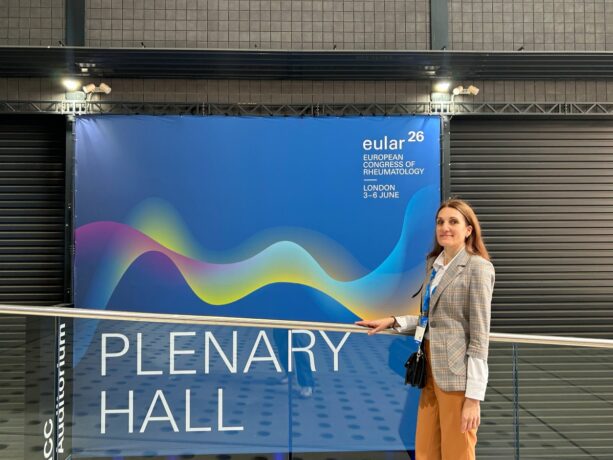
From June 3 to 6, 2026, the annual Congress of the European Alliance of Associations for Rheumatology (EULAR 2026) was held at the ExCeL London Exhibition Centre in London. It is one of the world’s largest scientific forums in the field of rheumatology and musculoskeletal diseases.
Since 1947, EULAR has been one of the leading international platforms in rheumatology, bringing together clinicians, researchers, patients, and industry representatives. Today, it comprises 45 national rheumatology scientific societies, 35 patient organizations, and 25 associations of health professionals in rheumatology.
This year, the Congress in London welcomed more than 13,000 participants from around the world. The scientific programme included over 170 sessions dedicated to fundamental and clinical aspects of rheumatology, oral and poster presentations, educational events, and interactive learning formats.
The EULAR 2026 scientific programme was distinguished by its relevance and interdisciplinary nature. Considerable attention was devoted to recent advances in understanding the pathogenesis of musculoskeletal diseases, the implementation of personalized medicine, and new evidence regarding the efficacy and safety of modern biological disease-modifying antirheumatic drugs (bDMARDs) and targeted synthetic DMARDs (tsDMARDs) in the treatment of rheumatic diseases. Other key topics included treatment resistance, early diagnosis, prevention of complications, and long-term patient monitoring.
Particular interest was generated by sessions devoted to systemic lupus erythematosus, systemic sclerosis, idiopathic inflammatory myopathies, vasculitis, rheumatoid arthritis, axial spondyloarthritis, and psoriatic arthritis. A significant part of the programme focused on difficult-to-treat patients, multimorbidity, fibromyalgia, obesity, and their impact on the course of rheumatic diseases.
Innovative technologies in rheumatology constituted another important theme of the Congress. Discussions addressed the potential applications of artificial intelligence in clinical practice, digital patient-monitoring tools, telemedicine, big data analytics, and prospects for their integration into healthcare systems. A particularly engaging debate focused on the future role of artificial intelligence in rheumatology and the interaction between physicians and digital technologies.
The Congress traditionally combined basic science with clinical practice. The “From Bench to Bedside” sessions highlighted recent achievements in translational medicine and pathways for implementing fundamental research findings into clinical practice. At the same time, considerable attention was devoted to practical aspects of patient management during the “Challenges in Clinical Practice” sessions, where experts analyzed complex clinical cases and discussed decision-making algorithms.
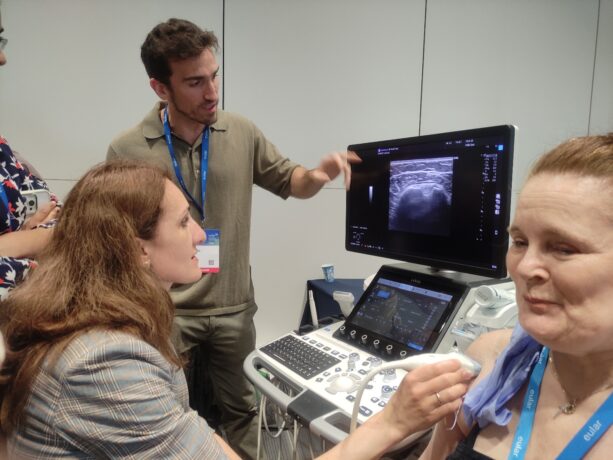
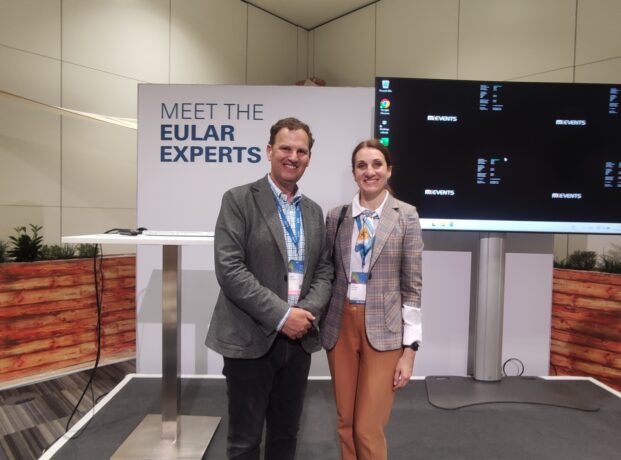
Interactive educational activities formed an important component of the Congress. Participants had the opportunity to attend Hands-on Sessions to develop practical skills, as well as the Meet the EULAR Expert format, which facilitated direct professional interaction with leading international experts in small-group settings.
As always, the latest clinical research findings were widely presented through oral presentations, poster tours, and poster sessions. The Congress served as a platform for discussing new therapeutic strategies, registry data, real-world evidence, and future directions in rheumatology.
Special recognition should be given to the active involvement of young researchers and physicians through EMEUNET programmes, as well as initiatives for Health Professionals in Rheumatology and patient organizations through PARE. These activities further emphasized EULAR’s multidisciplinary and patient-centred approach.
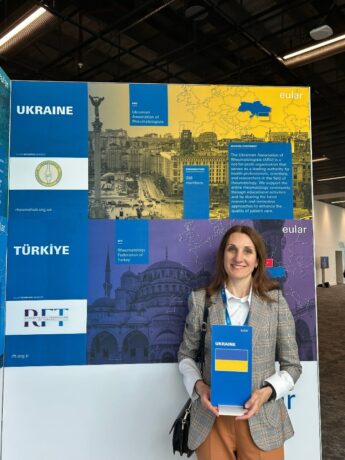
The support of Ukraine by the European medical community within EULAR is demonstrated through the continuation of professional cooperation, the involvement of Ukrainian physicians and researchers in international educational and scientific projects, and the creation of opportunities for their active participation in the Congress. Such initiatives contribute to the development of rheumatology care in Ukraine, enhance professional competencies, and strengthen international partnerships despite the challenges of wartime conditions.
Participation in EULAR 2026 contributed to updating professional knowledge, familiarization with the latest scientific advances in rheumatology, the establishment of international professional contacts, and the exchange of experience with leading specialists from around the world. The knowledge gained and practical insights acquired will be applied to further improve clinical practice, research activities, and the educational process.