

TNMU Representative Participates in the Final Meeting of the Erasmus+ LIFESTRAND Project in Georgia
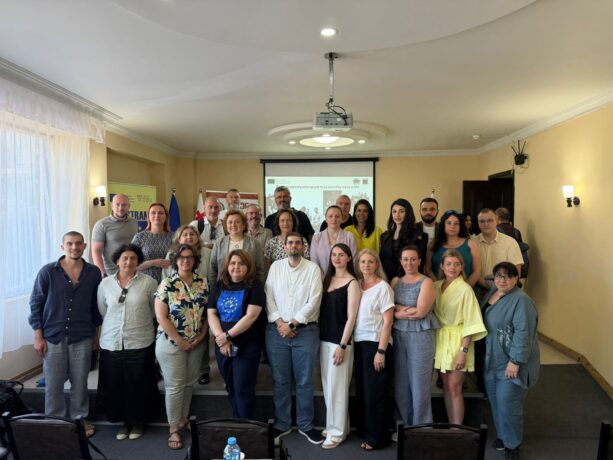
From June 15 to 18, 2026, the final meeting and dissemination event of the Erasmus+ KA2 Capacity Building in Higher Education (CBHE) project LIFESTRAND took place in Batumi and the Samegrelo region of Georgia. Participants from Ukraine, Georgia, Spain, and Portugal reviewed the project’s achievements, while I. Horbachevsky Ternopil National Medical University presented its contribution to establishing a network of first aid trainers and disseminating life-saving emergency care skills among communities living in high-risk areas.
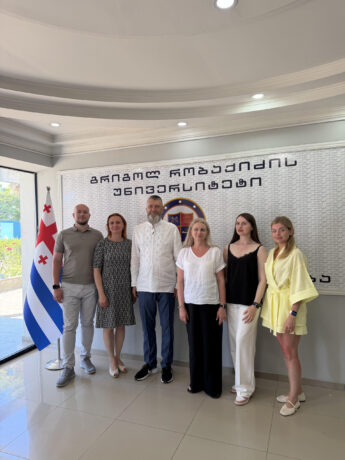
The meeting was jointly organised by three Georgian higher education institutions—Petre Shotadze Tbilisi Medical Academy, Tbilisi State Medical University, and Alte University—and brought together delegations from partner institutions in Ukraine, Spain, and Portugal. TNMU was represented by Tetiana Kovalchuk, the University’s LIFESTRAND Project Coordinator.
The LIFESTRAND project, “Training and Dissemination of Emergency Care Skills for Higher Education Institutions and Communities Living in Conflict-Risk Areas in Ukraine and Georgia,” was implemented within the Erasmus+ KA2 Capacity Building in Higher Education (CBHE) programme. The project’s main objectives included training instructors from among university faculty members and students to subsequently educate local communities; developing and implementing modern educational materials on first aid and emergency care; equipping Ukrainian universities with advanced training equipment to support the delivery of the programme; and strengthening life-saving emergency response skills among people living in areas affected by military threats. This work is of particular importance for Ukraine during wartime, when the ability to provide timely first aid can make the difference between life and death.
The project consortium consisted of ten universities and professional organisations from four countries: the University of Santiago de Compostela (Spain); the Spanish Society of Primary Care Physicians (SEMERGEN) (Spain); Petre Shotadze Tbilisi Medical Academy (Georgia); Tbilisi State Medical University (Georgia); Alte University (Georgia); Grigol Robakidze University (Georgia); the University of Porto (Portugal); I. Horbachevsky Ternopil National Medical University (Ukraine); Luhansk State Medical University (Ukraine); and Poltava State Medical University (Ukraine).
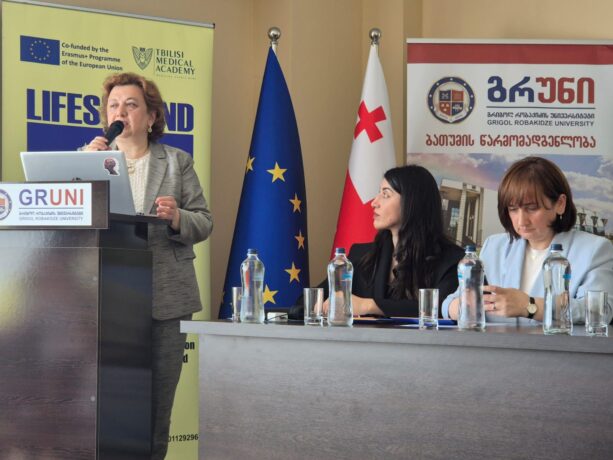
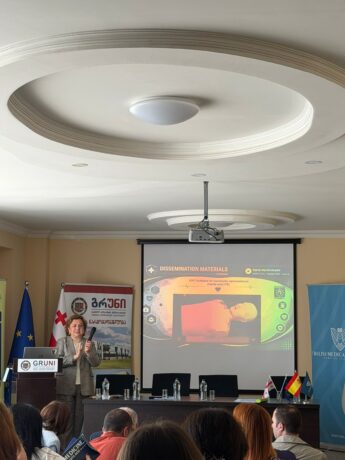
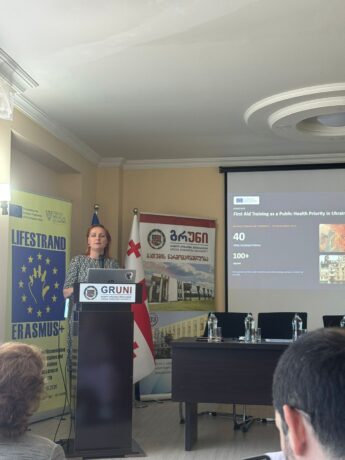
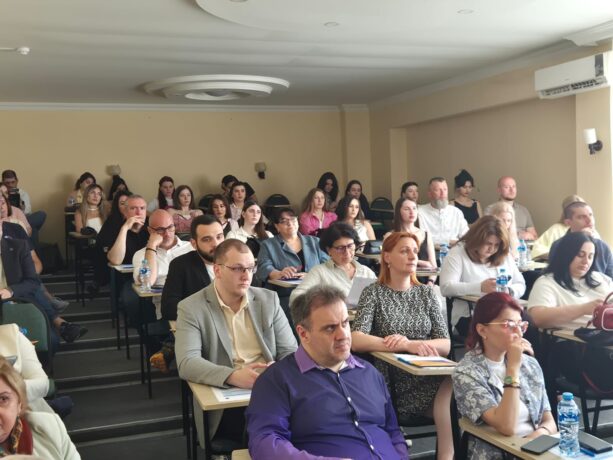
The first day of the event was dedicated to participant registration and a cultural tour of Batumi, providing an opportunity for informal networking among the delegations. The main working session began with an official opening ceremony attended by representatives of the Government of the Autonomous Republic of Adjara. Project Coordinator Professor Ia Evaliani presented an overview of the project’s implementation and key achievements, after which each partner university delivered a presentation highlighting its individual contribution.
During the presentation session, TNMU showcased the results achieved throughout the project. The University successfully established an international, community-oriented network of trainers in Basic Life Support (BLS) and Prehospital Trauma Care, while also developing and implementing modern educational modules for faculty members, medical students, and community representatives.
As part of the project, TNMU trained five senior instructors from among its academic staff and 52 junior instructors from among its students, who subsequently delivered training sessions to members of the public. Particular emphasis was placed on community outreach: a series of large-scale training events provided emergency care education to 1,626 residents of the Ternopil, Lviv, Khmelnytskyi, and Ivano-Frankivsk regions. The University also received state-of-the-art training equipment, significantly enhancing the quality of practical education for both students and course participants. Throughout the implementation period, TNMU continuously monitored project activities and regularly reported its progress to the consortium partners.
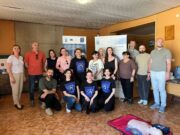
The day concluded with an open-air emergency care training session for residents of the Adjara region, held on Batumi’s seaside promenade.
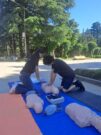
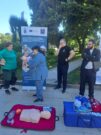
A separate day was devoted to a field visit to the Samegrelo region, located near the administrative boundary line between Georgia and Abkhazia, where participants conducted a series of community training sessions. Delivering practical training in a region situated close to a conflict-affected area served as a powerful demonstration of the project’s practical relevance and community-oriented mission.
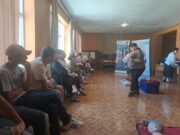
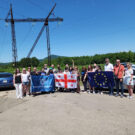
Participation in the LIFESTRAND project has strengthened TNMU’s international cooperation, enabled the University to systematise the experience gained, and facilitated its integration into the educational process. During the final meeting, the partners exchanged best practices in implementing educational innovations and identified future directions for the further development and expansion of the project. The training programmes developed within LIFESTRAND will continue to be delivered across Ukraine, particularly in regions most affected by the challenges of wartime, helping communities improve their emergency preparedness and fostering a culture of mutual assistance and resilience.