

TNMU Associate Professors Participate in the Workshop “mhGAP in Higher Medical Education: Quality and Sustainability of Programme Implementation”
Associate Professors of I. Horbachevsky Ternopil National Medical University Andrii Mashtalir, Oksana Kotsiuba, and Neonila Korylchuk represented the university at the workshop “mhGAP in Higher Medical Education: Quality and Sustainability of Programme Implementation,” held in Vinnytsia on August 17–19, 2026.
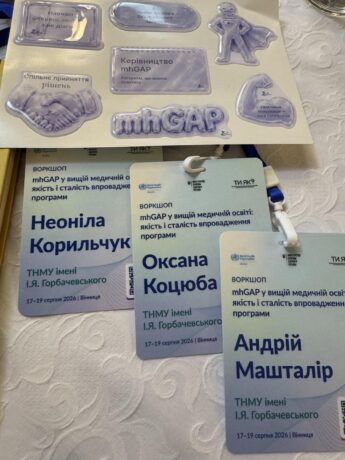
During the event, the TNMU representatives presented the university’s experience in implementing the mhGAP programme at both undergraduate and postgraduate levels of education. They introduced the participants to the team of instructors involved in its implementation, outlined the main achievements, as well as the barriers and challenges arising in the process of integrating mhGAP into the educational process. Particular attention was paid to identifying practical steps needed to ensure the quality, consistency, and sustainability of programme delivery.
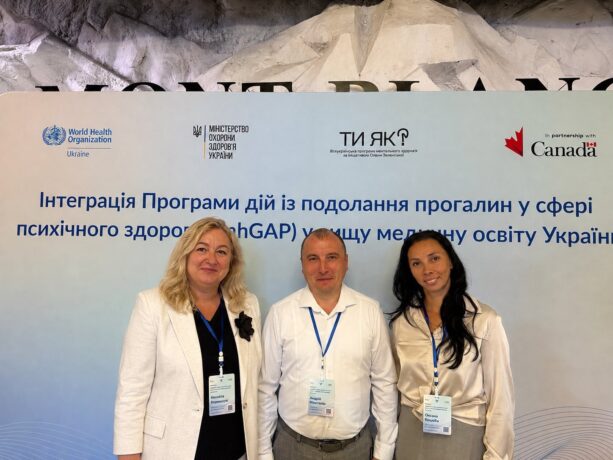
An important component of the workshop was the exchange of experience among representatives of higher medical education institutions in Ukraine. Participants had the opportunity to compare approaches to organising education, discuss specific aspects of instructor training, the integration of mhGAP materials into academic disciplines, and the search for effective solutions to overcome difficulties arising at different stages of programme implementation.
Three days of intensive professional interaction provided an opportunity not only to present the achievements of TNMU but also to explore various models of mhGAP implementation at other universities, identify common challenges, and determine promising areas for further work.
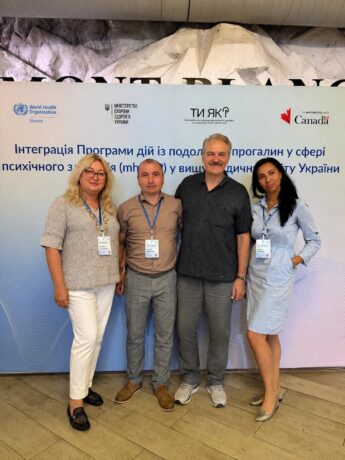
Particularly valuable was the professional communication with Professor O. Chaban, including discussions of current mental health issues, the training of future physicians, and opportunities for further development of mhGAP within the medical education system.
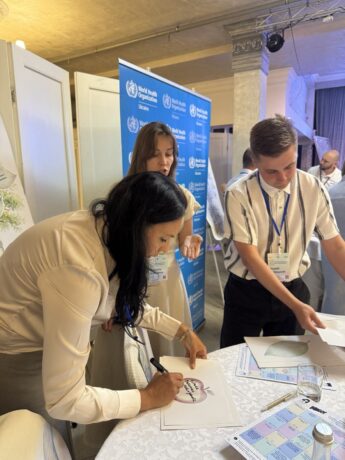
The practical format of the event involved active teamwork. Representatives of TNMU worked together with colleagues from Bukovinian Medical University, discussing specific challenges and possible solutions aimed at ensuring the quality and sustainability of the programme’s implementation. Equally important was the exchange of experience with representatives of all medical universities, which made it possible to compare established approaches, share successful practices, and develop new ideas for further cooperation.
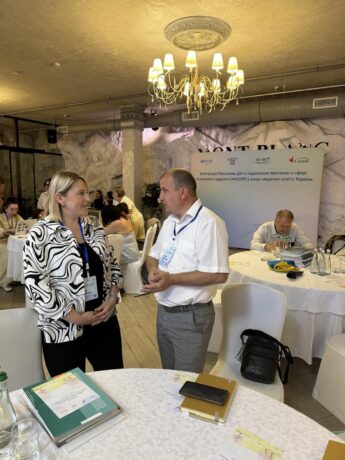
Such meetings contribute to the formation of a professional community of mhGAP educators, in which the experience of each higher education institution becomes a resource for collective development. The workshop served as a platform for open dialogue, teamwork, and the development of a shared vision of what high-quality and systematic mental health education for future physicians should look like.
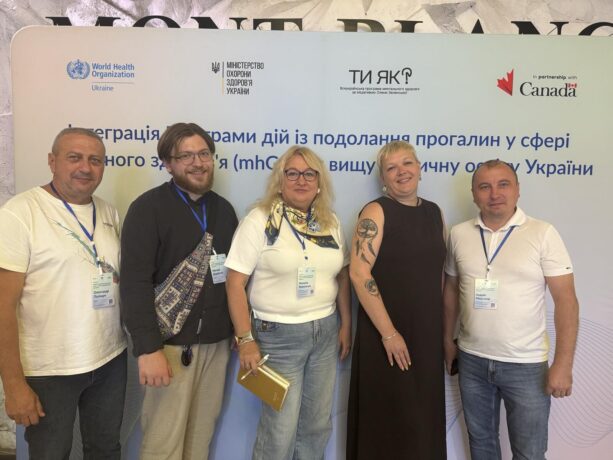
The experience gained and the ideas developed during the workshop will provide a basis for further improving mhGAP teaching at TNMU, expanding interuniversity cooperation, and strengthening the training of future healthcare professionals to provide care to people with mental, neurological, and substance use disorders.