

TNMU Researchers Take Part in the 62nd Congress of the European Association for the Study of Diabetes (EASD 2026)
From September 28 to October 2, Milan became a global center of endocrinology as it hosted the 62nd Annual Meeting of the European Association for the Study of Diabetes (EASD 2026). The event brought together more than 16,000 participants from around the world to discuss the latest advances in diabetes therapy, obesity management, the use of next-generation insulins, and GLP-1/GIP/GCG receptor agonists.
A special highlight of the congress was the recognition of the achievements of Ukrainian researchers, including scientists from Ivan Horbachevsky Ternopil National Medical University. During the opening ceremony, EASD President Professor Francesco Giorgino expressed his sincere appreciation to the Ukrainian team for the exceptional value and importance of the findings of their study on the genetics of type 1 diabetes in Ukraine.
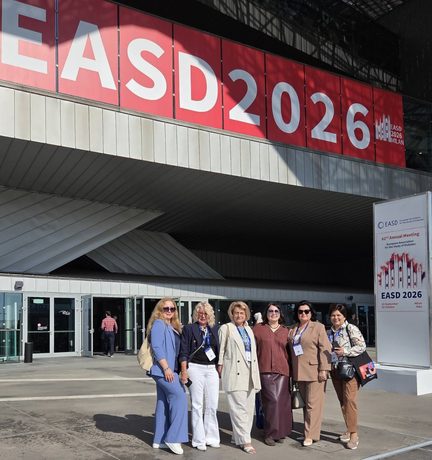
The preliminary results of this research have already been published in the prestigious scientific journal Diabetologia. Professor Taras Oleksyk and PhD Christina Shchubelka played a significant role in the implementation of the project. A part of this large-scale study was conducted at Ternopil Regional Hospital by TNMU researchers Nadiia Pasiechko, Veronika Kulchinska, and Taras Krytskyi.
Modern diabetology is currently undergoing rapid transformation. Incretin-based therapy has firmly established its role as a comprehensive therapeutic approach aimed at improving glycemic control, managing body weight, providing cardiovascular and renal protection, reducing metabolic risks, and improving patients’ long-term outcomes.
Researchers are paying particular attention to retatrutide, amylin-based therapies, and combination medications, which offer new prospects for the treatment of obesity and type 2 diabetes.
The use of continuous glucose monitoring (CGM) has fundamentally changed approaches to patient assessment by making it possible to monitor glucose dynamics in real time.
Automated insulin delivery systems are increasingly bringing type 1 diabetes therapy closer to physiological insulin regulation.
The integration of artificial intelligence, genetic research, and digital technologies is paving the way toward truly personalized medicine, enabling earlier identification of risks and the selection of increasingly precise treatment strategies for individual patients.