

What Prospects Does the Healing Arts Initiative Offer for Medical Education and Rehabilitation?
Can changing the way we perceive our surroundings change the way healthcare professionals see a person? And how does the way people perceive the world affect their physical and mental health? These questions formed the basis of a meeting between students and faculty members of I. Horbachevsky Ternopil National Medical University and Dutch researcher Marc Boumeester.
Increasingly, modern educational environments are concerned not only with the quality of knowledge and professional training but also with the people who create, share and acquire that knowledge. This is particularly relevant in times of prolonged psycho-emotional strain, when persistent underlying anxiety becomes part of everyday life and inevitably affects how we perceive ourselves, other people and the world around us.
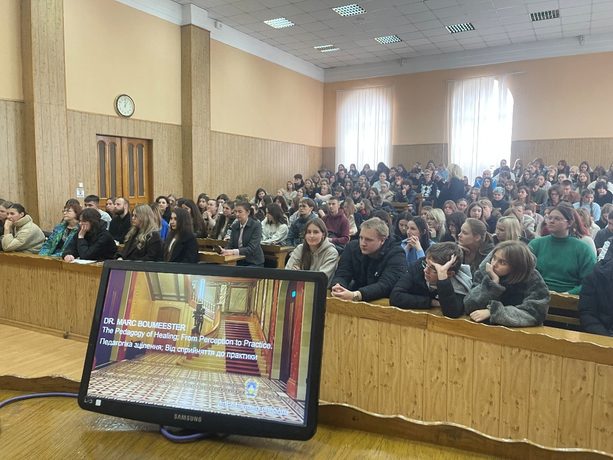
That is why it is important today not only to discuss psycho-emotional well-being but also to explore the mechanisms of human perception: how our experiences are shaped through the senses, the body, attention and interaction.
These issues were central to the visit to TNMU by Marc Boumeester, a media philosopher and researcher of somaesthetics and the agency of media images. He is the author of more than 60 video works, a graduate of Leiden University, and currently serves as Head of Research and Development at ArtEZ University of the Arts.
During an official meeting with TNMU’s administration, new topics for professional discussion emerged, and prospects for future cooperation were outlined. These include the possibility of combining the research and educational expertise of ArtEZ University of the Arts, TNMU’s medical education experience and the practical knowledge of professionals working with veterans.
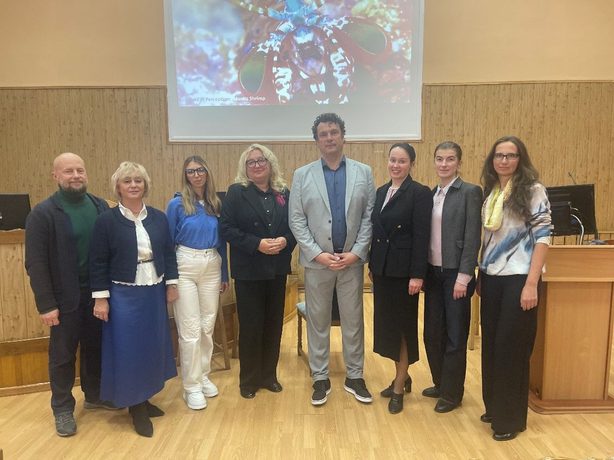
Marc Boumeester’s visit attracted a large audience and brought together two fields whose dialogue is particularly important today: medical education and rehabilitation practices. Students of clinical psychology, physical therapy and medicine, together with academic staff, attended his lecture, “Pedagogy of Healing: From Perception to Practice,” and took part in a workshop on developing somaesthetics.
The guest introduced participants to approaches that offer new ways of understanding the interaction between people and their environment. The discussion covered affordances — the possibilities for action that an environment offers an individual — environmental entropy, and other concepts related to perception, attention and human interaction with space. Importantly, these concepts did not remain purely theoretical for the participants. They were explored further during the practical workshop, “Mapping Sensations: Exploring Embodied Perception.”
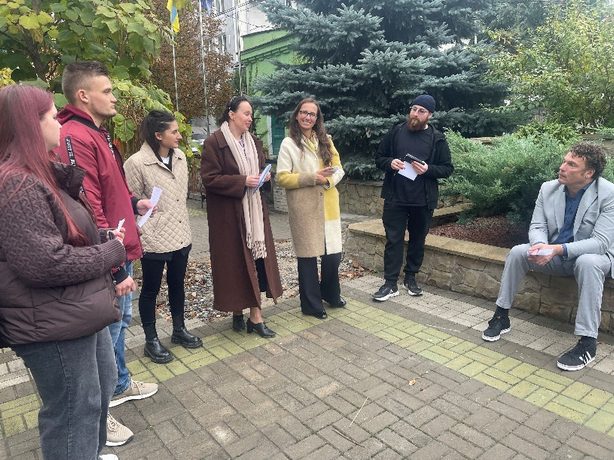
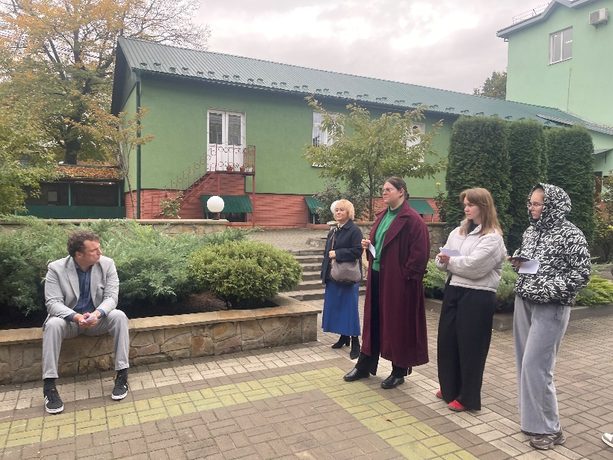
During the workshop, students and faculty members explored perception through their own direct experience. Using all five senses, they paid attention to aspects of their surroundings that often go unnoticed: the characteristics of a space, sounds, smells, tactile sensations, visual details and their own responses to them. This format makes it possible to move from the abstract concept of perception to direct experience and recognise how differently the same situation can be experienced by different people.
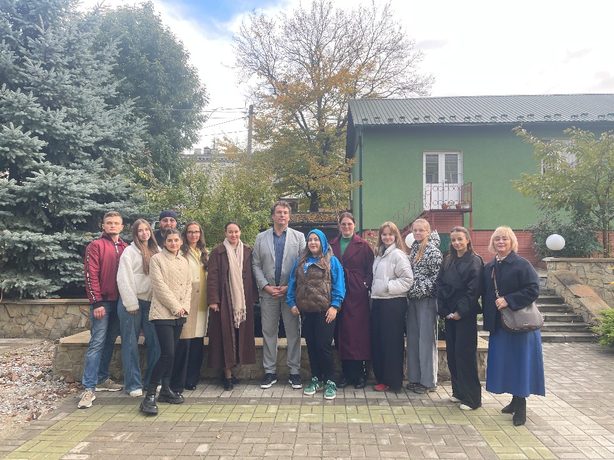
This approach is particularly relevant to Ukraine, where educational and rehabilitation environments operate amid traumatic experiences and significant changes in everyday life. The novelty of these approaches lies not only in introducing practices that are relatively unfamiliar to medical education but also in changing the professional perspective itself: moving beyond a primary focus on symptoms or functional impairments towards a more attentive understanding of how a person feels, perceives space and interacts with it.
For educators and future healthcare professionals, this opens up additional opportunities to reflect on learning, professional interaction and recovery. These ideas are also central to the principles of trauma-informed arts, which are being promoted through the international Healing Arts initiative.
In training future specialists, physical therapists need to understand how people interact with space, move, orient themselves and make use of the opportunities their environment provides. For clinical psychologists, it is important to consider individual experience, bodily and sensory responses, and the ways people interact with their surroundings. The aim is not to replace evidence-based rehabilitation methods or psychological support but to broaden the professional understanding of the person.
Another important part of Marc Boumeester’s visit was an introduction to the facilities and work of the Garta Rehabilitation Centre, where Ukrainian veterans undergo rehabilitation. He was accompanied by Nataliia Volotovska, Associate Professor of the Department of Physiology and Bioethics, and Dariia Popovych, Head of the Department of Physical Therapy, Occupational Therapy and Physical Rehabilitation.
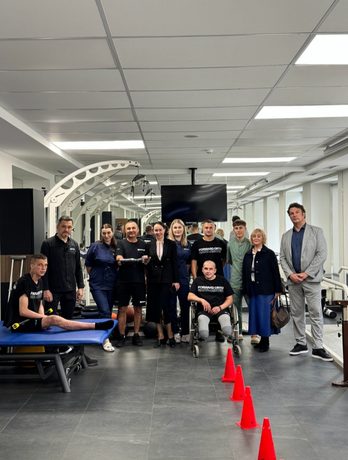
One promising area that attracted the interest of Yurii Zavidniuk, Medical Director of the Garta Rehabilitation Centre, was “art on prescription.” This approach involves engaging people in artistic, cultural or social activities as part of a broader healthcare and well-being system. As Dariia Popovych noted, the World Health Organization (WHO) actively supports the development of such approaches in various European countries.
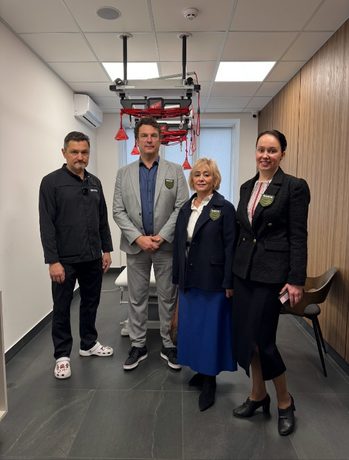
According to Marc Boumeester, Ukraine stood out among the 22 countries he has visited for lectures and research projects. His meetings with students at TNMU and the Lviv National Academy of Arts, their openness to new experiences, their unwavering determination not to let air raid alerts prevent planned events, and their sincere desire to learn and embrace new approaches during wartime made a profound impression on him. Ukrainian resilience, young people’s curiosity and their willingness to sustain professional and creative dialogue became an important part of his visit.
In June, Marc Boumeester was also invited as an expert to the Third International Congress “Art for Health,” organised by the NGO Art Dot as part of the global Healing Arts initiative of the Jameel Arts & Health Lab, with support from the WHO Regional Office for Europe under the Health Resilience in the Eastern Partnership programme.
Nataliia Volotovska, Associate Professor at TNMU, also participated in the professional programme preceding the Congress. During the training sessions, she contributed to discussions on the university’s involvement in Healing Arts initiatives and opportunities for developing this field in Ukraine. The professional exchange at the Congress helped identify shared research interests and potential areas for further dialogue, which subsequently continued during Marc Boumeester’s visit to TNMU.
Bringing education, practice and research together will help lay the foundations for an Arts and Health framework tailored to the realities of war, recovery and the needs of Ukrainian society.
BACKGROUND INFORMATION
More information about Marc Boumeester’s work is available at www.marcboumeester.com.
One of his books, The Image By Proxy: Mass-Microimaging and the Epistemology of Platform-Capitalism, is also freely available online: